


Antiischemic therapy in treating chronic coronary syndrome
- University of Defense, Faculty of Medicine, Belgrade, Serbia
- Military Medical Academy, Clinic for Emergency Internal Medicine, Belgrade, Serbia
- Military Medical Academy, Clinic for Thoracic and Cardiac Surgery, Belgrade, Serbia
ABSTRACT
Myocardial ischemia is pathophysiologically based on the inadequate balance between the supply of oxygenated blood and the myocardial oxygen demand. Clinically, it presents as anginal pain with a typical localization, nature, intensity, and accompanying symptoms, primarily exercise intolerance. The diagnostic algorithm includes clinical examination, non-invasive and invasive diagnostic procedures, with coronary angiography as the gold standard. Conservative treatment of stable angina pectoris, in addition to lifestyle modification and elimination of traditional risk factors, involves the use of novel medications, including ranolazine, which stands out for its unique mechanism of action, effectiveness, and safety. Ranolazine is effective in reducing manifestations of ischemia and angina, with a potential effect on left ventricular dysfunction-primarily diastolic and electrical instability.
STABLE ANGINA PECTORIS
The pathophysiological basis of myocardial ischemia lies in the inadequate balance between the supply of oxygenated blood to the myocardium and its demand for oxygen (Figure 1) [1].
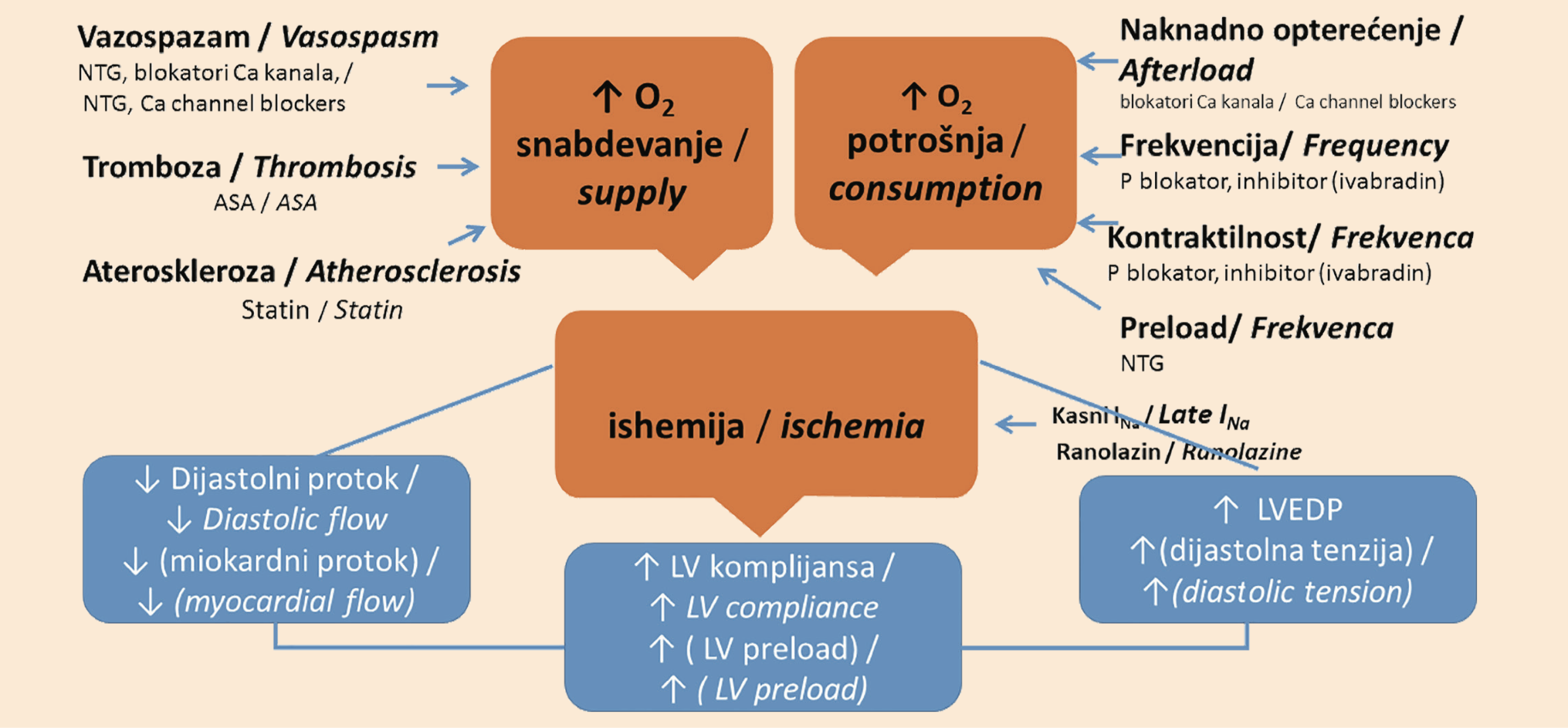
Myocardial ischemia clinically presents as anginal pain with a typical localization, nature, intensity, and accompanying symptoms, primarily exercise intolerance [1]. A two-year follow-up study conducted by Mozaffarian et al. on nearly 9,000 patients with coronary artery disease confirmed that angina pectoris symptoms were an independent predictor of cardiovascular mortality, emphasizing physical limitation as a predictor of poor survival [2]. The predominant morphological substrate of stable angina pectoris is a stable, uncomplicated atherosclerotic plaque that narrows the coronary artery.
The diagnostic algorithm includes clinical examination, non-invasive and invasive diagnostic procedures, with coronary angiography as the gold standard. Conservative treatment of stable angina pectoris, in addition to lifestyle modification and elimination of traditional risk factors, involves the use of modern medications, among which ranolazine stands out due to its unique mechanism of action, efficacy, and safety. Ranolazine is effective in reducing manifestations of ischemia and angina, with a potential effect on left ventricular dysfunction, particularly diastolic dysfunction and electrical instability [1],[2],[3],[4],[5].
Pharmacological treatment of stable angina pectoris – fundamental principles
Conventional anti-ischemic drugs reduce the development of ischemia, primarily by decreasing the determinants of myocardial oxygen demand: heart rate, blood pressure, preload, and contractility. It is important to note that there is no overlap between drugs that improve prognosis and those that alleviate symptoms, except for beta-blockers following myocardial infarction. The above supports the hypothesis that symptomatic myocardial ischemia is not necessarily the fundamental mechanism relevant to prognosis, but rather that specific mechanisms affecting platelet function and anti-inflammatory or cytokine-mediated neurohumoral activity may contribute to improved survival.
Current treatment strategies are based on symptom relief through pharmacological agents by restoring the balance between myocardial oxygen supply and demand, which is crucial for myocardial ischemia and angina pectoris. All pharmacological agents in this category – beta-blockers, calcium channel blockers, nitrates, potassium channel activators, and sinus node inhibitors – reduce myocardial oxygen demand. This is achieved either through direct effects on the myocardium or indirectly via complex effects on hemodynamic determinants. Calcium channel blockers, nitrates, and potassium channel activators can additionally improve blood flow and oxygen delivery (Figure 2) [1],[2],[3],[4],[5],[6].
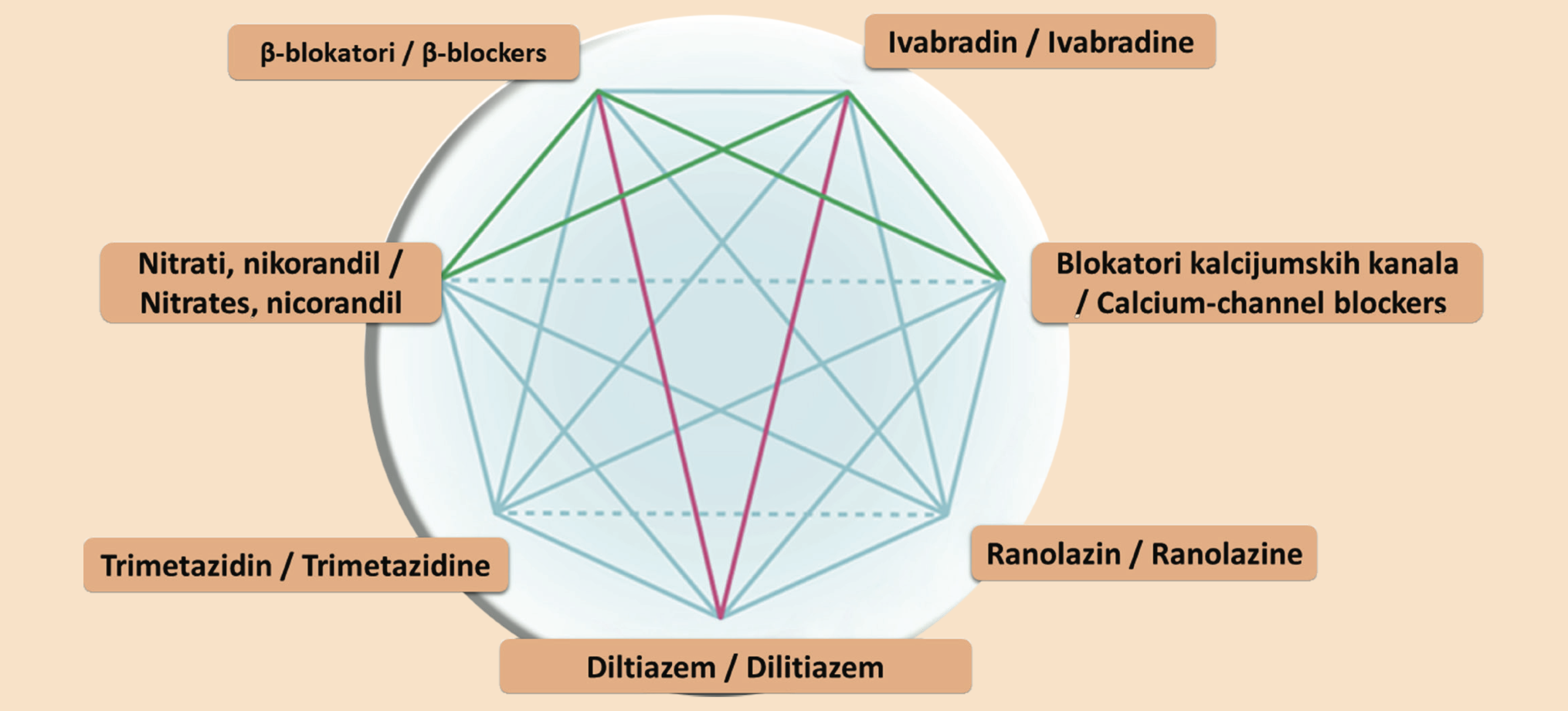
From a pathophysiological perspective, during myocardial ischemia, intracellular calcium overload develops, leading to the progression of ischemia, including both systolic and diastolic myocardial dysfunction, as well as electrical instability [1],[2],[3],[4],[5],[6]. Ranolazine does not have a clinically significant impact on variables related to myocardial oxygen demand, however, it does enhance their anti-ischemic effect by preventing intracellular calcium overload. In doing so, it reduces myocardial stiffness that contributes to decreased myocardial perfusion [7],[8],[9],[10].
A recent study emphasizes that the dose-dependent improvement in myocardial ischemia during submaximal and maximal exertion achieved with ranolazine in patients with stable coronary artery disease is attributed to enhanced myocardial perfusion, without a measurable effect on heart rate or blood pressure [9]. This suggests that ranolazine may serve as an ideal complementary addition to standard antianginal therapy.
Pharmacological treatment of ischemia
The antianginal effect of medications is achieved at different levels, acting in a complementary manner – on one hand, by increasing myocardial oxygen supply (by reducing vasospasm, atherosclerosis progression, and thrombosis), and on the other, by decreasing oxygen demand (by reducing preload and afterload, heart rate, and contractility) (Figures 1 and 2) [7],[8],[9],[10].
At the cellular level, ischemia disrupts the function of sodium channels in cardiomyocytes, leading to a prolonged increase in late sodium current and consequently excessive intracellular accumulation of sodium and calcium. The elevated intracellular calcium concentration impairs diastolic relaxation, resulting in increased diastolic wall stress and oxygen consumption, as well as reduced myocardial perfusion and oxygen supply. The resulting myocardial hypoperfusion further contributes to the worsening of ischemia and angina (Figure 3) [1],[2].
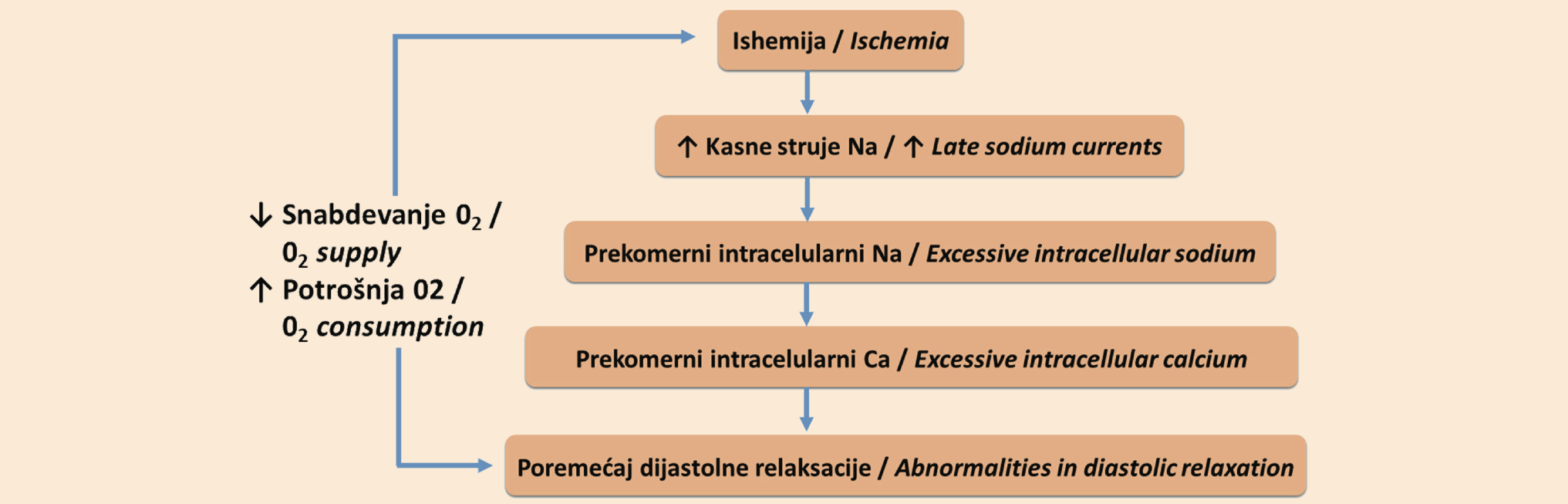
In an ischemia-affected cardiomyocyte, intracellular sodium concentration increases, leading to elevated intracellular calcium levels and resulting in contractile dysfunction. Moreover, increased diastolic wall stress increases microvascular resistance and exacerbates the disturbance of the energy balance in the ischemic myocardium. This creates a vicious cycle wherein diastolic dysfunction – arising as a consequence of myocardial ischemia – increases energy consumption and further aggravates the energy imbalance. Pathological increase of the late sodium current contributes to sodium-dependent calcium overload. By reducing the magnitude of this pathological late sodium current increase, ranolazine prevents or decreases the intracellular calcium concentration, thereby interrupting a key mechanism in the pathophysiology of myocardial ischemia (Figure 4) [8].
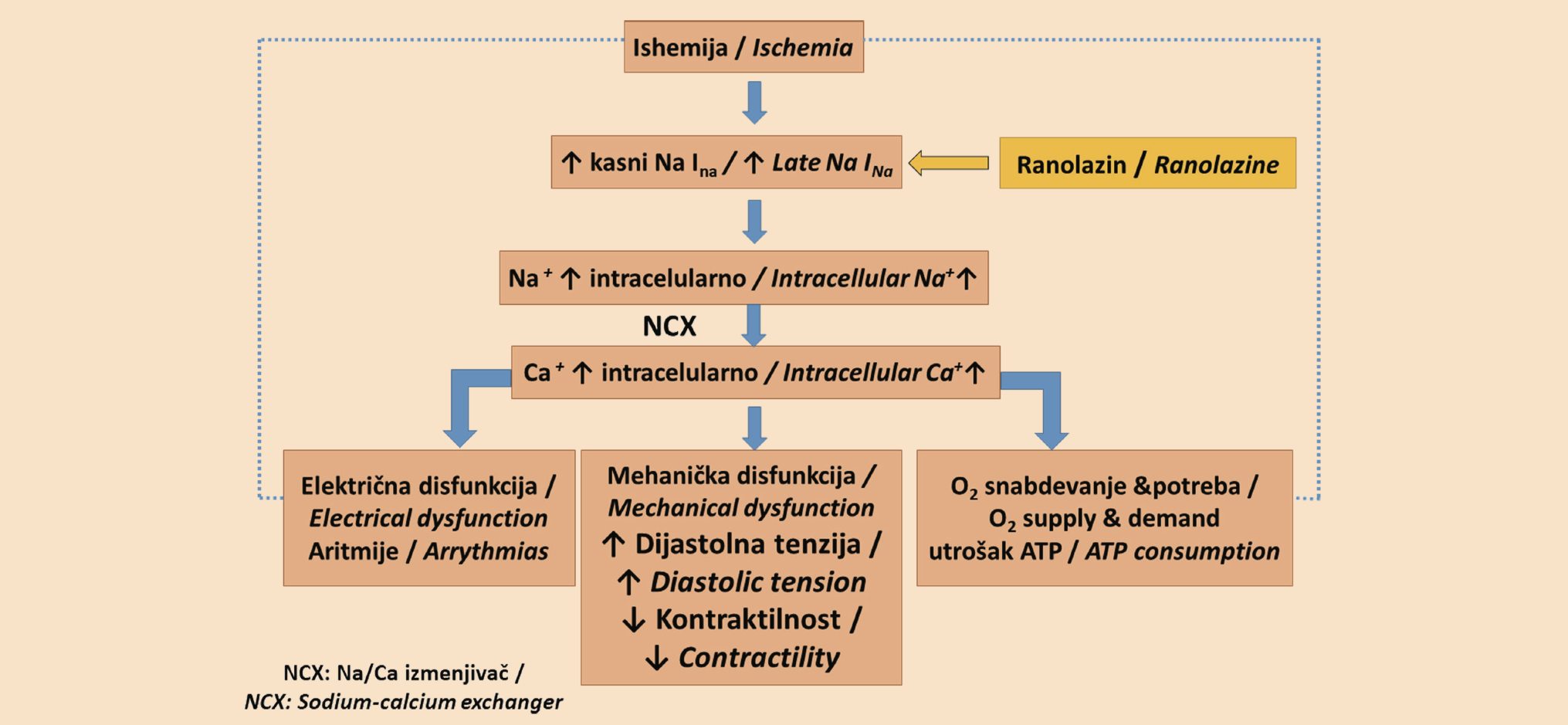
Anti-ischemic mechanism, pharmacokinetics, and pharmacodynamics of ranolazine
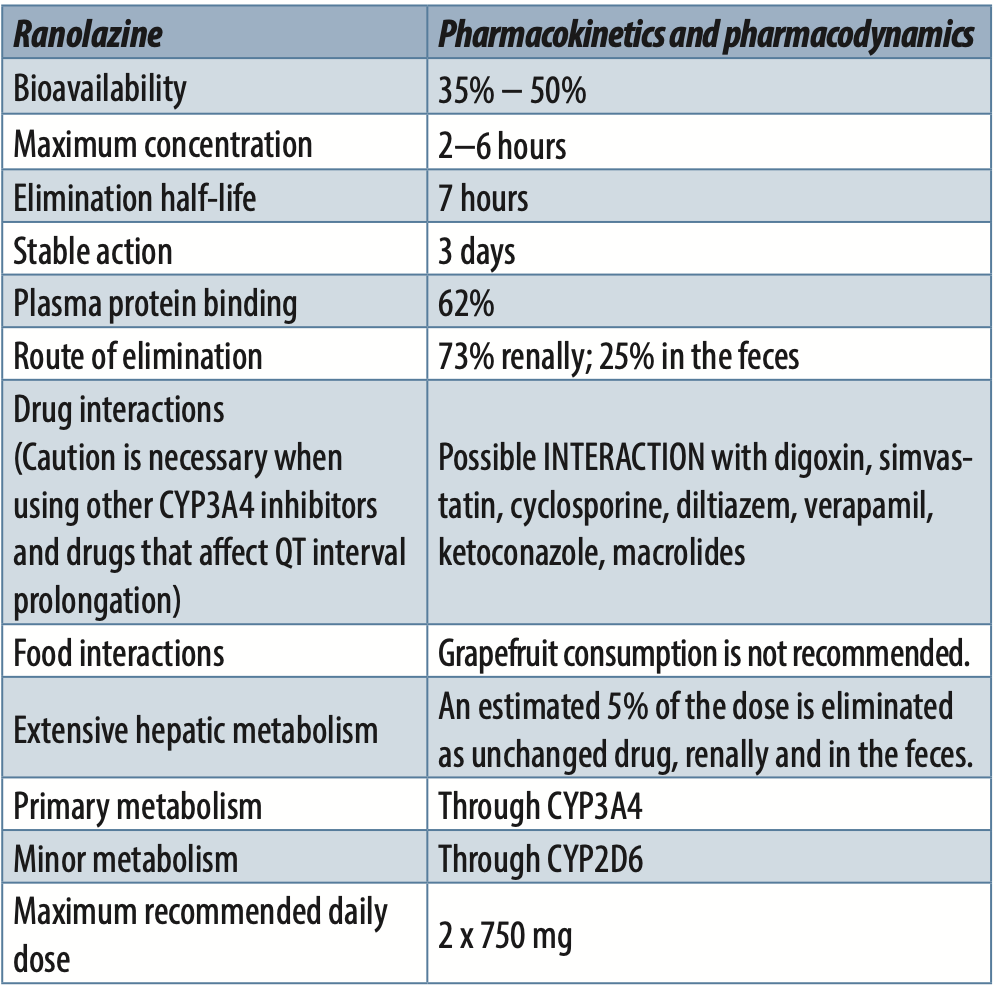
The primary mechanism of ranolazine action is the improvement of regional coronary blood flow in the ischemic zone. Its antianginal effect is achieved without a significant impact on heart rate or arterial blood pressure. Clinical studies have reported only negligible reductions in average heart rate (< 2 bpm) and systolic blood pressure (< 3 mmHg) [9],[10]. The antianginal efficacy of ranolazine is not dependent on gender, age, or comorbidities (such as diabetes mellitus), but it is associated with a favorable metabolic profile in diabetic patients (reduction in HbA1c levels) [9, 11,12]. The key pharmacokinetic and pharmacodynamic properties of ranolazine are presented in Table 1.
Antianginal therapy in everyday clinical practice
The goal of antianginal drugs is to provide adequate relief of angina symptoms in patients with chronic coronary syndrome (CCS), somewhat independently of their effect or lack thereof on major adverse cardiac events (MACE). Initial monotherapy, followed by escalation to combination antianginal therapy in cases of inadequate symptom relief, represents a reasonable approach [13].
According to current European guidelines, therapeutic goals in the pharmacological treatment of stable angina pectoris can be categorized into three groups:
1. immediate short-term relief of symptoms
2. symptomatic therapy
3. etiological treatment with improved prognosis [1],[2],[14].
Therapy optimization leads to improved quality of life (symptom relief), reduced mortality and morbidity, slowed disease progression, and induction of regression [1],[2],[14].
In this context, an empirical approach of starting with a beta-blocker may be recommended for many patients with chronic coronary syndrome, unless there are contraindications or unless other drugs are more suitable than beta-blockers (e.g., patients with a low heart rate and/or low blood pressure) [15].
It is recommended that the choice of antianginal drugs be individualized and tailored to the patient’s characteristics, taking into account the hemodynamic profile, presence of comorbidities, current therapy (comedication), drug tolerability, as well as the underlying pathophysiology of angina. Additionally, local availability and cost of medications should also be considered (recommendation grade: Ic).
Per current recommendations, long-acting nitrates or ranolazine should be considered as add-on therapy in patients whose symptoms are not adequately controlled by beta-blockers and/or calcium channel blockers, or as part of initial therapy in carefully selected patients (recommendation grade: IIa) [13],[14],[15].
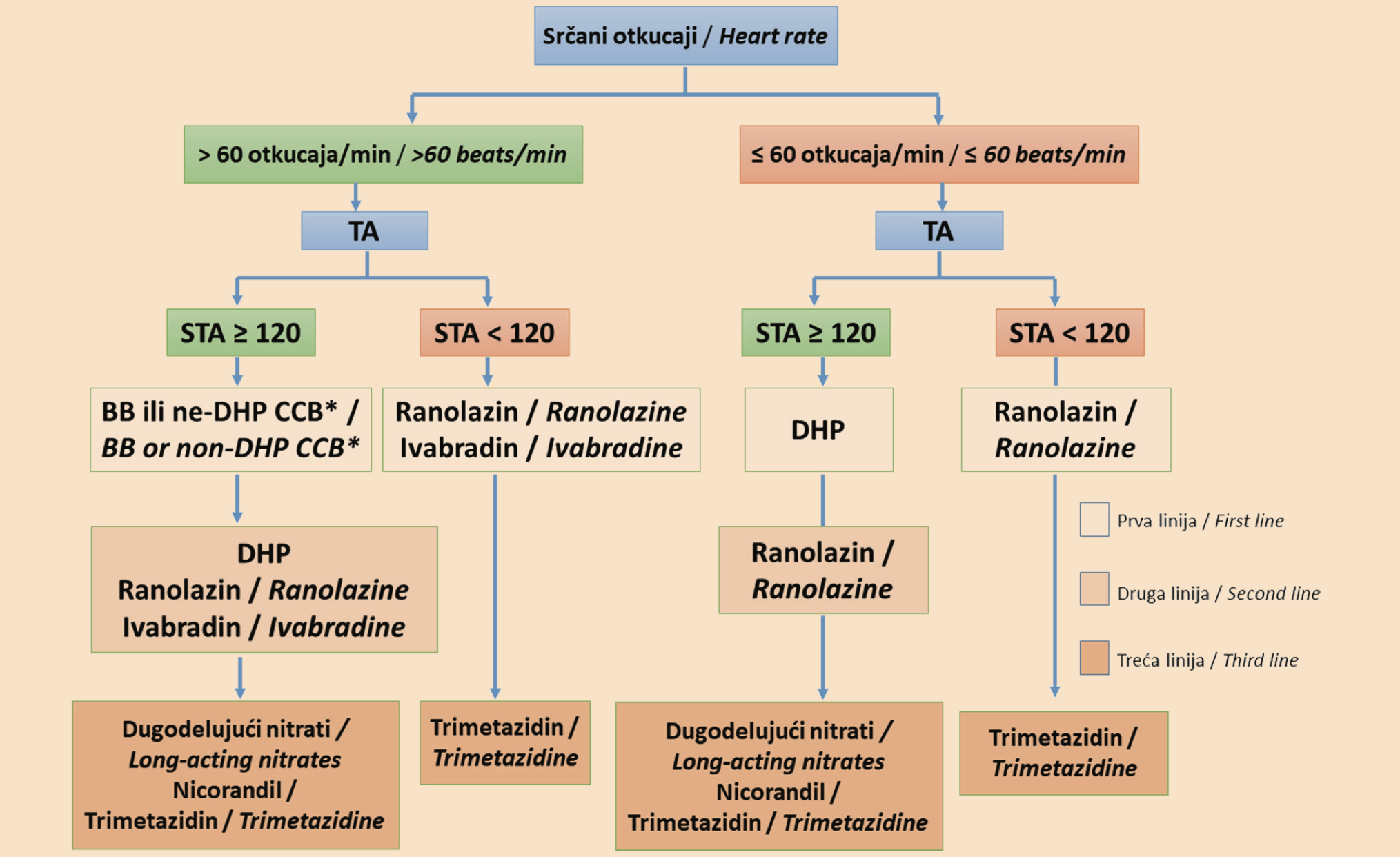
The current empirical paradigm for selecting antianginal therapy involves a hierarchical, stepwise approach that includes first-line drugs (beta-blockers, calcium channel blockers) and second-line drugs (long-acting nitrates, nicorandil, ranolazine, ivabradine, trimetazidine). This approach emphasizes the concept that medical therapy for symptom control in chronic coronary syndrome (CCS) should be tailored to the hemodynamic profile of each patient (blood pressure, heart rate), comorbidities (especially in the presence of heart failure), concurrent use of medications with potential interactions with antianginal drugs, while also considering the pathophysiological basis of myocardial ischemia in each patient, as well as the local availability of different drugs.
For many patients with chronic coronary syndrome, initial drug therapy should include a beta-blocker and/or a calcium channel blocker (CCB). If angina symptoms cannot be adequately controlled with initial monotherapy with a beta-blocker or calcium channel blocker, a combination of a beta-blocker and a dihydropyridine calcium channel blocker (DHPCCB) should be considered, unless contraindicated (recommendation grade: IIa).
Other antianginal drugs (long-acting nitrates, ranolazine, nicorandil, trimetazidine, or ivabradine in patients with left ventricular systolic dysfunction) can be added to beta-blockers and/or CCBs, or applied as part of initial combination therapy in appropriately selected patients when treatment with beta-blockers and/ or calcium channel blockers is contraindicated or poorly tolerated, or when angina symptoms are inadequately controlled (Figure 5) (recommendation grade: IIa).
As to the choice of antianginal drugs, short-acting nitrates are recommended for immediate relief of angina (recommendation grade: Ib). When long-acting nitrates are prescribed, a nitrate-free or low-nitrate interval should be considered to reduce tolerance (recommendation grade: IIa). Nicorandil or trimetazidine may be considered as add-on therapy in patients with inadequate symptom control while on beta-blockers and/or calcium channel blockers, or as part of initial therapy in appropriately selected patients (recommendation grade: IIb).
Ivabradine should be considered as additional antianginal therapy in patients with left ventricular systolic dysfunction (LVEF < 40%) and inadequate symptom control, or as part of initial treatment in appropriately selected patients (recommendation grade: IIa). Ivabradine is not recommended as add-on therapy in patients with CCS, LVEF > 40%, and no clinical heart failure (recommendation grade: IIIb). The combination of ivabradine with non-DHP CCBs (verapamil or diltiazem) or other strong CYP3A4 inhibitors is not recommended (recommendation grade: IIIb) [13],[14],[15].
Nitrates are not recommended in patients with hypertrophic cardiomyopathy or combined with phosphodiesterase inhibitors (recommendation grade: IIIb). These drugs may require caution or may be contraindicated in certain patients, such as those with low blood pressure (beta-blockers and DHP-CCBs), diabetes mellitus (beta-blockers), atrioventricular conduction disorders (beta-blockers and non-DHP-CCBs), or chronic obstructive pulmonary disease (non-selective beta-blockers) [13],[14],[15].
For initial therapy, ivabradine, nicorandil, long-acting nitrates, ranolazine, or trimetazidine should be considered in patients with intolerance or contraindications to beta-blockers and/or calcium channel blockers. Ranolazine and trimetazidine may be considered in patients with microvascular angina, while nicorandil or nitrates may be considered in patients with coronary artery spasm (recommendation grade: IIb) [13],[14],[15].
These drugs may cause atrioventricular conduction disturbances and should be used with caution in patients with peripheral arterial disease (PAD) and chronic obstructive pulmonary disease (COPD). Calcium channel blockers require caution in patients with heart failure with reduced ejection fraction (HFrEF). Ranolazine and trimetazidine are reasonable alternatives as part of combination antianginal therapy in patients with a low heart rate [13],[14],[15].
In patients with heart failure with preserved ejection fraction (HFpEF), in addition to diuretics for treating congestion, SGLT2 inhibitors are recommended to improve outcomes (recommendation grade: I). Additionally, beta-blockers, long-acting nitrates, calcium channel blockers (CCBs), ivabradine, ranolazine, trimetazidine, nicorandil, and their combinations should be considered in patients with HFpEF and coronary artery disease (CAD) for angina relief, though without effect on heart failure progression or end outcomes in coronary syndrome [13],[14],[15].
Reduced doses of rivaroxaban may be considered in patients with coronary artery disease (CAD) and heart failure, LVEF > 40%, and sinus rhythm, who are at high risk of stroke and have a low risk of hemorrhage [15].
Managing angina symptoms in patients with angina with nonobstructive coronary arteries/ischemia with nonobstructive coronary arteries (ANOCA/INOCA) is challenging, as these patients represent a heterogeneous group and randomized trials are lacking. A small study showed that a stratified algorithm for antianginal therapy based on coronary functional testing led to symptom relief and improved quality of life compared to the control group treated with standard therapy.
In patients with microvascular angina and reduced coronary flow reserve (CFR) and/or increased index of microcirculatory resistance (IMR), which may reflect arteriolar remodeling, beta-blockers, CCB, ranolazine, and angiotensin-converting enzyme inhibitors (ACE-I) are administered. In these patients, anti-ischemic therapy with amlodipine has led to significant improvement.
In the treatment of patients with epicardial or microvascular spasm after acetylcholine testing (ACH testing), calcium antagonists should be considered as first-line therapy. In patients with severe vasospastic angina, the use of unusually high doses of calcium antagonists (e.g., diltiazem at a dose of 2 × 200 mg daily or even up to 960 mg daily) and in certain cases a combination of nondihydropyridines (such as diltiazem) and dihydropyridine calcium channel blockers (such as amlodipine) may be necessary.
It is important to note that, in a small study wherein oral therapy with diltiazem at a dose of up to 360 mg per day or a placebo was administered for six weeks, in patients with coronary microvascular dysfunction (CMD), no significant improvement in symptoms or quality of life was found. However, diltiazem therapy reduced the prevalence of epicardial spasm. Nicorandil, a combined vasodilator that acts via nitrate- and potassium-dependent channels, may represent an effective alternative, although side effects are common (recommendation grade: IIb) [15].
Combination treatment with ranolazine, an antianginal agent that improves myocyte relaxation and ventricular compliance by reducing sodium and calcium overload, has shown significant results. In patients with INOCA, spinal cord stimulation is an option for those with refractory complaints after drug therapy [15].
Due to inconsistencies in data collection over time, there is no clear and well-founded evidence to support the existence of clearly defined first- and second-line antianginal therapy. Whether long-acting nitrates, ranolazine, nicorandil, ivabradine, trimetazidine, or their combinations provide greater relief of angina symptoms compared to beta-blockers or calcium channel blockers remains unclear [15].
Ranolazine in pivotal studies and daily clinical practice
To date, no large, randomized trials have directly compared the classic, historically first-approved antianginal agents (beta-blockers and calcium channel blockers - CCBs) with newer anti-ischemic drugs such as ivabradine, nicorandil, ranolazine, and trimetazidine. Newer drugs have mostly been investigated in smaller studies evaluating their non-inferiority compared to beta-blockers or calcium channel blockers, or in larger trials, where they have been examined as an addition to standard therapy founded on beta-blockers and/or calcium channel blockers. A recent study conducted on 158 patients with angina symptoms also supports the thesis that ranolazine should be given rather than beta-blockers in chronic angina. In this study, ranolazine improved exercise tolerance, reduced exercise-induced ischemia and angina, showing efficacy at least equal to atenolol, with no effect on arterial pressure or heart rate [16].
One of the pivotal studies that established the role of ranolazine in the treatment of patients with stable angina pectoris was the double-blind, placebo-controlled, four-period crossover study MARISA (Monotherapy Assessment of Ranolazine in Stable Angina), which included 175 patients treated with ranolazine in two daily doses as monotherapy for angina. Compared to placebo, ranolazine demonstrated a sustained, dose-dependent effect, increased exercise tolerance, and reduced exercise-induced ischemia without clinically significant hemodynamic effects, and without any reduction in short-term survival compared to expectations [17].
Consistent with the previously cited study are the results of the CARISA study (Combination Assessment of Ranolazine in Stable Angina), conducted on 450 patients in whom ranolazine was added to conventional anti-ischemic therapy at standard doses, and in whom long-term survival was not shorter than expected. The same applies to the post-hoc CARISA analysis, which recorded improved exercise tolerance and symptom relief, along with a reduction in exercise-induced ischemia and hemodynamic neutrality in patients with more severe forms of angina who received ranolazine in addition to standard antianginal therapy, with maximum doses of beta-blockers and calcium channel antagonists [18].
A significant reduction in the frequency of anginal attacks – and consequently, in the use of nitroglycerin – was also recorded in a large study by Stone et al., wherein ranolazine was added to the therapy of patients already receiving amlodipine monotherapy at the maximum daily dose. Interestingly, patients with more severe forms of angina experienced a more pronounced therapeutic effect without hemodynamic changes [19].
The anti-ischemic effect is consistent across all subgroups of patients with chronic angina, including patients with diabetes, in whom – besides the sustained antianginal effect in terms of reduced frequency of angina attacks and nitroglycerin use during treatment – a more favorable metabolic profile and a reduction in HbA1c were observed, regardless of baseline values (Figure 5) [12],[20],[21].
The results of the ROLE (Ranolazine Open Label Experience) study, which included 746 patients with chronic angina, confirmed the long-term safety of ranolazine use in this population. Treatment was associated with symptomatic improvement and good tolerance of therapy, with no observed increase in mortality [21].
In addition to patients with chronic angina, patients with non–ST-segment elevation acute coronary syndromes also experience measurable benefits when ranolazine is added to standard anti-ischemic therapy. The effect is a sustained reduction of ischemic symptoms, without impact on cardiovascular morbidity and mortality in these patients [22]. A positive effect of ranolazine on myocardial perfusion has been observed, and even patients with endothelial dysfunction have achieved clear subjective and objective benefits in terms of symptom relief and improvement of ischemic deficit [23].
The overall benefit of optimizing antianginal therapy with ranolazine is substantiated by a recent economic meta-analysis that included seven studies. This analysis confirms a clear financial benefit for the health system through the application of ranolazine as an adjunct to conventional anti-ischemic therapy, at least in the first year of treatment [24].
In addition to HFrEF, which most often occurs as a complication of coronary disease, the effects of ranolazine are also measurable in HFpEF. In a pilot study involving 20 patients with HFpEF treated with intravenous ranolazine, Maier et al. registered an acute improvement in hemodynamic (LVEDP, PCWP, MPAP) but not diastolic function parameters. On the other hand, a meta-analysis that included eight randomized studies with a rather heterogeneous population with HFpEF (ischemic heart disease, diabetes, hypertrophic cardiomyopathy), in addition to the improvement of hemodynamics in patients treated with ranolazine, also highlights the positive effect of the drug on diastolic function parameters (LVEDV, E/e'), without causing hemodynamic and electrical instability [25],[26].
Although it is known that ranolazine prolongs the QT interval in the ECG recording, and that the prolongation of the corrected QT interval (QTc) ranges from an average of 6 ms up to 15 ms in 5% of patients, clinical experience has not indicated an increase in the risk of proarrhythmias or sudden death in patients treated with ranolazine [4],[17]. Moreover, the results of the RAID study, which included patients with an implantable cardioverter defibrillator (ICD), clearly highlight the effect of ranolazine on electrical instability in terms of reducing the number of episodes of ventricular tachycardia in high-risk patients, while particular benefits were observed in patients with an upgraded biventricular pacemaker, the so-called by CRT (cardiac resynchronization therapy), patients in whom atrial fibrillation was not recorded, and in patients without concomitant antiarrhythmic therapy [27].
Precisely because of its mechanism of action, ranolazine has the potential to prevent the occurrence of not only ventricular, but also atrial arrhythmias, such as atrial fibrillation (AF), and has a particularly important place in rhythm control in patients with paroxysmal atrial fibrillation and various clinical conditions.
The results of the meta-analysis by Leelapatana et al., which included patients with AF and systolic dysfunction, clearly highlight the synergistic effect of ranolazine in combination with amiodarone on Na currents, resulting in an increase in the frequency and speed of conversion of AF to sinus rhythm, with an optimal safety profile [28].
Ranolazine has demonstrated a consistent effect in the prevention of postoperative atrial fibrillation comparable to the effect of amiodarone in surgically revascularized patients, without a change in the frequency of adverse events [29].
CONCLUSION
Optimum therapy of angina cannot be conceived without the latest generation of anti-ischemic drugs that have a cellular mechanism of action, which achieves reduction of ischemia at the myocyte level. Ranolazine is the first late sodium current inhibitor, proven effective and safe, which achieves a reduction in the frequency of angina pectoris, better exercise tolerance, improved quality of life, and improved survival, with a positive metabolic profile (reduction of HbA1C), without affecting hemodynamics, i.e. heart rate and blood pressure.
Ranolazine, therefore, is not a “backup drug”; it is optimal for certain patient subgroups, such as those with diabetes, microvascular disease, hypotension, and bradycardia, where it has proven effective both as monotherapy and in combination with a beta-blocker or calcium channel blocker.
Informations

-
Keywords:
-
Received:
-
Revised:
-
Accepted:
-
Online first:
-
DOI:
-
Cite this article:

Milena Pandrc
Clinic for Emergency Internal Medicine, Military Medical Academy
17 Crnotravska Street, 11000 Belgrade, Serbia
E-mail:
1. Morrow DA, Boden WE. Chapter 57: Stable Ischemic Heart Disease. In: Braunwald’s Heart Disease: A Textbook of Cardiovascular Medicine. 9th ed. (2012). Saunders; 1210-1269.
2. Mozaffarian D, Bryson CL, Spertus JA, McDonell MB, Fihn SD. Anginal symptoms consistently predict total mortality among outpatients with coronary artery disease. Am Heart J. 2003 Dec;146(6):1015-22. doi: 10.1016/S0002- 8703(03)00436-8. [CROSSREF]
3. Michel T, Hoffman BB. Chapter 27: Treatment of myocardial Ischemia & Hypertension. In: Brunton LL, et al. Goodman & Gilman’s The Pharmacological Basis of Therapeutics. 12th ed. (2011).
4. Sažetak karakteristika leka Ranexa, Februar 2021.
5. Stone PH. Ranolazine: new paradigm for management of myocardial ischemia, myocardial dysfunction, and arrhythmias. Cardiol Clin. 2008 Nov;26(4):603-14. doi: 10.1016/j.ccl.2008.06.002. [CROSSREF]
6. Ferrari R, Camici PG, Crea F, Danchin N, Fox K, Maggioni AP, et al. Expert consensus document: A ‘diamond’ approach to personalized treatment of angina. Nat Rev Cardiol. 2018 Feb;15(2):120-132. doi: 10.1038/nrcardio.2017.131. [CROSSREF]
7. Chaitman BR. Ranolazine for the treatment of chronic angina and potential use in other cardiovascular conditions. Circulation. 2006 May 23;113(20):2462-72. doi: 10.1161/CIRCULATIONAHA.105.597500. [CROSSREF]
8. Hasenfuss G, Maier LS. Mechanism of action of the new anti-ischemia drug ranolazine. Clin Res Cardiol. 2008 Apr;97(4):222-6. doi: 10.1007/s00392-007- 0612-y. [CROSSREF]
9. Stone PH, Chaitman BR, Stocke K, Sano J, DeVault A, Koch GG. The anti-ischemic mechanism of action of ranolazine in stable ischemic heart disease. J Am Coll Cardiol. 2010 Sep 14;56(12):934-42. doi: 10.1016/j.jacc.2010.04.042. [CROSSREF]
10. Keating GM. Ranolazine: a review of its use in chronic stable angina pectoris. Drugs. 2008;68(17):2483-503. doi: 10.2165/0003495-200868170-00006. [CROSSREF]
11. Wenger NK, Chaitman B, Vetrovec GW. Gender comparison of efficacy and safety of ranolazine for chronic angina pectoris in four randomized clinical trials. Am J Cardiol. 2007 Jan 1;99(1):11-8. doi: 10.1016/j.amjcard.2006.07.052. [CROSSREF]
12. Timmis AD, Chaitman BR, Crager M. Effects of ranolazine on exercise tolerance and HbA1c in patients with chronic angina and diabetes. Eur Heart J. 2006 Jan;27(1):42-8. doi: 10.1093/eurheartj/ehi495. [CROSSREF]
13. Jurisch D, Laufs U. Chronisches Koronarsyndrom : Neuklassifikation der stabilen koronaren Herzkrankheit [Chronic coronary syndrome : New classification of stable coronary artery disease]. Internist (Berl). 2021 Jan;62(1):47-57. German. doi: 10.1007/s00108-020-00910-0. [CROSSREF]
14. Manolis AJ, Kallistratos MS, Poulimenos LΕ, Ambrosio G, Dechend R, Lopez-Sendon J, et al. The ESC 2019 CCS guidelines: Have we left our patients and scientific evidence behind? Eur J Intern Med. 2020 Feb;72:5-8. doi: 10.1016/j.ejim.2019.12.012. [CROSSREF]
15. Vrints C, Andreotti F, Koskinas KC, Rossello X, Adamo M, Ainslie J, et al; ESC Scientific Document Group. 2024 ESC Guidelines for the management of chronic coronary syndromes. Eur Heart J. 2024 Sep 29;45(36):3415-3537. doi: 10.1093/eurheartj/ehae177. [CROSSREF]
16. Rousseau MF, Pouleur H, Cocco G, Wolff AA. Comparative efficacy of ranolazine versus atenolol for chronic angina pectoris. Am J Cardiol. 2005 Feb 1;95(3):311-6. doi: 10.1016/j.amjcard.2004.09.025. [CROSSREF]
17. Chaitman BR, Skettino SL, Parker JO, Hanley P, Meluzin J, Kuch J, et al; MARISA Investigators. Anti-ischemic effects and long-term survival during ranolazine monotherapy in patients with chronic severe angina. J Am Coll Cardiol. 2004 Apr 21;43(8):1375-82. doi: 10.1016/j.jacc.2003.11.045. [CROSSREF]
18. Chaitman BR, Pepine CJ, Parker JO, Skopal J, Chumakova G, Kuch J, et al; Combination Assessment of Ranolazine In Stable Angina (CARISA) Investigators. Effects of ranolazine with atenolol, amlodipine, or diltiazem on exercise tolerance and angina frequency in patients with severe chronic angina: a randomized controlled trial. JAMA. 2004 Jan 21;291(3):309-16. doi: 10.1001/ jama.291.3.309. [CROSSREF]
19. Stone PH, Gratsiansky NA, Blokhin A, Huang IZ, Meng L; ERICA Investigators. Antianginal efficacy of ranolazine when added to treatment with amlodipine: the ERICA (Efficacy of Ranolazine in Chronic Angina) trial. J Am Coll Cardiol. 2006 Aug 1;48(3):566-75. doi: 10.1016/j.jacc.2006.05.044. [CROSSREF]
20. Kosiborod M, Arnold SV, Spertus JA, McGuire DK, Li Y, Yue P, et al. Evaluation of ranolazine in patients with type 2 diabetes mellitus and chronic stable angina: results from the TERISA randomized clinical trial (Type 2 Diabetes Evaluation of Ranolazine in Subjects With Chronic Stable Angina). J Am Coll Cardiol. 2013 May 21;61(20):2038-45. doi: 10.1016/j.jacc.2013.02.011. [CROSSREF]
21. Koren MJ, Crager MR, Sweeney M. Long-term safety of a novel antianginal agent in patients with severe chronic stable angina: the Ranolazine Open Label Experience (ROLE). J Am Coll Cardiol. 2007 Mar 13;49(10):1027-34. doi: 10.1016/j.jacc.2006.10.067. [CROSSREF]
22. Wilson SR, Scirica BM, Braunwald E, Murphy SA, Karwatowska-Prokopczuk E, Buros JL, et al. Efficacy of ranolazine in patients with chronic angina observations from the randomized, double-blind, placebo-controlled MERLIN-TIMI (Metabolic Efficiency With Ranolazine for Less Ischemia in Non-ST-Segment Elevation Acute Coronary Syndromes) 36 Trial. J Am Coll Cardiol. 2009 Apr 28;53(17):1510-6. doi: 10.1016/j.jacc.2009.01.037. [CROSSREF]
23. Venkataraman R, Belardinelli L, Blackburn B, Heo J, Iskandrian AE. A study of the effects of ranolazine using automated quantitative analysis of serial myocardial perfusion images. JACC Cardiovasc Imaging. 2009 Nov;2(11):1301-9. doi: 10.1016/j.jcmg.2009.09.006. [CROSSREF]
24. Ayyasamy L, Bagepally BS. Cost-utility of Ranolazine for Chronic Stable Angina Pectoris: Systematic Review and Meta-analysis. Clin Ther. 2023 May;45(5):458-465. doi: 10.1016/j.clinthera.2023.04.004. [CROSSREF]
25. Maier LS, Layug B, Karwatowska-Prokopczuk E, Belardinelli L, Lee S, Sander J, et al. RAnoLazIne for the treatment of diastolic heart failure in patients with preserved ejection fraction: the RALI-DHF proof-of-concept study. JACC Heart Fail. 2013 Apr;1(2):115-22. doi: 10.1016/j.jchf.2012.12.002. [CROSSREF]
26. Cempaka Putri DKS, Andrianto A, Al-Farabi MJ, Saputra PBT, Nugraha RA. Efficacy of Ranolazine to Improve Diastolic Performance in Heart Failure with Preserved Ejection Fraction: A Systematic Review and Meta-analysis. Eur Cardiol. 2023 Jan 21;18:e02. doi: 10.15420/ecr.2022.10. [CROSSREF]
27. Zareba W, Daubert JP, Beck CA, Huang DT, Alexis JD, Brown MW, et al; RAID Trial Investigators. Ranolazine in High-Risk Patients With Implanted Cardioverter-Defibrillators: The RAID Trial. J Am Coll Cardiol. 2018 Aug 7;72(6):636- 645. doi: 10.1016/j.jacc.2018.04.086. [CROSSREF]
28. Leelapatana P, Thongprayoon C, Prasitlumkum N, Vallabhajosyula S, Cheungpasitporn W, Chokesuwattanaskul R. Role of Ranolazine in the Prevention and Treatment of Atrial Fibrillation in Patients with Left Ventricular Systolic Dysfunction: A Meta-Analysis of Randomized Clinical Trials. Diseases. 2021 Apr 16;9(2):31. doi: 10.3390/diseases9020031. [CROSSREF]
29. Miles RH, Passman R, Murdock DK. Comparison of effectiveness and safety of ranolazine versus amiodarone for preventing atrial fibrillation after coronary artery bypass grafting. Am J Cardiol. 2011 Sep 1;108(5):673-6. doi: 10.1016/j. amjcard.2011.04.017. [CROSSREF]
- Figure 1. Pathophysiological basis of ischemia and the sites of the action of antianginal drugs
- Figure 2. Individualization of angina pectoris treatment, the so-called diamond approach, with possible combinations of different classes of antianginal drugs
- Figure 3. Pathophysiology of myocardial hypoperfusion
- Fgure 4. Mechanism of the anti-ischemic action of ranolazine
- Table 1. Key pharmacokinetic and pharmacodynamic properties of ranolazine
- Figure 5. Treatment recommendations for chronic coronary syndrome