


The left ventricular ejection fraction and the left atrial anteroposterior diameter as predictors of acute ischemic stroke outcome
- Special Hospital “Sveti Sava", Belgrade, Serbia
- University of Kragujevac, Faculty of Medical Sciences, Kragujevac, Serbia
ABSTRACT
Introduction: Acute stroke represents a significant health burden. Since the variables obtained by transthoracic echocardiography are proven predictors of the outcome of cardiac diseases, we tried to determine their importance in predicting the outcome of this group of patients.
The aim of the work is to prove the hypothesis that the enlargement of the left atrium, expressed by the increase in the anteroposterior diameter and the decrease in the systolic function of the left ventricle, as observed by the value of the ejection fraction, predict a bad outcome in these patients.
Materials and methods: The methodology is based on the data analysis of 106 patients with acute ischemic stroke, including data on the modified Rankin score at discharge, which indicates the disease’s functional outcome.
Results: A correlation was shown between the functional outcome of the disease in relation to the ejection fraction of the left ventricle. As the ejection fraction of the left ventricle decreases, the possibility of a worse disease outcome increases. The size of the left atrium was also tested as a predictor of a worse outcome in terms of a larger left atrium associated with a worse outcome of the disease, and the hypothesis proved to be correct here as well, given that there is a correlation between the size of its diameter and the outcome of the disease.
Conclusion: The monitored parameters, the left ventricular ejection fraction and the left atrium size, show predictive value for the disease’s functional outcome.
INTRODUCTION
Globally, stroke remains the second leading cause of death and the third leading cause of death and disability combined [1]. Projections also indicate that the incidence rate of ischemic stroke will increase among both genders across all age groups in low-income countries between 2020 and 2030 [2]. Stroke is the fourth leading cause of mortality in the United States [3]. From 1990 to 2019, the incidence of stroke has risen in parallel with an increase in stroke-related mortality, although age-standardized incidence rates have declined during the same period [1].
Common risk factors for atherosclerosis are also risk factors for ischemic stroke. As clinical experience shows, stroke often presents with multiple cardiac comorbidities. Since well-defined variables obtained through transthoracic echocardiography are proven predictors of cardiovascular outcomes [4],[5],[6],[7], this study aimed to determine their significance in predicting outcomes in patients with acute ischemic stroke.
The objective of this study was to evaluate the association of clearly defined echocardiographic variables with the functional outcome of patients with ischemic stroke, specifically testing the hypothesis that left atrial enlargement, indicated by an increase in the anteroposterior (AP) diameter, as well as reduced left ventricular systolic function, reflected by ejection fraction values, are predictors of poor outcomes in patients with acute ischemic stroke.
MATERIALS AND METHODS
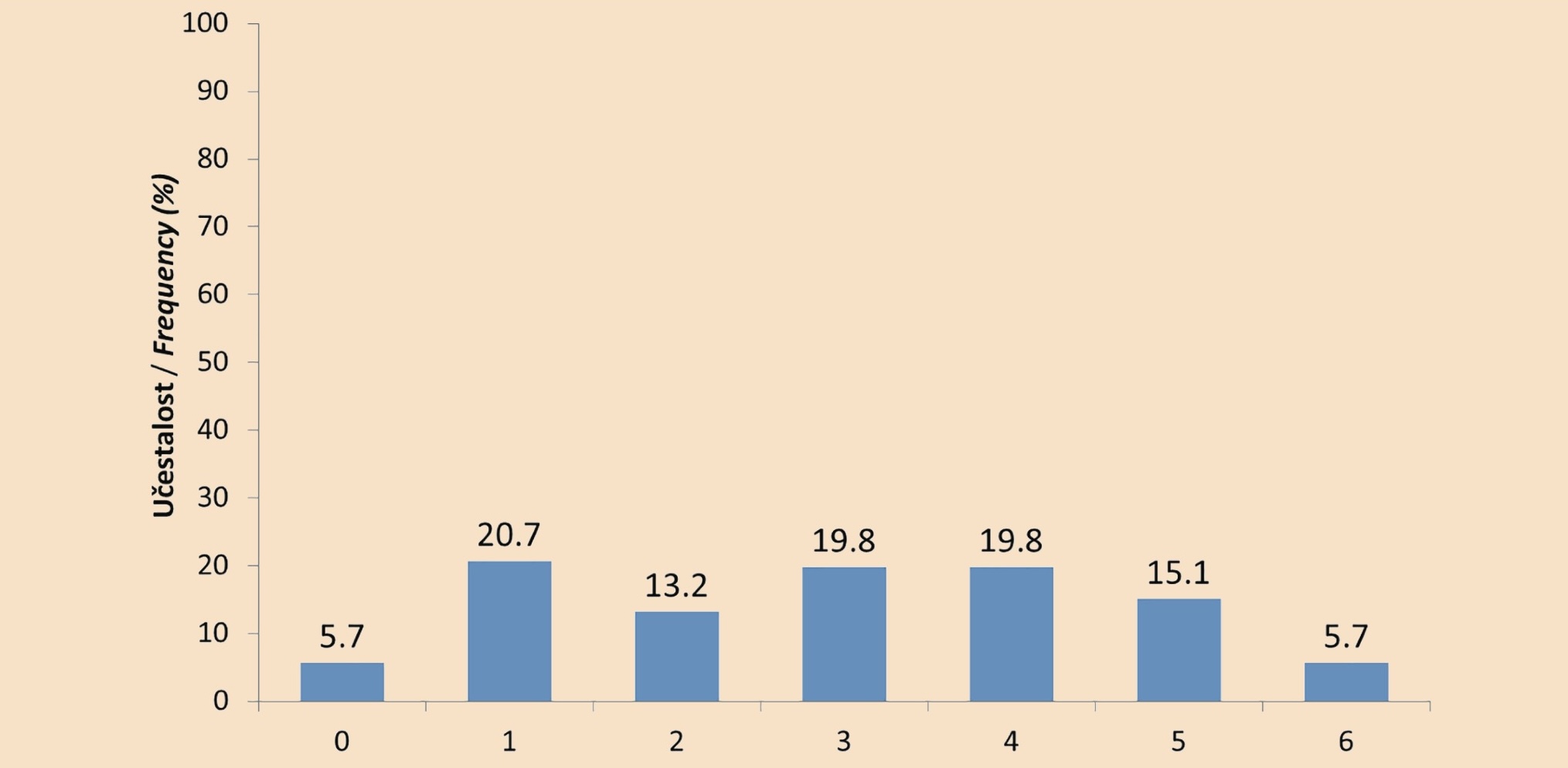
The study involved a retrospective review and analysis of data collected from 106 patients with ischemic stroke treated between February 1, 2023, and August 1, 2023, at the Specialized Hospital “Sveti Sava.” Demographic data on the sex and age of the participants were collected, along with selected parameters from transthoracic echocardiographic studies, respectively variables of left ventricular systolic function expressed through the left ventricular ejection fraction (LVEF) measured using Simpson’s method, as well as the anteroposterior diameter (AP) of the left atrium visualized in the parasternal long-axis view (PLAX). Additionally, the modified Rankin Scale scores at discharge, which serve as outcome variables and represent the most commonly used clinical scale for disability assessment after stroke, were analyzed. The categories of the modified Rankin score are presented in Table 1, with a graphical distribution illustrated in Figure 1.

Depending on the type of variables and the normality of distribution, data were described as n (%), mean ± standard deviation (mean ± SD), or median (range, min-max). Spearman’s correlation coefficient assessed the association between the modified Rankin score and other variables. Statistical hypotheses were tested at a significance level (alpha level) of 0.05. All data were processed using IBM SPSS Statistics 24 (SPSS Inc, Chicago, IL, USA).
RESULTS
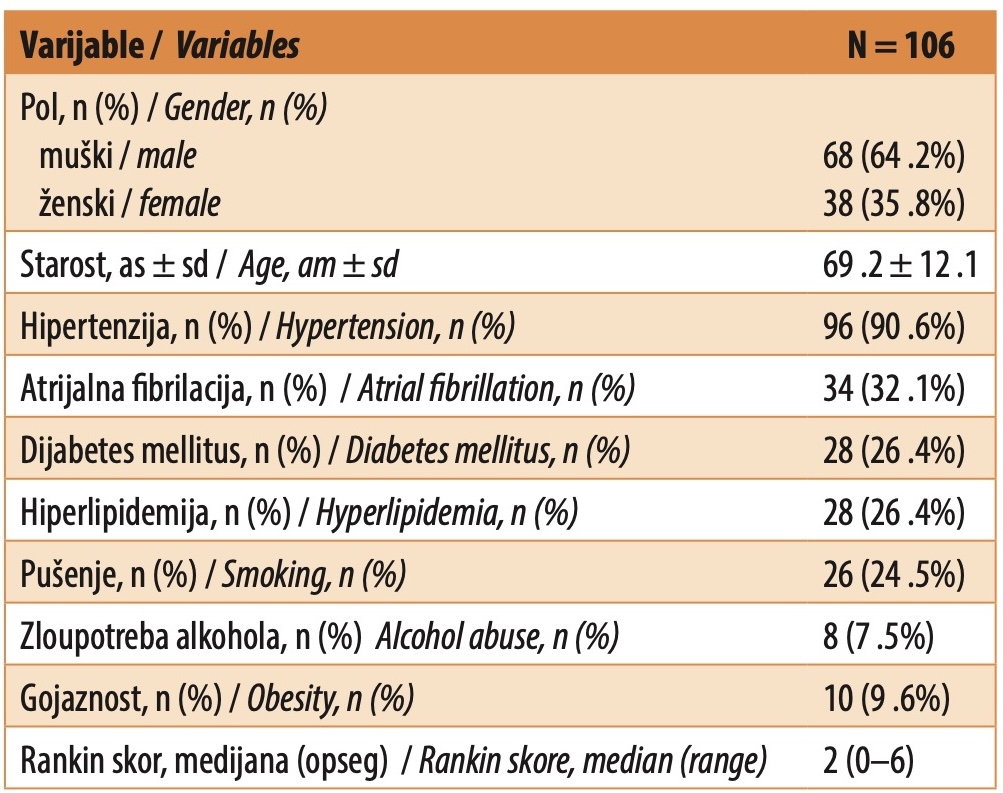
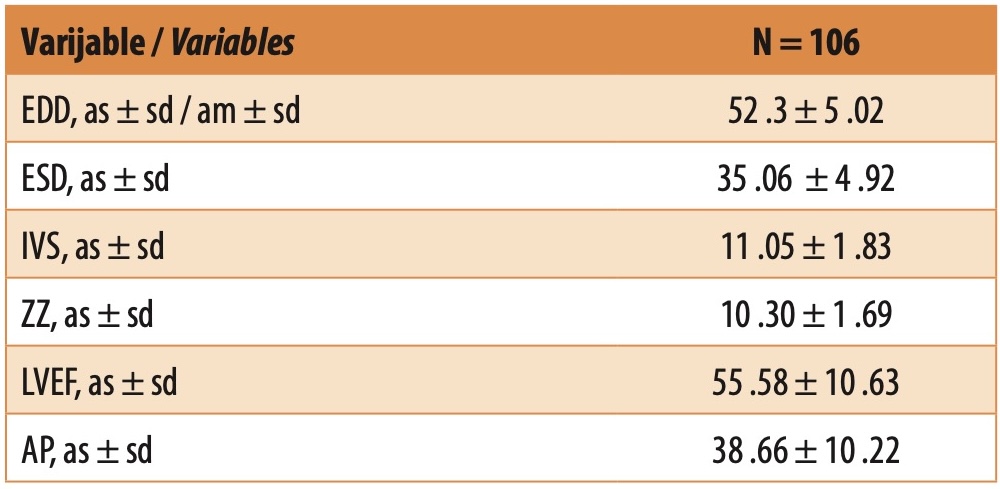
The study included 106 patients with acute ischemic stroke, with an average age of approximately 69 years (69.2 years, standard deviation 12.1 years). A little over one-third of the patients were female (68 male and 38 female participants). The youngest patient was 35 years old, and the oldest was 90 years old. Table 2 provides an overview of the sociodemographic variables of the sample, as well as the profile of risk factors among the patients included in the study. All participants underwent transthoracic echocardiographic studies, which measured left ventricular ejection fraction (LVEF) using Simpson’s method, along with the anteroposterior diameter of the left atrium from the parasternal long axis view and additional echocardiographic variables presented in Table 3.
The left ventricular ejection fraction, determined by Simpson’s method, as a universal and widely used marker of left ventricular systolic function (LVEF), was used as a predictor of disease outcome in patients with acute ischemic stroke. Testing disease outcomes in relation to left ventricular ejection fraction was conducted by analyzing the non-parametric correlation between the left ventricular ejection fraction and disease outcome, represented by the modified Rankin Scale score.
Testing, using Spearman’s correlation, found that there is a lower degree of correlation between the outcome of the disease in relation to the LVEF with a negative sign (rs = -0.31; p = 0.001; Table 4), i.e. that with a decrease in the degree of systolic ventricular function, expressed by the left ventricular ejection fraction using the Simpson method, the degree of functional disability of patients after acute ischemic stroke increases.
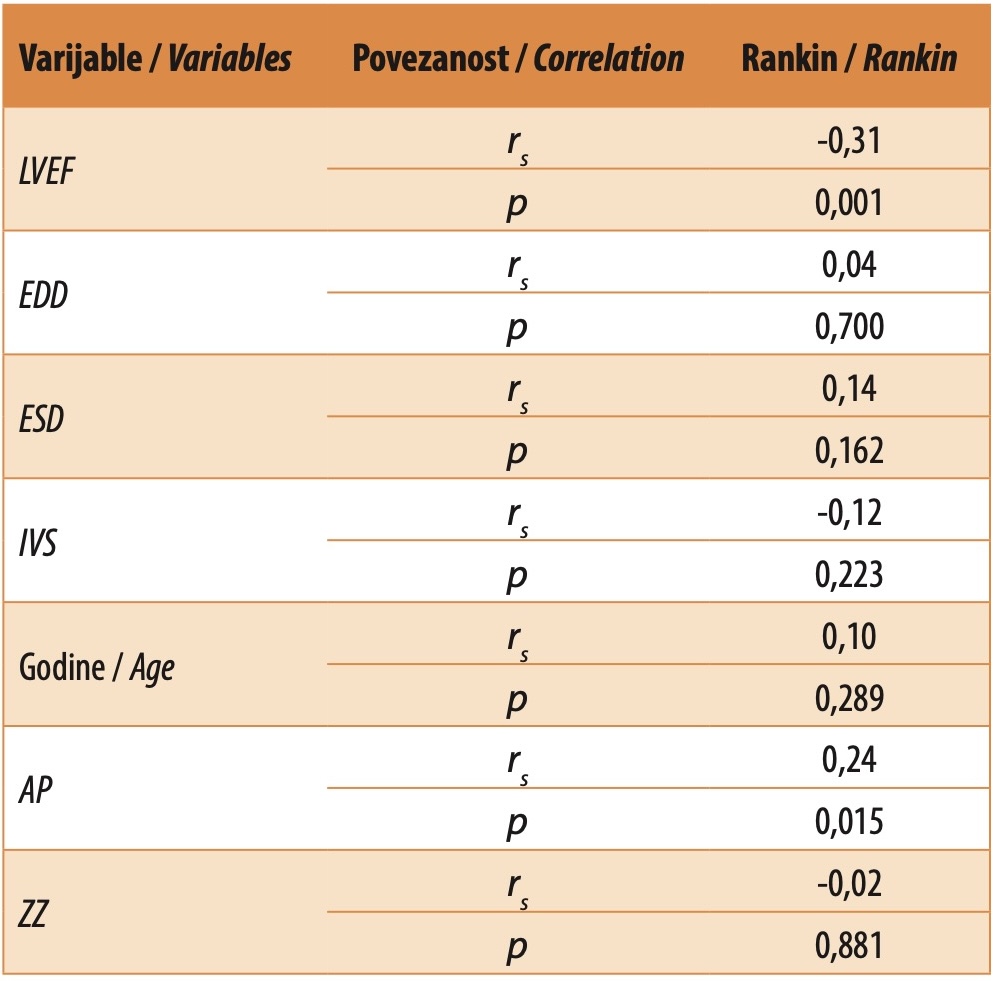
The size of the left atrium, expressed as its anteroposterior diameter in the parasternal long-axis view (PLAX), was also tested as a predictor of poorer outcomes. A larger left atrial diameter was associated with higher Rankin scores (rs = 0.24; p = 0.015; Table 4), implying that an increase in the size of the left atrium is associated with a worse functional outcome in patients with acute ischemic stroke.
When analyzed individually, other echocardiographic parameters of left ventricular morphometry did not show any significant association with functional outcomes following acute stroke.
DISCUSSION
The study included 106 patients of both genders with acute ischemic stroke, with an average age of approximately 69 years. The sample was predominantly male, accounting for just under two-thirds of the participants (64.2%).
Among the measured, tested, and analyzed echocardiographic parameters in this patient cohort, LVEF measured by Simpson’s method was identified as a predictor of poor disease progression, showing a slight negative correlation. In other words, lower LVEF is associated with a prognostically worse disease outcome. LVEF is a widely studied parameter as a predictor of mortality due to heart failure and cardiovascular death in general [4],[5],[6],[7], but it has been less frequently investigated in the context of outcomes following acute stroke.
Some studies [7] have demonstrated a correlation between ischemic stroke outcomes and very low LVEF values. Other researchers have similarly linked reduced LVEF to poorer disease outcomes [8],[9],[10]. Consistent with our findings, other studies investigating the association between LVEF and outcomes in patients undergoing thrombolytic therapy for acute ischemic stroke have reported similar results [11]. Additionally, the literature associates reduced LVEF with decreased one-year survival in patients with acute ischemic stroke or transient ischemic attack [12],[13]. Thus, our findings align with those reported by other researchers.
On the other hand, left atrial size was tested as a predictor of acute ischemic stroke outcomes due to its association with increased incidence of atrial fibrillation, a well-established risk factor for acute ischemic stroke. Since atrial fibrillation is a known risk for systemic and cardiac embolization, the hypothesis was formed that an enlarged left atrium, as a pathomorphological substrate, would be statistically significantly more common in the group of patients with worse outcomes and correlate with disease outcome; this was confirmed through testing.
Most of the literature focuses on investigating the relationship between left atrial size, particularly its enlargement, as a risk factor for acute ischemic stroke. Meta-analyses have demonstrated that an increase in left atrial size significantly raises the risk of developing acute ischemic stroke, but without analyzing its size as a predictor of disease outcomes [14],[15].
Some authors, albeit in limited numbers, have also examined the relationship between left atrial morphology and prediction of acute ischemic stroke outcomes. One study demonstrated that left atrial diameter has an independent association with all-cause mortality, including acute ischemic stroke, in both genders [16]. However, in that study, acute ischemic stroke was not considered an isolated variable but rather part of overall cardiovascular mortality. This indicates a need for further research in this area with larger sample sizes, given the prevalence of this non-communicable disease
A limitation of this study is the need to assess the impact of other comorbidities and the age of participants on the functional outcome of acute ischemic stroke. This represents a further objective for future research, which could be achieved by expanding the sample size.
CONCLUSION
The left ventricular ejection fraction determined by the Simpson method has a predictive value for the disease outcome of the monitored ultrasound parameters. Namely, there is a statistically significant relationship between the size of the LVEF between groups of patients in relation to the functional outcome of acute ischemic stroke, and that is because a decrease in the value of the ejection fraction favors a worse functional outcome of the stroke.
The size of the left atrium, expressed as the anteroposterior diameter measured in the PLAX view, also significantly correlated with the functional outcome of acute ischemic stroke. This correlation had a positive sign, meaning an increased left atrial diameter is associated with a worse functional outcome.
Stroke is almost always part of the spectrum of cardiovascular disorders that always affect the way patients are treated, which in modern conditions is individualized, but with respect to the principles of good clinical practice of treating both stroke and all accompanying comorbidities in parallel. Therefore, it is a multimorbid condition where there is an influence of pathological conditions on each other, which results in the need for the aforementioned individualization of therapy, and therefore, stroke should always be viewed as a part of the cardiovascular “puzzle.”
LIST OF ABBREVIATIONS
LVEF – Left Ventricular Ejection Fraction
AP – Anteroposterior Diameter of the Left Atrium
PLAX – Parasternal Long Axis View
EDD – End-Diastolic Diameter of the Left Ventricle
ESD – End-Systolic Diameter of the Left Ventricle
IVS – Interventricular Septum Thickness
PW – Posterior Wall Thickness of the Left Ventricle
Informations

-
Keywords:
-
Received:
-
Revised:
-
Accepted:
-
Online first:
-
DOI:
-
Cite this article:

Dejan Munjiza
Special hospital “Sveti Sava”
2 Nemanjina Street, 11000 Belgrade, Serbia
E-mail:
1. GBD 2019 Stroke Collaborators. Global, regional, and national burden of stroke and its risk factors, 1990-2019: a systematic analysis for the Global Burden of Disease Study 2019. Lancet Neurol. 2021 Oct;20(10):795-820. doi: 10.1016/ S1474-4422(21)00252-0. [CROSSREF]
2. Pu L, Wang L, Zhang R, Zhao T, Jiang Y, Han L. Projected global trends in ischemic stroke incidence, deaths and disability-adjusted life years from 2020 to 2030. Stroke. 2023 May;54(5):1330-9. doi: 10.1161/STROKEAHA.122.040073. [CROSSREF]
3. Imoisili OE, Chung A, Tong X, Hayes DK, Loustalot F. Prevalence of stroke – behavioral risk factor surveillance system, United States, 2011-2022. MMWR Morb Mortal Wkly Rep. 2024 May 23;73(20):449-55. doi: 10.15585/mmwr.mm7320a1. [CROSSREF]
4. Toma M, Ezekowitz JA, Bakal JA, O'Connor CM, Hernandez AF, Sardar MR, et al. The relationship between left ventricular ejection fraction and mortality in patients with acute heart failure: insights from the ASCEND-HF Trial. Eur J Heart Fail. 2014 Mar;16(3):334-41. doi: 10.1002/ejhf.19. [CROSSREF]
5. Solomon SD, Anavekar N, Skali H, McMurray JJ, Swedberg K, Yusuf S, et al.; Candesartan in Heart Failure Reduction in Mortality (CHARM) Investigators. Influence of ejection fraction on cardiovascular outcomes in a broad spectrum of heart failure patients. Circulation. 2005 Dec 13;112(24):3738-44. doi: 10.1161/CIRCULATIONAHA.105.561423. [CROSSREF]
6. Curtis JP, Sokol SI, Wang Y, Rathore SS, Ko DT, Jadbabaie F, et al. The association of left ventricular ejection fraction, mortality, and cause of death in stable outpatients with heart failure. J Am Coll Cardiol. 2003 Aug 20;42(4):736-42. doi: 10.1016/s0735-1097(03)00789-7. [CROSSREF]
7. Di Tullio MR, Qian M, Thompson JL, Labovitz AJ, Mann DL, Sacco RL, et al.; WARCEF Investigators. Left ventricular ejection fraction and risk of stroke and cardiac events in heart failure: Data from the Warfarin Versus Aspirin in Reduced Ejection Fraction Trial. Stroke. 2016 Aug;47(8):2031-7. doi: 10.1161/ STROKEAHA.116.013679. [CROSSREF]
8. Rahmayani F, Paryono, Setyopranoto I. The role of ejection fraction to clinical outcome of acute ischemic stroke patients. J Neurosci Rural Pract. 2018 AprJun;9(2):197-202. doi: 10.4103/jnrp.jnrp_490_17. [CROSSREF]
9. Wrigley P, Khoury J, Eckerle B, Alwell K, Moomaw CJ, Woo D, et al. Prevalence of positive troponin and echocardiogram findings and association with mortality in acute ischemic stroke. Stroke. 2017 May;48(5):1226-32. doi: 10.1161/ STROKEAHA.116.014561. [CROSSREF]
10. Ziaeian B, Xu H, Matsouaka RA, Xian Y, Khan Y, Schwamm LS, et al. US surveillance of acute ischemic stroke patient characteristics, care quality, and outcomes for 2019. Stroke. 2022 Nov;53(11):3386-93. doi: 10.1161/STROKEAHA.122.039098. [CROSSREF]
11. Chee RCH, Lin NH, Ho JSY, Leow AST, Li TYW, Lee ECY, et al. Left ventricular ejection fraction association with acute ischemic stroke outcomes in patients undergoing thrombolysis. J Cardiovasc Dev Dis. 2023 May 25;10(6):231. doi: 10.3390/jcdd10060231. [CROSSREF]
12. Wei N, Wei Y, Nie X, Liu X, Xiang X, Pan Y, et al. Effect of left ventricular ejection fraction Spectrum on 1-Year mortality in patients with acute ischemic stroke or transient ischemic attack. CNS Neurosci Ther. 2023 Nov;29(11):3518- 27. doi: 10.1111/cns.14285. [CROSSREF]
13. Milionis H, Faouzi M, Cordier M, D'Ambrogio-Remillard S, Eskandari A, Michel P. Characteristics and early and long-term outcome in patients with acute ischemic stroke and low ejection fraction. Int J Cardiol. 2013 Sep 30;168(2):1082-7. doi: 10.1016/j.ijcard.2012.11.036. [CROSSREF]
14. Xu Y, Zhao L, Zhang L, Han Y, Wang P, Yu S. Left atrial enlargement and the risk of stroke: a meta-analysis of prospective cohort studies. Front Neurol. 2020 Feb 14;11:26. doi: 10.3389/fneur.2020.00026. [CROSSREF]
15. Hamatani Y, Ogawa H, Takabayashi K, Yamashita Y, Takagi D, Esato M, et al. Left atrial enlargement is an independent predictor of stroke and systemic embolism in patients with non-valvular atrial fibrillation. Sci Rep. 2016 Aug 3;6:31042. doi: 10.1038/srep31042. [CROSSREF]
16. Bouzas-Mosquera A, Broullón FJ, Álvarez-García N, Méndez E, Peteiro J, Gándara-Sambade T, et al. Left atrial size and risk for all-cause mortality and ischemic stroke. CMAJ. 2011 Jul 12;183(10):E657-64. doi: 10.1503/cmaj.091688. [CROSSREF]
- Table 1. Modified Rankin Scale
- Figure 1. The distribution of participants across the categories of the modified Rankin Scale by relative frequencies
- Table 2. Sociodemographic Variables, Risk Factors, and Median Disease Outcome
- Table 3. Echocardiographic Parameters
- Table 4. Spearman's Coefficient Values and Probability