


Hematological toxicities of cyclin-dependent kinase 4 and 6 inhibitors in metastatic breast cancer, single institution experience
- Institute for Oncology and Radiology of Serbia, Belgrade, Serbia
ABSTRACT
Introduction: Hematologic toxicity is the most common side effect of CDK4/6 inhibitors (CDK4/6i). Due to the novelty of these drugs, additional data are needed to identify potential predisposing factors for the development of hematologic toxicities.
Aim: This study aims to investigate potential predisposing factors for the development of hematological toxicity during the administration of CDK4/6i in the treatment of metastatic breast cancer.
Methods: This retrospective descriptive study investigated the application of CDK4/6i in patients with metastatic breast cancer treated at the Breast Department of IORS from 1.1.2021 to 1.6.2024.
Results: 128 patients were included in the study; 43% were treated with palbociclib and 57% with ribociclib. The median age was 60 years. Median follow-up was 12 months (range 2-23). Neutropenia was observed in 82.1% of patients and grade 3/4 in 43%. Dose reduction due to repeated grade 3/4 neutropenia was required in 21.1% of subjects. Grade 3/4 anemia and thrombocytopenia were observed in 0.8% and 1.6% of patients. Discontinuation of therapy due to hematological toxicities was necessary in 1.5% of patients. There was no statistically significant difference between the two drugs regarding the incidence of hematological toxicity (p = 0.443). Previous use of chemotherapy in the metastatic phase of the disease was not significantly associated with the frequency of hematological toxicity (p = 0.565). Palliative radiotherapy of bone lesions showed a statistically significant association with the need to reduce the dose of CDK4/6i (p =0.001, r = 0.283). Median progression-free survival (PFS) was not reached, but there was no trend to suggest that CDK4/6i dose reduction affected PFS (p = 0.719)
Conclusion: Palliative radiotherapy of bone lesions is associated with more frequent dose reduction of CDK4/6i, but dose reduction of these drugs did not affect the length of survival.
INTRODUCTION
Cyclin-dependent kinase 4 and 6 (CDK4/6) inhibitors represent an optimal therapeutic option in the first or second line of treatment for metastatic hormone receptor-positive (HR+), human epidermal growth factor receptor 2 (HER2)-negative breast cancer. These drugs are administered in combination with hormonal therapy, in the first line with aromatase inhibitors and the second line with fulvestrant [1]. To date, three CDK4/6 inhibitors have received approval from the U.S. Food and Drug Administration (FDA) and the European Medicines Agency (EMA) for use in this indication: abemaciclib, palbociclib, and ribociclib. Additionally, abemaciclib has been approved by the FDA and EMA for use in the adjuvant treatment of early-stage breast cancer with a high risk of relapse, while ribociclib has demonstrated significant relapse-free survival benefits in the adjuvant setting for patients in stage II and III HR+/HER2- breast cancer [1],[2].
The primary mechanism of action of these drugs is based on the inhibition of CDK4/6, which leads to the halting of retinoblastoma protein (Rb) phosphorylation in the CDK4/6-cyclin D1-Rb-p16/ink4a signaling pathway, preventing the transition of cells from the G1 to the S phase of the cell cycle [3]. Although all three drugs inhibit both CDK4 and CDK6, studies have shown that palbociclib and ribociclib inhibit CDK6 to a greater extent, while abemaciclib primarily targets CDK4, resulting in differences in the toxicity profiles of these drugs [4]. Due to the important role of CDK6 in hematopoietic cell differentiation, neutropenia (present in up to 80% of patients) is by far the most common adverse effect of palbociclib and ribociclib [5],[6]. However, this neutropenia is easily and quickly reversible, resulting from halted hematopoietic cell differentiation without DNA damage, unlike cytotoxic neutropenia caused by chemotherapy. As a result, the therapeutic cycle of ribociclib and palbociclib includes a 7-day drug break, and grade 4 neutropenia and recurrent grade 3 neutropenia are the most common reasons for the dose reduction of these drugs [7],[8]. This is not the case with abemaciclib, which is administered continuously, with a neutropenia rate of around 40%, while the most common adverse effect is diarrhea, caused by CDK9 inhibition, which is not seen with palbociclib and ribociclib [9]. Anemia and thrombocytopenia are significantly less frequent with the use of CDK4/6 inhibitors [7],[8].
As of the time of writing this paper, palbociclib and ribociclib are available in the Republic of Serbia for the treatment of metastatic HR+/HER2- breast cancer, while abemaciclib is used as adjuvant therapy. This study aims to present the experience of our center with palbociclib and ribociclib from the perspective of hematological toxicities, as well as to examine potential risk factors that could predict the occurrence of increased hematological adverse effects and the need for dose reduction of these drugs.
MATERIALS AND METHODS
We conducted a retrospective descriptive study that included female patients treated for metastatic HR+/ HER2- breast cancer with palbociclib or ribociclib from January 1, 2021, to June 1, 2024, at the Breast Department of the Institute for Oncology and Radiology of Serbia (IORS). The patients’ medical histories were reviewed to obtain data on age, disease stage, histology, relapse characteristics, adverse events, previous specific oncological treatments, and patient follow-up. Data on chemotherapy use in the metastatic phase of the disease before CDK4/6 inhibitor administration, as well as the use of palliative radiotherapy (RT) for bone lesions of hematopoietically active bones (spine, pelvis, ribs, scapula, shoulder, or femur) before or during CDK4/6 inhibitor therapy, were also collected. The Common Terminology Criteria for Adverse Events (CTCAEv.5.0) was used to grade adverse events, while the Response Evaluation Criteria in Solid Tumors (RECIST) version 1.1 was applied to evaluate the disease. The general condition of the patients included in the study was assessed based on the Eastern Cooperative Oncology Group Performance Status (ECOG PS). All patients provided written informed consent before the study began.
The treatment cycle for palbociclib or ribociclib lasted 28 days, with the drug administered for 21 days (palbociclib at a dose of 125 mg daily, ribociclib at a dose of 600 mg daily), followed by a 7-day break. In the case of adverse events requiring dose reduction, palbociclib was administered at a dose of 100 mg daily (first dose reduction level) or 75 mg daily (second dose reduction level), while ribociclib was administered at doses of 400 mg daily (first dose reduction level) or 200 mg daily (second dose reduction level).
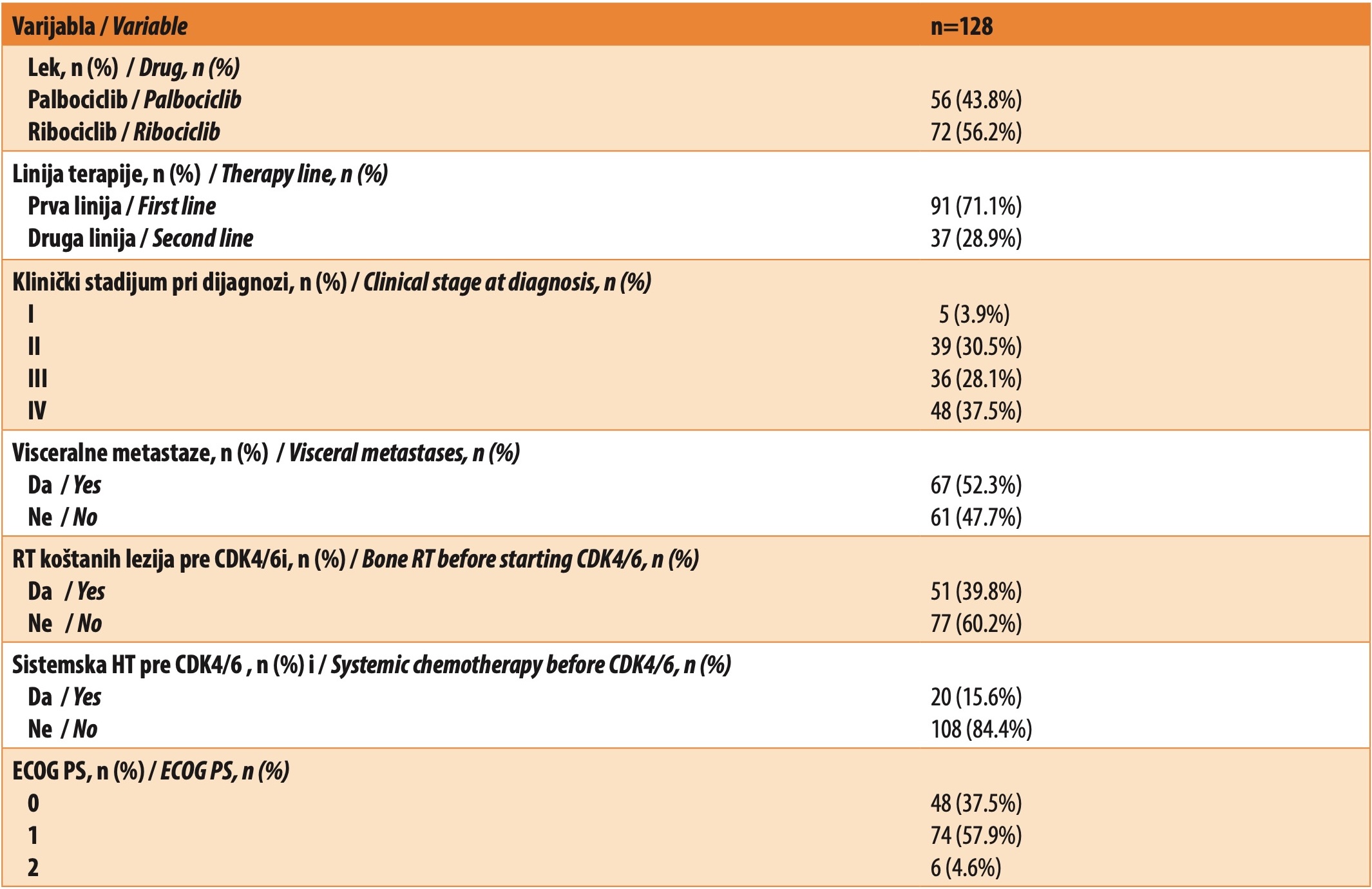
A total of 128 patients were included in this study. Most participants (95.4%) were in good general condition (ECOG PS 0 or 1) before starting CDK4/6 inhibitors. Palbociclib was used by 56 (43.8%) patients, while ribociclib was used by 72 (56.2%) patients. The population’s median age was 60 years (range 30-83). The median age in the palbociclib subgroup was 66 years (range 42-83), while for the ribociclib subgroup, it was 57 years (range 30-77). In most cases, CDK4/6 inhibitors were administered as first-line therapy with aromatase inhibitors in 91 (71.1%) patients, with 37 (66%) receiving palbociclib and 54 (75%) receiving ribociclib. Slightly over a third of the patients, 48 (37.5%), were diagnosed in the fourth clinical stage, and visceral metastases were present in 67 (52.3%) participants, 28 (50%) in the palbociclib group, and 39 (54.2%) in the ribociclib group. In 41 (32%) patients, secondary deposits were present only in the bones (palbociclib 32.1%, ribociclib 31.9%). Chemotherapy was administered in the metastatic phase of the disease before CDK4/6 inhibitors in 20 (15.6%) patients, and radiotherapy for bone lesions was performed in 51 (37.5%) patients.
Statistical Analysis
The Statistical Package for Social Sciences (SPSS) version 26 was used for statistical analysis. Progression-free survival (PFS) was defined as the time from the start of CDK4/6 inhibitor therapy to disease progression or death from any cause. Correlations between nominal variables were assessed using Pearson’s correlation coefficient and Fisher’s exact test, while correlations between ordinal variables were analyzed using the Mann-Whitney U test. Survival data were obtained using the Kaplan-Meier method. The log-rank test was used to assess the correlation between survival parameters. P-values less than 0.05 were considered statistically significant.”
RESULTS
Using the Mann-Whitney U test for independent samples, it was concluded that there was a statistically significant difference in age between the palbociclib and ribociclib subgroups (p < 0.001). There were no other statistically significant differences in demographic characteristics between the two subgroups of patients.
After a median follow-up of 12 months (range 2–34), 54 cases of disease progression were recorded (42.2% of patients). At the time of writing this paper, the median PFS had not yet been reached (estimated mean: 18.029 months [CI 95% 15.453-20.604]).
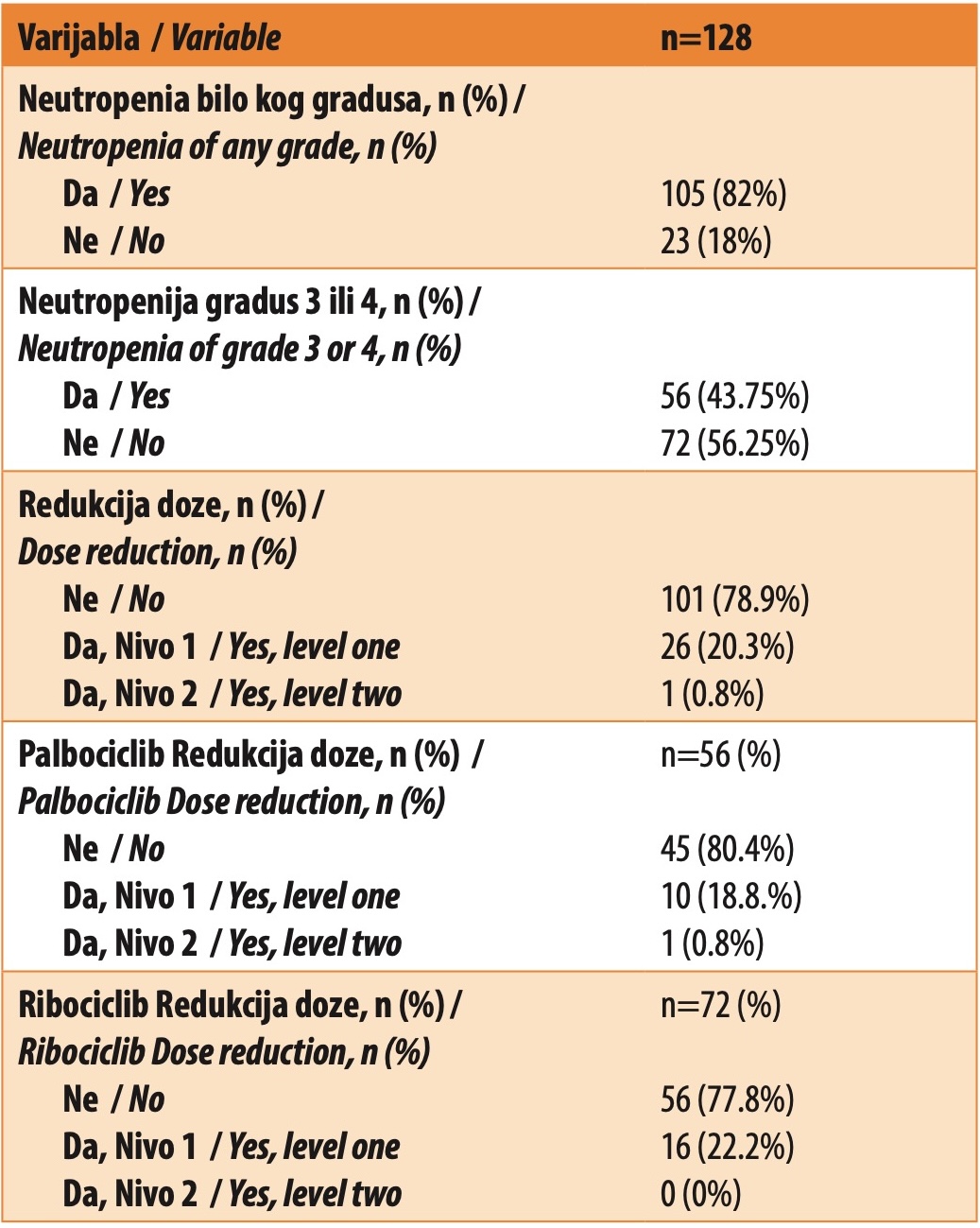
Hematological toxicities were very common, occurring in 82.8% of patients. Neutropenia was the predominant toxicity, occurring in any grade during CDK4/6 inhibitor therapy in 105 (82%) patients. Grade 3 neutropenia was present in 51 (39.8%) cases, while grade 4 neutropenia was significantly rarer, occurring in 5 (3.9%) patients. In the palbociclib subgroup, 47 (83.9%) patients developed neutropenia, of whom 24 (42.3%) had grade 3 or 4 neutropenia. Similar results were observed in the ribociclib subgroup, where neutropenia occurred in 58 (80.6%) patients, and grade 3 or 4 neutropenia occurred in 32 (44.5%). There was no statistically significant difference between palbociclib and ribociclib in the incidence of neutropenia (p =0.857).
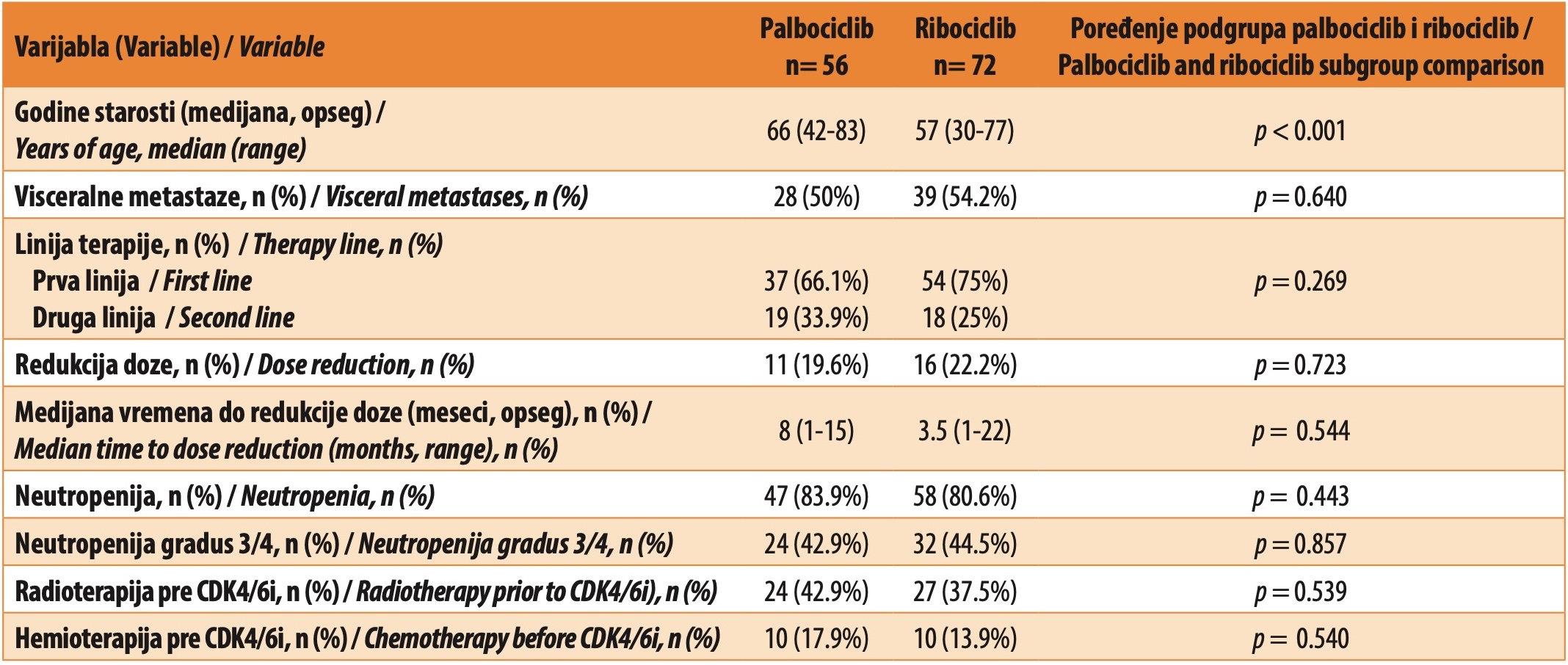
No cases of febrile neutropenia were recorded during CDK4/6 inhibitor therapy, nor was granulocyte colony-stimulating factor (GCSF) used as a treatment for neutropenia. Grade 4 neutropenia or recurrent grade 3 neutropenia, which required delays in the therapeutic cycle and subsequent dose reductions, occurred in 27 (21.1%) patients. In the palbociclib subgroup, 11 (19.6%) patients required dose reduction, while in the ribociclib subgroup, this number was 16 (22.2%). There was no statistically significant difference between the two drugs regarding the need for dose reduction (p = 0.723). The median time to dose reduction was 5 months (range 1–22).
Thrombocytopenia was significantly less common, occurring in 10 (7.8%) patients, with one patient (0.8%) in each subgroup experiencing grade 3 or 4 thrombocytopenia. High-grade anemia was recorded in only one case during ribociclib therapy (0.8%). Blood transfusions were needed in two patients: one due to grade 4 thrombocytopenia and one due to grade 4 anemia. Complete discontinuation of CDK4/6 inhibitors due to hematological toxicity was necessary in only two (1.5%) cases: one due to grade 4 thrombocytopenia (ribociclib) and one due to recurrent grade 4 neutropenia despite dose reduction (palbociclib).
The prior use of chemotherapy in the metastatic phase of the disease and palliative radiation therapy for bone lesions were examined as potential risk factors for developing hematological toxicity during CDK4/6 inhibitor therapy. Chemotherapy use was not significantly associated with the incidence of hematological adverse events (p = 0.663) or with the need for dose reduction (p = 0.467). Palliative radiation therapy for bone lesions was not significantly associated with the occurrence of neutropenia (p = 0.778), but it was significantly correlated with the need for CDK4/6 inhibitor dose reduction (p = 0.001, r = 0.283). This correlation persisted in the subgroup analysis: palbociclib (p = 0.029, r = 0.298) and ribociclib (p = 0.019, r = 0.276).
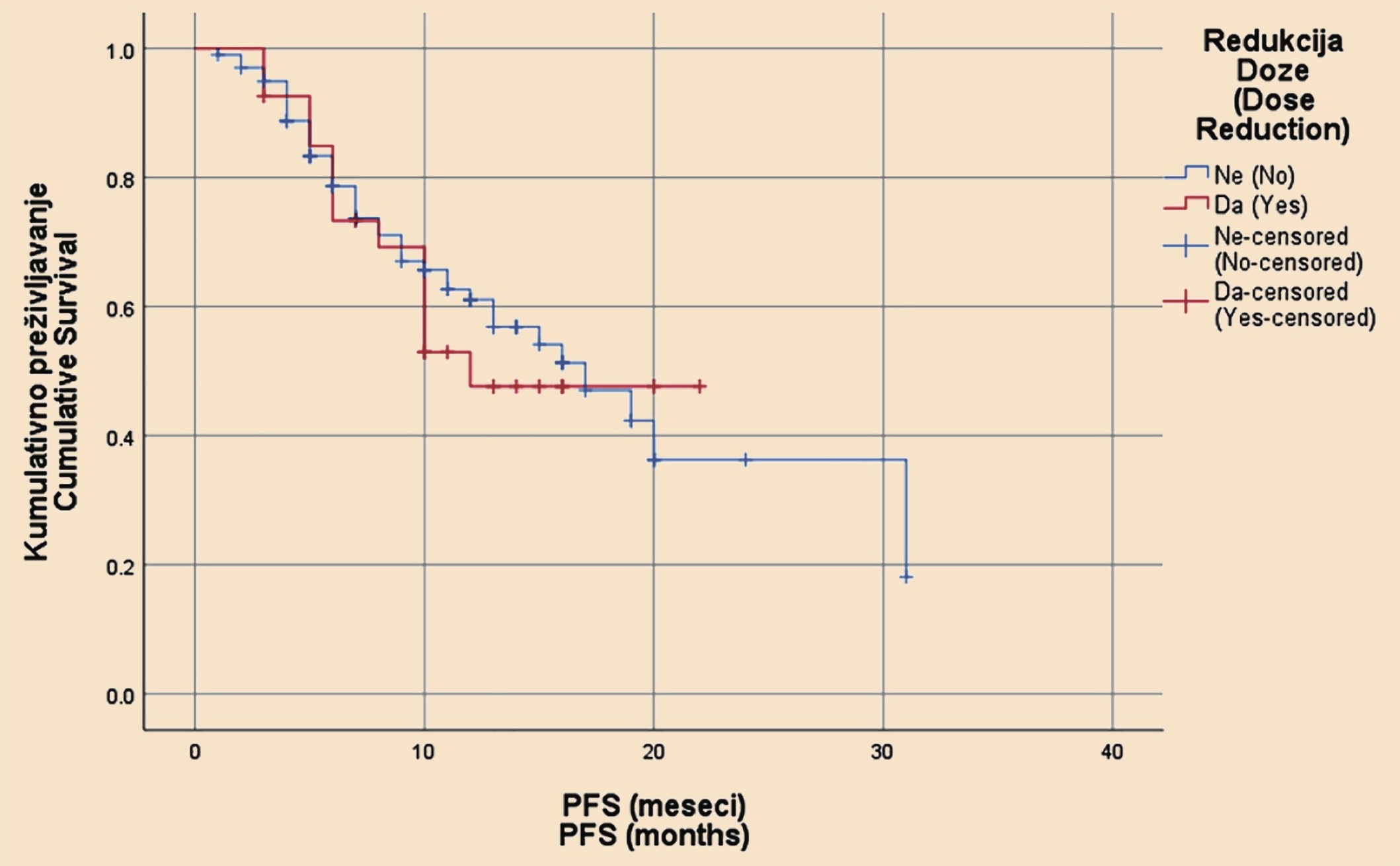
Although the median PFS has not yet been reached, considering that the median time to dose reduction was shorter than the median follow-up time, a survival analysis was conducted to investigate the potential effect of dose reduction of CDK4/6 inhibitors due to hematological toxicity on PFS. After a median follow-up of 12 months, no statistically significant difference in PFS was observed in patients on a reduced dose of CDK4/6 inhibitors due to hematological toxicity (p = 0.179).
High-grade non-hematological toxicities were significantly rarer than hematological ones. The development of hepatic toxicity in the form of grade 3 or 4 transaminase elevation was recorded in 3.9% of patients, while a reduction in creatinine clearance of grade 3 or 4 was noted in 4.6% of patients. QTc interval prolongation was observed in 2 (1.5%) patients receiving ribociclib. There was also one case of an allergic reaction to palbociclib.
DISCUSSION
The use of palbociclib and ribociclib in HR+/HER2- metastatic breast cancer has been approved based on multiple clinical studies that have demonstrated both clinically and statistically significant benefits in progression-free survival (PFS) and overall survival (OS) compared to endocrine therapy without CDK4/6 inhibitors [7],[8],[9],[10]. However, patients in clinical trials were carefully selected based on age, general condition, comorbidities, menopausal status, prior specific oncological treatment, and many other factors, which do not always reflect the characteristics of the general population. In our study, patients treated with ribociclib were statistically significantly younger than those treated with palbociclib. A potential explanation for this difference could lie in the fact that during ribociclib treatment, there was a significant risk of developing cardiotoxicity, such as QTc interval prolongation, as well as interactions with antiarrhythmic drugs and other medications that affect the QTc interval, which are often used in older populations [4],[6],[11].
According to the official recommendations of the European Society for Medical Oncology (ESMO), CDK4/6 inhibitors are most commonly used as first-line treatment in the metastatic stage of the disease [1]. However, a distinct entity in the treatment of metastatic breast cancer is the visceral crisis, which is defined as the presence of severe progressive impairment of vital organ function due to malignant disease [12]. In cases of visceral crisis, official recommendations advise chemotherapy as the first-line treatment of choice. A significant percentage of patients in our study who received chemotherapy before CDK4/6 inhibitors did so not because of a prior visceral crisis but because chemotherapy was administered before the registration of CDK4/6 inhibitors in the Republic of Serbia.
Hematological toxicities caused by myelosuppression are the most common adverse effects of palbociclib and ribociclib. The percentage of patients who develop neutropenia during the use of these drugs does not differ significantly between clinical studies (74-82%) and real-world clinical data (68.4%-89%) [11],[13],[14],[15]. In this regard, our population did not significantly differ from previous studies. Additionally, we did not observe a significant difference in the frequency of grade 3 or 4 neutropenia in our study compared to previous research [16]. Although randomized clinical trials directly comparing palbociclib and ribociclib have not yet been conducted, literature data do not indicate a difference between these two drugs regarding hematological toxicities, which our study confirms [11],[13]. Studies have given special attention to the development of febrile neutropenia during CDK4/6 inhibitor treatment. Although high-grade neutropenia occurs in a large percentage of patients, severe infections and febrile neutropenia are extremely rare, and in some studies, as well as in ours, they were not observed [11],[13],[17],[18]. Since neutropenia caused by CDK4/6 inhibitors is due to the inhibition of hematopoietic cell differentiation, the question arises about the usefulness of granulocyte colony-stimulating factor (GCSF) during CDK4/6 inhibitor treatment. Although GCSF was used in clinical trials that initially investigated these drugs, many authors today believe that given the rapid recovery of neutropenia after a pause in treatment, the use of GCSF is not justified [6],[19]. High-grade anemia and thrombocytopenia are rare adverse effects of these drugs, occurring in about 1% of patients in clinical studies [11],[13]. These results are similar to ours, and it is also important to note that in our study, only one patient required a blood derivative transfusion during CDK4/6 inhibitor treatment, and after its administration, there was a rapid recovery from anemia and thrombocytopenia.
Literature data show that many palbociclib and ribociclib therapy patients require dose reductions during treatment. The most common reasons for dose reduction are recurrent grade 3 neutropenia that requires treatment delays or grade 4 neutropenia. Although neutropenia can occur at any time during CDK4/6 inhibitor treatment, dose reductions most often happen within the first 6 months of therapy [7],[8],[9],[10],[11],[13],[14],[15],[16],[17]. Our study is consistent with these data regarding the frequency of dose reductions, and since the median time to dose reduction in our population was 5 months, the trend of dose reductions within the first 6 months of therapy is confirmed. Multiple studies have investigated the potential effect of dose reduction on survival during CDK4/6 inhibitor treatment. Until now, no data show that justified dose reductions of palbociclib or ribociclib lead to worsened patient survival outcomes [7],[8],[9],[10],[20]. Our results align with previous observations, as although the median PFS in our study has not yet been reached, no statistically significant difference in survival was observed in the subgroup of patients who underwent CDK4/6 inhibitor dose reduction (Log-rank, p = 0.179).
Palliative radiotherapy (RT) to hematopoietic bones was examined as a potential risk factor for the development of hematological toxicity in our study. The antineoplastic effect of RT stems from its cytotoxic effect, based on direct and indirect damage to tumor DNA during the G2-M phase of the cell cycle [21]. In contrast, the effect of CDK4/6 inhibitors is cytostatic, resulting from the inhibition of cell cycle transition from the G1 to the S phase. Both mechanisms of action have the undesired effect of causing neutropenia. Radiotherapy can be administered sequentially with CDK4/6 inhibitor therapy or during treatment [21],[22]. Most previous studies included both groups of patients in their research, whereas our study only examined the use of palliative bone RT before initiating CDK4/6 inhibitors. In previous studies, palliative RT of bone lesions did not show a statistically significant association with the incidence of neutropenia or high-grade neutropenia, which our results also confirmed [21],[22]. However, our study found a statistically significant association between palliative RT of hematopoietic bones and an increased incidence of CDK4/6 inhibitor dose reductions due to recurrent grade 3 or 4 hematological toxicities (p = 0.001, r = 0.283). This study is one of the first to present evidence of an association between RT and the need for CDK4/6 inhibitor dose reduction [21]. Due to differences in RT methodologies, the timing of RT in relation to CDK4/6 inhibitor therapy, and the small number of patients, comparisons between studies investigating the impact of RT on hematological toxicities during palbociclib and ribociclib treatment are not feasible. Additional prospective, randomized studies with larger patient cohorts, more uniform RT approaches, and longer follow-up periods are needed to draw definitive conclusions about the combined effects of RT and CDK4/6 inhibitors on hematological toxicity.
Our study’s limitations arise from its retrospective design, the limited number of patients, and the relatively shorter follow-up period. Additionally, data on the exact dose of RT administered were not collected. Nevertheless, our results successfully reflect real-world clinical practice in the use of CDK4/6 inhibitors and thus provide important conclusions about the tolerability and toxicities of these drugs.
CONCLUSION
This study identified a statistically significant association between palliative RT of bone lesions and a more frequent need for CDK4/6 inhibitor dose reduction. Although the need to reduce the dose of CDK4/6 inhibitors due to hematological toxicities is relatively common, there is no evidence that dose reduction affects the length of survival.
Informations

-
Keywords:
-
Received:
-
Revised:
-
Accepted:
-
Online first:
-
DOI:
-
Cite this article:

Mila Purić
Institute for Oncology and Radiology of Serbia
14 Pasterova Street, 11000 Belgrade, Serbia
E-mail:
1. Gennari A, André F, Barrios CH, Cortés J, de Azambuja E, DeMichele A, et al. ESMO Clinical Practice Guideline for the diagnosis, staging and treatment of patients with metastatic breast cancer. Ann Oncol. 2021 Dec;32(12):1475-95. doi: 10.1016/j.annonc.2021.09.019. [CROSSREF]
2. Clinical practice guidelines in oncology, Breast Cancer [Internet]. Version 4.2024. Plymouth Meeting (PA): National Comprehensive Cancer Network (US); 2024 July [cited 2024 July 30]. Available from: https://www.nccn.org/guidelines/guidelines-detail?category=1&id=1419 [HTTP]
3. Gelbert LM, Cai S, Lin X, Sanchez-Martinez C, Del Prado M, Lallena MJ, et al. Preclinical characterization of the CDK4/6 inhibitor LY2835219: in-vivo cell cycle-dependent/independent anti-tumor activities alone/in combination with gemcitabine. Invest New Drugs. 2014 Oct;32(5):825-37. doi: 10.1007/ s10637-014-0120-7. [CROSSREF]
4. Wekking D, Lambertini M, Dessì M, Denaro N, Bardanzellu F, Garrone O, et al. CDK4/6 inhibitors in the treatment of metastatic breast cancer: Focus on toxicity and safety. Semin Oncol. 2023 Dec;50(6):131-9. doi: 10.1053/j.seminoncol.2024.01.002. [CROSSREF]
5. Laurenti E, Frelin C, Xie S, Ferrari R, Dunant Cyrille F, Zandi S, et al. CDK6 levels regulate quiescence exit in human hematopoietic stem cells. Cell Stem Cell. 2015 Mar;16(3):302-13. doi: 10.1016/j.stem.2015.01.017. [CROSSREF]
6. Thill M, Schmidt M. Management of adverse events during cyclin-dependent kinase 4/6 (CDK4/6) inhibitor-based treatment in breast cancer. Ther Adv Med Oncol. 2018 Sep 3;10:1758835918793326. doi: 10.1177/1758835918793326. [CROSSREF]
7. Hortobagyi GN, Stemmer SM, Burris HA, Yap YS, Sonke GS, Paluch-Shimon S, et al. Ribociclib as first-line therapy for hr-positive, advanced breast cancer. N Engl J Med. 2016 Nov 3;375(18):1738-48. doi: 10.1056/NEJMoa1609709. [CROSSREF]
8. Finn RS, Martin M, Rugo HS, Jones S, Im SA, Gelmon K, et al. Palbociclib and letrozole in advanced breast cancer. New England Journal of Medicine. N Engl J Med. 2016 Nov 17;375(20):1925-36. doi: 10.1056/NEJMoa1607303. [CROSSREF]
9. Slamon DJ, Neven P, Chia S, Fasching PA, De Laurentiis M, Im SA, et al. Phase III randomized study of ribociclib and fulvestrant in hormone receptor-positive, human epidermal growth factor receptor 2-negative advanced breast cancer: MONALEESA-3. J Clin Oncol. 2018 Aug 20;36(24):2465-72. doi: 10.1200/JCO.2018.78.9909. [CROSSREF]
10. Iwata H, Im SA, Masuda N, Im YH, Inoue K, Rai Y, et al. PALOMA-3: phase iii trial of fulvestrant with or without palbociclib in premenopausal and postmenopausal women with hormone receptor-positive, human epidermal growth factor receptor 2-negative metastatic breast cancer that progressed on prior endocrine therapy – safety and efficacy in Asian patients. J Glob Oncol. 2017 Apr 11;3(4):289-303. doi: 10.1200/JGO.2016.008318. [CROSSREF]
11. Burris HA, Chan A, Bardia A, Thaddeus Beck J, Sohn J, Neven P, et al. Safety and impact of dose reductions on efficacy in the randomised MONALEESA-2, -3 and -7 trials in hormone receptor-positive, HER2-negative advanced breast cancer. Br J Cancer. 2021 Aug;125(5):679-86. doi: 10.1038/s41416-021- 01415-9. [CROSSREF]
12. Cardoso F, Paluch-Shimon S, Schumacher-Wulf E, Matos L, Gelmon K, Aapro MS, et al. 6th and 7th International Consensus Guidelines for the management of advanced breast cancer (ABC Guidelines 6 and 7). Breast. 2024 Aug;76:103756. doi: 10.1016/j.breast.2024.103756. [CROSSREF]
13. Diéras V, Rugo HS, Schnell P, Gelmon K, Cristofanilli M, Loi S, et al. Longterm pooled safety analysis of palbociclib in combination with endocrine therapy for HR+/HER2- advanced breast cancer. J Natl Cancer Inst. 2019 Apr 1;111(4):419-30. doi: 10.1093/jnci/djy109. [CROSSREF]
14. Suzuki DA, Morelle AM, de Brito ML, Paes FR, Mattar A, Leal JHS, et al. Real-world evidence of ribociclib plus aromatase inhibitors as first-line treatment in advanced breast cancer: The BrasiLEEira Study. JCO Glob Oncol. 2024 Apr;10:e2300484. doi: 10.1200/GO.23.00484. [CROSSREF]
15. Sampedro-Gimeno T, Pampín-Sánchez R, Barbazán-Vázquez FJ, Reguero-Cuervo V, Galeazzi-Martínez V, Pelaez-Fernández I, et al. Observational real world data with palbociclib associated to hormone therapy for advanced breast carcinoma. Farm Hosp. 2021 Nov-Dec;45(6):329-34. doi: 10.7399/ fh.11695.
16. Palmieri C, Musson A, Harper-Wynne C, Wheatley D, Bertelli G, Macpherson IR, et al. A real-world study of the first use of palbociclib for the treatment of advanced breast cancer within the UK National Health Service as part of the novel Ibrance® Patient Program. Br J Cancer. 2023 Sep;129(5):852-60. doi: 10.1038/s41416-023-02352-5. [CROSSREF]
17. Baltussen JC, Mooijaart SP, Vulink AJE, Houtsma D, Van der Deure WM, Westerman EM, et al. Tolerability and effectiveness of palbociclib in older women with metastatic breast cancer. Breast Cancer Res Treat. 2024 Jul;206(2):337-46. doi: 10.1007/s10549-024-07312-y. [CROSSREF]
18. Fountzilas E, Koliou GA, Vozikis A, Rapti V, Nikolakopoulos A, Boutis A, et al. Real-world clinical outcome and toxicity data and economic aspects in patients with advanced breast cancer treated with cyclin-dependent kinase 4/6 (CDK4/6) inhibitors combined with endocrine therapy: the experience of the Hellenic Cooperative Oncology Group. ESMO Open 2020 Aug;5(4):e000774. doi: 10.1136/esmoopen-2020-000774. [CROSSREF]
19. Ettl J. Management of adverse events due to cyclin-dependent kinase 4/6 inhibitors. Breast Care (Basel). 2019 Apr;14(2):86-92. doi: 10.1159/000499534. [CROSSREF]
20. Musicco F, Lasala R, Santoleri F, Costantini A, Abrate P, Carretta MT, et al. A multicentre study with real-world data of the use of palbociclib in the treatment of breast cancer: Treatment duration correlates with dose reductions. J Oncol Pharm Pract. 2023 Dec;29(8):1806-15. doi: 10.1177/10781552221117135. [CROSSREF]
21. Becherini C, Visani L, Caini S, Bhattacharya IS, Kirby AM, Nader Marta G,et al. Safety profile of cyclin-dependent kinase (CDK) 4/6 inhibitors with concurrent radiation therapy: a systematic review and meta-analysis. Cancer Treat Rev. 2023 Sep;119:102586. doi: 10.1016/j.ctrv.2023.102586. [CROSSREF]
22. Kubeczko M, Gabryś D, Gawkowska M, Polakiewicz-Gilowska A, Cortez AJ, Krzywon A, et al. Safety and feasibility of radiation therapy combined with CDK4/6 inhibitors in the management of advanced breast cancer. Cancers (Basel). 2023 Jan 22;15(3):690. doi: 10.3390/cancers15030690. [CROSSREF]
- Table 1. Demographic data on the population
- Table 2. Analysis of palbociclib and ribociclib subgroup
- Table 3. Hematological toxicities and dose reductions of therapy
- Picture 1. Kaplan-Meier survival curve for patients with and without dose reduction of CDK4/6i Legend: PFS- Progression Free Survival, CDK4/6i - Cyclin Dependent Kinase 4 and 6 inhibitors