


Anemia and heart failure
- University Hospital Medical Center Zemun, Clinic for Internal Medicine, Department of Hematology, Belgrade, Serbia
- University of Belgrade, Faculty of Medicine, Belgrade, Serbia
- University Hospital Medical Center Bežanijska kosa, Clinic for Internal Medicine. Department of Hematology, Belgrade, Serbia
ABSTRACT
The presence of anemia in patients with heart failure is a significant independent adverse prognostic factor. The etiology of anemia is multifactorial and the nature of heart failure itself, advanced age, and frequent comorbidities contribute to its development. Notably, absolute or functional iron deficiency, even in the absence of anemia, significantly diminishes the quality of life, increases hospitalization frequency, and raises mortality rates in patients with heart failure. The intricate etiology and pathophysiology of anemia present a challenge for the accurate interpretation of laboratory parameters of iron metabolism and necessitate a tailored therapeutic approach.
INTRODUCTION
Anemia remains a major global health problem, although a significant downward trend has been observed in recent years, thanks to preventive measures. Based on the analysis conducted in 2019, in 204 countries worldwide, it has been estimated that 1.8 billion people have anemia, with an age-adjusted prevalence of 23% [1]. The latest epidemiological data show that around 64 million people in the world suffer from heart failure (HF). While the incidence of HF in developed countries is stabilizing or slightly declining, its prevalence is increasing due to the improved treatment of ischemic heart disease, which is the main cause of HF, as well as due to new therapeutic approaches to HF treatment and the overall aging of the global population [2].
According to the current World Health Organization (WHO) criteria, anemia in adults is defined as a drop in hemoglobin (Hb) levels below 120 g/l in women, i.e., below 130 g/l in men, and, depending on the degree of Hb reduction, it is graded in the following manner: mild (Hb ≥ 110 g/l), moderate (80 g/l – 109 g/l), and severe (Hb < 80 g/l) [3]. Heart failure (HF) is a syndrome resulting from structural and/or functional heart impairments leading to an increase in intracardiac pressures and/or a decrease in cardiac output at rest or during exertion. HF can be classified into the following three groups: 1) HF with reduced left ventricular ejection fraction (HFrEF), (LVEF ≤ 40%); 2) HF with moderately reduced LVEF (HFmrEF), (LVEF = 41% – 49%); and 3) HF with preserved LVEF (HFpEF), (LVEF ≥ 50%) [4],[5]. The latest epidemiological data show that approximately 64 million people worldwide suffer from HF.
Epidemiological studies have revealed that the prevalence of anemia in patients with HF is around 30% in outpatients and as high as 50% in hospitalized patients, which is much higher than in the general population [6]. It has been found that the incidence of anemia increases with the HF stage, i.e., HF functional class, ranging from 9%, in New York Heart Association (NYHA) Class I, to 79%, in NYHA Class IV [7]. Furthermore, the incidence of anemia progressively increases with the duration of HF. The results of the Studies of Left Ventricular Dysfunction (SOLVD) showed that 9% of patients with normal Hb levels at the time of HF diagnosis developed anemia within the first year of follow-up [8], while in the Carvedilol and Metoprolol European Trial (COMET), the prevalence of anemia was above 25%, after five-year follow-up [9].
In the recommendations of the European Society of Cardiology (ESC) for the treatment of HF, iron deficiency (ID), irrespective of the presence of anemia, is particularly recognized as an adverse risk factor in HFmrEF and HFrEF that significantly complicates the course of the disease. This is why it is necessary to carry out screening for the presence of anemia and ID in all patients with HF [4],[5]. A study conducted in 48 medical centers in France (CARENFER study group), which included 1,475 patients with decompensated HF and chronic HF, whose average age was 78 years, showed a total prevalence of ID of 49.5%. However, when the patients were stratified according to the severity of HF – decompensated HF (60.1% of respondents) and chronic HF, and then divided into three categories according to ESC recommendations, the prevalence of ID among patients with decompensated HF was 58.1%, as compared to a prevalence of 39% in those with chronic HF. Among the latter, the prevalence of ID was the highest in the HFpEF group (HFpEF 57.3%; HFmrEF 47.4%; HFrEF 44.3%) [10]. New research indicates that anemia significantly contributes to reduced exercise tolerance in people with HFpEF [11], but also that ID itself markedly increases the risk of mortality in patients with HFpEF [12].
ETIOLOGY AND PATHOPHYSIOLOGY OF ANEMIA IN HEART FAILURE
The etiology of anemia in heart failure is complex and multifactorial, wherein HF itself and associated conditions play a significant role. Over 85% of patients with HF suffer from two or more chronic diseases, and the average number of cardiovascular and non-cardiovascular comorbidities per hospitalized patient with HF is approximately four. In addition to anemia, common non-cardiovascular comorbidities include obesity, diabetes, renal failure, electrolyte imbalance, thyroid gland dysfunction, chronic obstructive pulmonary disease, sleep apnea, and malignant diseases [13],[14]. Patients with HF are typically older and often exhibit characteristics of anemia related to old age, which can be linked to improper nutrition (poverty, malnutrition) and chronic inflammation [15]. Anemia in HF is usually mild to moderate, and its primary cause is often iron deficiency, whether absolute or functional. Even without anemia, ID can significantly reduce functionality and quality of life [1]. It is estimated that 47% – 68% of patients with chronic HF have absolute or functional ID [16].
[16]. Iron is an integral component of the metalloprotein hemoglobin, essential for transporting oxygen to all cells in the body. Due to its chemical properties, which allow it to accept and release electrons easily, changing from a divalent (ferrous) to a trivalent (ferric) form, iron is also an integral part of enzymes and enzyme activators involved in crucial body processes. Iron controls the expression of aconitase, a key enzyme in the Krebs cycle (citric acid cycle) that facilitates electron transfer in redox reactions. Since the heart muscle is abundant with mitochondria, appropriate iron concentrations are necessary for the proper course of redox reactions and for preventing the formation of free radicals that affect remodeling and apoptosis in HF [17].
The causes of absolute iron deficiency (ID) and iron deficiency anemia (IDA) are diverse, ranging from improper nutrition (e.g., vegetarian diet; vegan diet; diet based mainly on milk and dairy products; diet based on foods rich in phytates – cereals, soy, legumes; excessive intake of beverages with tannins – coffee, tea, red wine), malabsorption in the duodenum (e.g., autoimmune atrophic gastritis, celiac disease, non-celiac gluten enteropathy and other malabsorption syndromes, bariatric surgery, inflammatory bowel diseases – IBD), increased iron needs (e.g., during postoperative recovery; during the administration of erythropoietin – EPO), congenital deficiency of iron transporters (e.g., heme oxygenase, divalent metal transporter 1 – DMT1), to increased blood loss (e.g., bleeding from the urogenital and digestive tract), which is the most common cause of anemia in developed countries [18],[19].
Functional ID is a deficiency of circulating iron that remains trapped in macrophages, which occurs in states of chronic inflammation. The prevalence of functional ID in patients with HF, which is also a chronic proinflammatory condition, is about 18% [20]. Increased production of proinflammatory cytokines, such as interleukin-6 (IL-6), IL-1β, IL-2, IL-8, IL-33, interferon-γ (IFN-γ), galectin-3, tumor necrosis factor-1 (TNF-1), pentraxin-3, and reduced production of protective cytokines, such as IL-10, have been proven in HF, leading to the following: a) hypoferremia caused by the increased secretion of hepcidin, which causes the degradation of ferroportin, the exporter of intracellular iron, which is why iron remains captured in macrophages, enterocytes, and hepatocytes and is not available to the precursors of erythropoiesis in the bone marrow; b) direct suppression of erythropoiesis; c) moderate shortening of the lifespan of erythrocytes due to their increased destruction; d) reduced production of EPO [21],[22],[23],[24]. Chronic kidney failure also contributes to reduced EPO production, and almost 45% of patients with terminal renal failure develop HF, i.e., cardiorenal syndrome type 4 [25],[26].
It’s important to note that various medications can often cause ID/IDA. Certain drugs like antihistamines (H2 blockers), antacids, proton pump inhibitors (PPIs), some antibiotics (penicillin, ciprofloxacin, tetracyclines), cholestyramine, and anticonvulsants reduce iron absorption. On the other hand, nonsteroidal antirheumatic drugs, antiplatelet drugs, and anticoagulants lead to bleeding [18]. Furthermore, angiotensin-converting enzyme inhibitors (ACE inhibitors) and AT1-antagonists (angiotensin blockers) act via the renin-angiotensin-aldosterone system (RAAS), thereby curtailing remodeling and sympathetic effects, and, by affecting angiotensin II, they suppress the synthesis of EPO and the proliferation of erythroid progenitors in the bone marrow [20],[27]. Additionally, ACE inhibitors lead to an increase in N-acetyl-seryl-aspartyl-lysyl-proline production, which affects the reduction of EPO secretion, leading to decreased erythrocytopoiesis and a drop in Hb concentration by 5 g/l [27],[28].
Malignant diseases, along with cardiovascular diseases, are the main cause of morbidity and mortality, as well as the leading cause of premature death in developed countries. Antineoplastic therapy (conventional cytostatics; immunotherapy and targeted therapy; radiation therapy) can lead to early and late cardiovascular complications, most often HF [29],[30], as well as the onset or worsening of anemia [31]. On the other hand, the use of sodium-glucose cotransporter (2SGLT2) inhibitors, which has significantly reduced mortality in patients with cardiorenal syndrome, has also been observed to have a beneficial effect on anemia. Although the exact mechanism is not known, it is believed that SGLT inhibitors act on iron homeostasis, reduce the secretion of pro-inflammatory cytokines, and induce the secretion of EPO [27],[32],[33].
In addition to the causes described above, a decline in Hb levels in patients with congestive HF can be attributed to hypervolemia, leading to hemodilution, which is characterized by an increase in plasma volume with a normal erythrocyte mass. Up to 46% of patients with HF have hemodilution [34].
THE IMPACT OF ANEMIA ON THE QUALITY OF LIFE AND MORTALITY OF PATIENTS WITH HEART FAILURE
Even in the absence of HF, severe anemia (a drop in Hb to 40 g/l – 50 g/l) leads to sodium and water retention, decreased renal perfusion, decreased glomerular filtration, and neurohormonal activation. This cardiorenal response stems from the effect of anemia on blood viscosity, oxygen pressure in the microvasculature, and nitric oxide availability. Mild anemia also contributes to neurohormonal activation (catecholamines; natriuretic peptides) and exacerbation of HF [35]. Anemia is an independent factor of poor prognosis in HF with left ventricular dysfunction, and its incidence increases with the severity of HF. According to the study: Randomized Etanercept North American Strategy to Study Antagonism of Cytokines (RENAISSANCE), the annual mortality risk in anemic HF patients is 28%, compared to 16% in HF patients without anemia. An increase in Hb by 10 g/l reduces the risk of mortality by 15.8% and the risk of hospitalization by 14.2% [7]. Conversely, every decrease in hematocrit by 1% carries an 11% increase in mortality risk, as shown in the study: Prospective Randomized Amlodipine Survival Evaluation (PRAISE) [36]. The risk of rehospitalization is also higher, increasing by 3.3% for every drop in the Hb level by 10 g/l, upon discharge from hospital [20]. The study: Carvedilol Prospective Randomized Cumulative Survival (COPERNICUS) showed that correction of anemia and an increase in Hb by 10 g/l was associated with a reduction in left ventricular mass by 4.1 g/m2 , over a period of 24 weeks [37]. Anemic patients with HF have a reduced exercise tolerance and poorer quality of life, and the costs of treating these patients are up to 25% higher [38].
In the absence of anemia, ID alone is also an independent factor of poor prognosis in HF. Doppler echocardiographic monitoring has shown that iron substitution in HF patients with ID significantly improves cardiac function [38]. Additionally, the six-year survival rate is significantly lower in non-anemic patients with HFpEF who have ID [12].

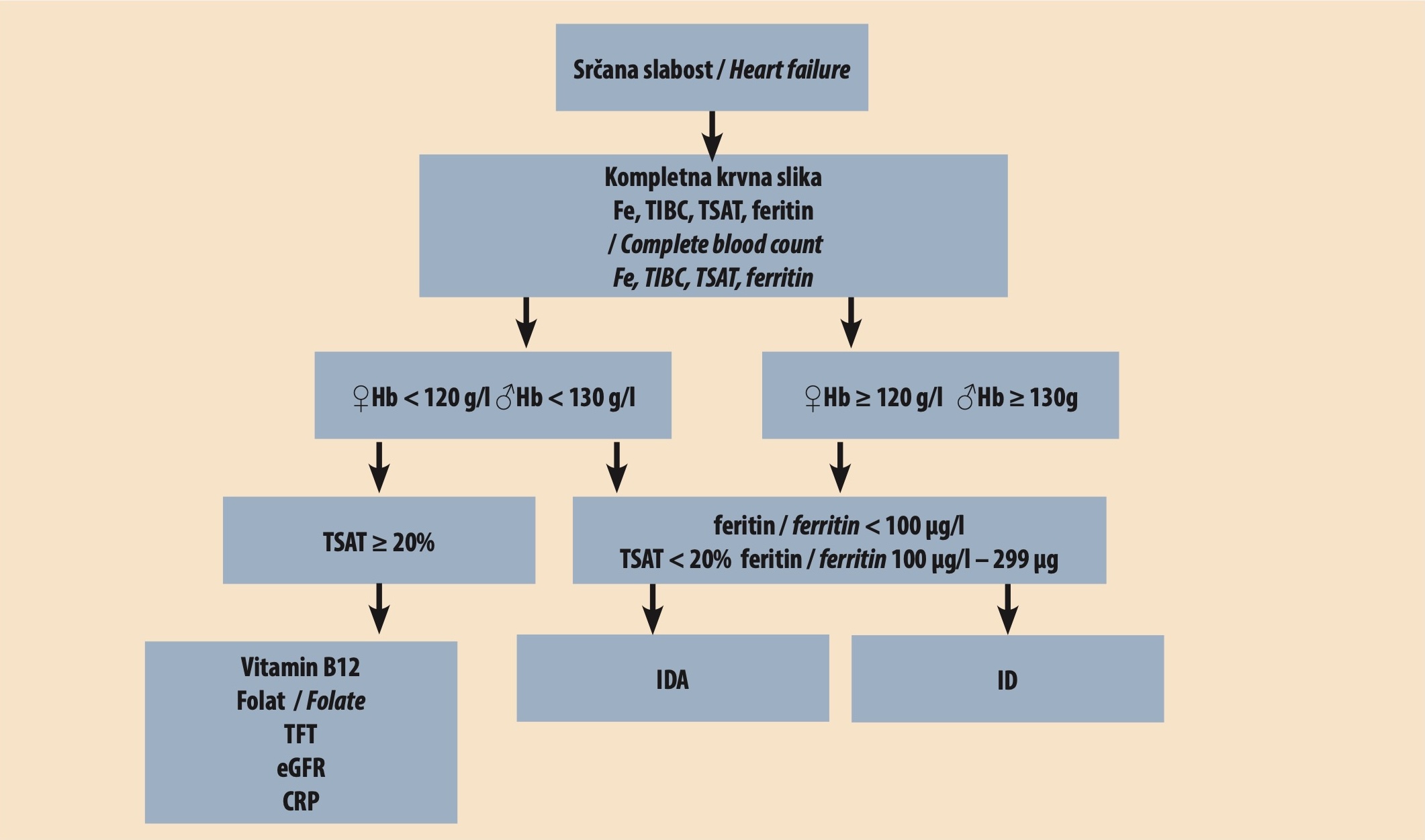
LABORATORY CHARACTERISTICS OF ANEMIA IN HEART FAILURE AND THE DIAGNOSTIC ALGORITHM The standard laboratory indicators of IDA – microcytic erythrocytes (MCV < 80 fl), hypoferremia (↓Fe), increased total iron binding capacity (TIBC), decreased transferrin saturation (TSAT < 20%), and reduced ferritin (< 30 μg/l) are usually absent in patients with HF, due to the above-described pathophysiological mechanisms of anemia in HF. In HF and other chronic inflammatory conditions, due to the fact that ferritin is a reactant of the acute phase, its values of up to 100 μg/l speak in favor of absolute ID, if all other laboratory characteristics of ID/IDA are present. In patients with HF whose blood ferritin level is 100 ng/ml – 299 ng/ml, ID is considered to exist, if TSAT is < 20%. These cut-off values were taken from nephrology, as they are acceptable and specific for diagnosing and treating ID [39]. When all the obtained laboratory findings are inconclusive, additional tests, such as reticulocyte hemoglobin content (CHr), soluble transferrin receptor (sTfR), and the sTfR-transferrin index, can be performed in specialized laboratories. Along with iron tests, it is essential to test the levels of C-reactive protein (CRP), vitamin B12, folate, thyroid hormones, and renal parameters [38], as well as to test for signs of manifest or occult bleeding [40].
As a normal Hb level does not rule out iron deficiency, according to current recommendations, all patients with HF should undergo iron metabolism laboratory tests [4],[5],[14]. A simplified algorithm of ID/IDA laboratory diagnostics is presented in Figure 2.
TREATMENT OF ANEMIA IN HEART FAILURE
According to WHO recommendations, iron replacement should be started at ferritin levels below 30 μg/l, as symptoms in healthy persons already appear in the ID phase [3]. Due to their low cost and ease of administration, in the treatment of ID/IDA the drugs of first choice are standard (divalent and trivalent) oral iron supplements [3],[19]. However, in about 30% – 70% of patients, standard orally administered iron supplements are not well tolerated. Food intake and concomitant use of other medications, such as H2-blockers and proton pump inhibitors that change duodenal pH, can decrease Fe3+ absorption in the digestive tract, leading to symptoms such as nausea, vomiting, indigestion, and constipation [41]. Furthermore, standard oral iron supplements have limited efficacy in HF due to edema of the intestinal mucosa and high hepcidin secretion. Overall, the degree of intestinal absorption of standard oral iron supplements is reduced to only 5% [42]. The ineffectiveness of standard oral iron supplements in HF was demonstrated in the IRON-HF [43] and IRONOUT-HF [44] studies.
A pilot study conducted on 50 patients with symptomatic HFrEF indicated that oral sucrosomial iron (SI) can overcome the hepcidin-ferroportin barrier and lead to a slight increase in ferritin, as well as to the improvement in exercise tolerance and quality of life, after six months of therapy [45]. SI is an oral supplement wherein ferric-pyrophosphate is coated with a matrix containing phospholipids and sucrester (tricalcium phosphate and starch), which is absorbed from the digestive tract in a hepcidin-independent way – paracellularly and transcellularly via enterocytes and M cells, throughout the entire small intestine [46]. The release of iron from SI during digestion is less than 5%, unlike all other oral preparations (75% – 85%), which significantly reduces the possibility of toxic effects of iron on the mucosa of the digestive tract, leading to improved intestinal tolerance and high bioavailability [47],[48]. However, the increase in ferritin, although significantly higher during SI supplementation, as compared to standard oral iron supplementation, is markedly inferior to intravenous (I.V.) iron administration, which has 100% bioavailability. Studies on a much larger number of patients and longer follow-ups are necessary to determine the place of SI in ID/IDA treatment in HF [49].
According to European and American guidelines, I.V. iron is the replacement therapy of choice for ID/ IDA in HF [4],[5],[14]. The results of two large international studies: FAIR-HF, conducted on 459 patients with HF NYHA class II and III [50], as well as CONFIRM-HF, conducted on 304 outpatients with symptomatic HF and EF ≤ 45% [51], showed a significant reduction of symptoms, better exercise tolerance, and improvement in quality of life, in patients who received ferric carboxymaltose during 24-week or one-year follow-up. The results of the randomized IRONMAN study, conducted on 1,137 patients in 70 hospitals in Great Britain, showed that treatment with ferric-derisomaltose significantly reduced the number of hospitalizations and mortality from cardiovascular events [52]. Unlike patients with chronic HF, the administration of I.V. iron in patients with acute HF, after the stabilization of the heart failure episode, does not affect patient survival, as shown by the AFFIRM-AHF study, which included 1,107 patients with acute HF [53]. I.V. iron has higher direct costs (use of hospital resources) and indirect costs (absence from work) than oral therapy. However, a drop in the total number of hospitalizations due to the exacerbation of HF or complications in patients with HF who had received I.V. iron indicates its long-term economic cost-effectiveness [54]. More recent I.V. iron preparations have a significantly lower rate of reported side effects than earlier preparations, such as ferridextran. Based on the results of individual randomized clinical trials, as well as a meta-analysis of published results that showed a decrease in the risk of hospitalization [55],[56], in the ESC guidelines, I.V. iron is recommended in patients with symptomatic HFmrEF as well as in patients with HFrEF and ID, to reduce HF symptoms and improve quality of life (recommendation class I, level of evidence A), while ferric carboxymaltose and ferric derisomaltose are listed as recommended I.V. replacement therapy for the treatment of ID in patients with symptomatic HFmrEF and HFrEF, to reduce the risk of hospitalization (recommendation class IIa, level of evidence A) [5]. The American guidelines do not single out specific I.V. forms [14].
In patients with coexisting HF and renal failure, the administration of EPO can be effective. It is important to note that correcting anemia until the Hb level reaches the normal level (130 g/l) does not reduce cardiovascular mortality. In fact, normalization of Hb significantly increases the risk of thromboembolic complications [57], which is why it is not recommended [5],[14]. Since anemia in HF is usually mild, RBC transfusions are seldom indicated. A meta-analysis of published studies on the survival of patients with acute coronary syndrome and anemia showed that survival was significantly better when transfusions were given at Hb levels below 100 g/l, as compared to a restrictive transfusion strategy, with Hb levels below 80 g/l [58]. However, for anemic HF patients, there are no definitive recommendations nor randomized studies and meta-analyses evaluating their survival and outcomes, in relation to the restrictive or liberal approach to transfusion support. In the absence of official guidelines, individual authors suggest considering a liberal approach regarding erythrocyte transfusions (Hb = 80 g/l – 90 g/l) for critically ill HF patients [59].
CONCLUSION
The high prevalence of ID/IDA in HF requires timely diagnosis and treatment for all patients, to improve their quality of life and survival.
Informations

-
Keywords:
-
Received:
-
Revised:
-
Accepted:
-
Online first:
-
DOI:
-
Cite this article:

Zorica Cvetković
Department of Hematology, Clinic for Internal Medicine,
University Hospital Medical Center Zemun
9 Vukova Street, 11080 Belgrade, Serbia
E-mail:
1. Safiri S, Kolahi AA, Noori M, Nejadghaderi SA, Karamzad N, Bragazzi NL, et al. Burden of anemia and its underlying causes in 204 countries and territories, 1990-2019: results from the Global Burden of Disease Study 2019. J Hematol Oncol. 2021 Nov 4;14(1):185. doi: 10.1186/s13045-021-01202-2. [CROSSREF]
2. Savarese G, Becher PM, Lund LH, Seferovic P, Rosano GMC, Coats AJS. Global burden of heart failure: a comprehensive and updated review of epidemiology. Cardiovasc Res. 2023 Jan 18;118(17):3272-87. doi: 10.1093/cvr/cvac013. [CROSSREF]
3. World Health Organization (WHO). Haemoglobin concentrations for the diagnosis of anaemia and assessment of severity; WHO/NMH/NHD/MNM/11.1. [Internet]. [Pristupljeno: May 30, 2024]. Dostupno: https://apps.who.int/iris/bitstream/handle/10665/85839/WHO_NMH_ NHD_MNM_11.1_eng.pdf.
4. McDonagh TA, Metra M, Adamo M, Gardner RS, Baumbach A, Böhm M, et al.; ESC Scientific Document Group. 2021 ESC Guidelines for the diagnosis and treatment of acute and chronic heart failure. 2021 Sep 21;42(36):3599-726. doi: 10.1093/eurheartj/ehab368. [CROSSREF]
5. McDonagh TA, Metra M, Adamo M, Gardner RS, Baumbach A, Böhm M, et al; ESC Scientific Document Group. 2023 Focused Update of the 2021 ESC Guidelines for the diagnosis and treatment of acute and chronic heart failure: Developed by the task force for the diagnosis and treatment of acute and chronic heart failure of the European Society of Cardiology (ESC) With the special contribution of the Heart Failure Association (HFA) of the ESC. Eur J Heart Fail. 2024 Jan;26(1):5-17. doi: 10.1002/ejhf.3024. [CROSSREF]
6. Chopra VK, Anker SD. Anaemia, iron deficiency and heart failure in 2020: facts and numbers. ESC Heart Fail. 2020 Oct;7(5):2007-11. doi: 10.1002/ehf2.12797. [CROSSREF]
7. Anand I, McMurray JJ, Whitmore J, Warren M, Pham A, McCamish MA, et al. Anemia and its relationship to clinical outcome in heart failure. Circulation. 2004 Jul 13;110(2):149-54. doi: 10.1161/01.CIR.0000134279.79571.73. [CROSSREF]
8. Al-Ahmad A, Rand WM, Manjunath G, Konstam MA, Salem DN, Levey AS, et al. Reduced kidney function and anemia as risk factors for mortality in patients with left ventricular dysfunction. J Am Coll Cardiol. 2001 Oct;38(4):955-62. doi: 10.1016/s0735-1097(01)01470-x. [CROSSREF]
9. Komajda M, Anker SD, Charlesworth A, Okonko D, Metra M, Di Lenarda A, et al. The impact of new onset anaemia on morbidity and mortality in chronic heart failure: results from COMET. Eur Heart J. 2006 Jun;27(12):1440-6. doi: 10.1093/eurheartj/ehl012. [CROSSREF]
10. Cohen-Solal A, Philip JL, Picard F, Delarche N, Taldir G, Gzara H, et al; CARENFER Study Group. Iron deficiency in heart failure patients: the French CARENFER prospective study. ESC Heart Fail. 2022 Apr;9(2):874-84. doi: 10.1002/ ehf2.13850. [CROSSREF]
11. Naito A, Obokata M, Kagami K, Harada T, Sorimachi H, Yuasa N, et al. Contributions of anemia to exercise intolerance in heart failure with preserved ejection fraction-An exercise stress echocardiographic study. Int J Cardiol Heart Vasc. 2023 Aug 20;48:101255. doi: 10.1016/j.ijcha.2023.101255. [CROSSREF]
12. Köseoğlu FD, Özlek B. Anemia and Iron Deficiency Predict All-Cause Mortality in Patients with Heart Failure and Preserved Ejection Fraction: 6-Year Follow-Up Study. Diagnostics (Basel). 2024 Jan 18;14(2):209. doi: 10.3390/ diagnostics14020209. [CROSSREF]
13. Siddiqui SW, Ashok T, Patni N, Fatima M, Lamis A, Anne KK. Anemia and heart failure: a narrative review. Cureus. 2022 Jul 23;14(7):e27167. doi: 10.7759/ cureus.27167. [CROSSREF]
14. Heidenreich PA, Bozkurt B, Aguilar D, Allen LA, Byun JJ, Colvin MM, et al. 2022 AHA/ACC/HFSA Guideline for the management of heart failure: Executive Summary: A report of the American College of Cardiology/American Heart Association Joint Committee on Clinical Practice Guidelines. J Am Coll Cardiol. 2022 May 3;79(17):1757-80. doi: 10.1016/j.jacc.2021.12.011. [CROSSREF]
15. Cvetković Z. Suvajdžić-Vuković N. Epidemiologija i etiologija »nemaligne«anemije kod starih. U: Marisavljević D, Milošević DP, Nikolić-Žugić J, Čokić V, Prostan M, priređivači. Poremećaji i bolesti krvi i krvotvornih organa kod starih osoba. Beograd: Zavod za udžbenike; 2017. p. 320-31.
16. Masini G, Graham FJ, Pellicori P, Cleland JGF, Cuthbert JJ, Kazmi S, et al. Criteria for iron deficiency in patients with heart failure. J Am Coll Cardiol. 2022 Feb 1;79(4):341-51. doi: 10.1016/j.jacc.2021.11.039. [CROSSREF]
17. Kaiafa G, Kanellos I, Savopoulos C, Kakaletsis N, Giannakoulas G, Hatzitolios AI. Is anemia a new cardiovascular risk factor? Int J Cardiol. 2015;186:117-24. doi: 10.1016/j.ijcard.2015.03.159. 18. Pasricha SR, Tye-Din J, Muckenthaler MU, Swinkels DW. Iron deficiency. Lancet. 2021 Jan 16;397(10270):233-48. doi: 10.1016/S0140-6736(20)32594-0. [CROSSREF]
19. Snook J, Bhala N, Beales ILP, Cannings D, Kightley C, Logan RP, et al. British Society of Gastroenterology guidelines for the management of iron deficiency anaemia in adults. Gut. 2021 Nov;70(11):2030-2051. doi: 10.1136/ gutjnl-2021-325210. [CROSSREF]
20. Anand IS, Gupta P. Anemia and iron deficiency in heart failure: current concepts and emerging therapies. Circulation. 2018 Jul 3;138(1):80-98. doi: 10.1161/CIRCULATIONAHA.118.030099. [CROSSREF]
21. Mann DL. Innate immunity and the failing heart: the cytokine hypothesis revisited. Circ Res. 2015 Mar 27;116(7):1254-68. doi: 10.1161/CIRCRESAHA.116.302317. [CROSSREF]
22. Röhrig G. Anemia in the frail, elderly patient. Clin Interv Aging. 2016 Mar 17;11:319-26. doi: 10.2147/CIA.S90727. [CROSSREF]
23. Cappellini MD, Comin-Colet J, de Francisco A, Dignass A, Doehner W, Lam CS, et al.; IRON CORE Group. Iron deficiency across chronic inflammatory conditions: International expert opinion on definition, diagnosis, and management. 017 Oct;92(10):1068-78. doi: 10.1002/ajh.24820. [CROSSREF]
24. Rosenblum SL. Inflammation, dysregulated iron metabolism, and cardiovascular disease. Front Aging. 2023 Feb 3;4:1124178. doi: 10.3389/fragi.2023.1124178. [CROSSREF]
25. Rangaswami J, Bhalla V, Blair JEA, Chang TI, Costa S, Lentine KL, et al; American Heart Association Council on the Kidney in Cardiovascular Disease and Council on Clinical Cardiology. Cardiorenal Syndrome: Classification, pathophysiology, diagnosis, and treatment strategies: A scientific statement from the American Heart Association. Circulation. 019 Apr 16;139(16):e840-78. doi: 10.1161/CIR.0000000000000664. [CROSSREF]
26. Xanthopoulos A, Papamichail A, Briasoulis A, Loritis K, Bourazana A, Magouliotis DE, et al. Heart failure in patients with chronic kidney disease. J Clin Med. 2023 Sep 21;12(18):6105. doi: 10.3390/jcm12186105. [CROSSREF]
27. Hullon D, Taherifard E, Al-Saraireh TH. The effect of the four pharmacological pillars of heart failure on haemoglobin level. Ann Med Surg (Lond). 2024 Jan 29;86(3):1575-1583. doi: 10.1097/MS9.0000000000001773. [CROSSREF]
28. Chatterjee B, Nydegger UE, Mohacsi P. Serum erythropoietin in heart failure patients treated with ACE-inhibitors or AT(1) antagonists. Eur J Heart Fail. 2000 Dec;2(4):393-8. doi: 10.1016/s1388-9842(00)00110-0. [CROSSREF]
29. Cvetković Z, Suvajdžić-Vuković N. Kasne komplikacije hematoloških bolesti i njihovog lečenja. U: Marisavljević D, Mihaljević B, Elezović I, Popović S, Suvajdžić-Vuković N, Vujić D, Janić D, Milenković P, Mostarica M, Bogdanović G, priređivači. Klinička hematologija. Beograd: Zavod za udžbenike; 2012. p. 1182-94.
30. Cvetković Z, Marković O, Mitrović M. Cardiotoxicity of antineoplastic therapy: Underlying mechanisms, clinical manifestations, and basic principles of cardio-oncology. Serbian J Med Chamb. 2023; 4(3):256-71. doi: 10.5937/ smclk4-45065. [CROSSREF]
31. Aapro M, Beguin Y, Bokemeyer C, Dicato M, Gascón P, Glaspy J, et al.; ESMO Guidelines Committee. Management of anaemia and iron deficiency in patients with cancer: ESMO Clinical Practice Guidelines. Ann Oncol. 2018 Oct 1;29(Suppl 4):iv96-110. doi: 10.1093/annonc/mdx758. [CROSSREF]
32. Savarese G, von Haehling S, Butler J, Cleland JGF, Ponikowski P, Anker SD. Iron deficiency and cardiovascular disease. Eur Heart J. 2023 May 7;44(18):1607. doi: 10.1093/eurheartj/ehad043. [CROSSREF]
33. Tziastoudi M, Pissas G, Golfinopoulos S, Filippidis G, Dousdampanis P, Eleftheriadis T, et al. Sodium-glucose transporter 2 (SGLT2) inhibitors and iron deficiency in heart failure and chronic kidney disease: a literature review. Life (Basel). 2023 Dec 13;13(12):2338. doi: 10.3390/life13122338. [CROSSREF]
34. Androne AS, Katz SD, Lund L, LaManca J, Hudaihed A, Hryniewicz K, et al. Hemodilution is common in patients with advanced heart failure. Circulation. 2003 Jan 21;107(2):226-9. doi: 10.1161/01.cir.0000052623.16194.80. [CROSSREF]
35. Tang YD, Katz SD. Anemia in chronic heart failure: prevalence, etiology, clinical correlates, and treatment options. Circulation. 2006 May 23;113(20):2454- 61. doi: 10.1161/CIRCULATIONAHA.105.583666. [CROSSREF]
36. Mozaffarian D, Nye R, Levy WC. Anemia predicts mortality in severe heart failure: the prospective randomized amlodipine survival evaluation (PRAISE). J Am Coll Cardiol. 2003 Jun 4;41(11):1933-9. doi: 10.1016/s0735- 1097(03)00425-x. [CROSSREF]
37. Packer M, Fowler MB, Roecker EB, Coats AJ, Katus HA, Krum H, et al; Carvedilol Prospective Randomized Cumulative Survival (COPERNICUS) Study Group. Effect of carvedilol on the morbidity of patients with severe chronic heart failure: results of the carvedilol prospective randomized cumulative survival (COPERNICUS) study. Circulation. 2002 Oct 22;106(17):2194-9. doi: 10.1161/01.cir.0000035653.72855.bf. [CROSSREF]
38. Tim Goodnough L, Comin-Colet J, Leal-Noval S, Ozawa S, Takere J, Henry D, et al. Management of anemia in patients with congestive heart failure. Am J Hematol. 2017 Jan;92(1):88-93. doi: 10.1002/ajh.24595. [CROSSREF]
39. Babitt JL, Eisenga MF, Haase VH, Kshirsagar AV, Levin A, Locatelli F, et al.; Conference Participants. Controversies in optimal anemia management: conclusions from a Kidney Disease: Improving Global Outcomes (KDIGO) Conference. Kidney Int. 2021 Jun;99(6):1280-1295. doi: 10.1016/j.kint.2021.03.020. [CROSSREF]
40. Anand I, Gupta P. How I treat anemia in heart failure. Blood. 2020 Aug 13;136(7):790-800. doi: 10.1182/blood.2019004004. 41. DeLoughery TG. Safety of Oral and Intravenous Iron. Acta Haematol. 2019;142(1):8-12. doi: 10.1159/000496966. [CROSSREF]
42. Sandek A, Bauditz J, Swidsinski A, Buhner S, Weber-Eibel J, von Haehling S, et al. Altered intestinal function in patients with chronic heart failure. J Am Coll Cardiol. 2007 Oct 16;50(16):1561-9. doi: 10.1016/j.jacc.2007.07.016. [CROSSREF]
43. Beck-da-Silva L, Piardi D, Soder S, Rohde LE, Pereira-Barretto AC, de Albuquerque D, et al. IRON-HF study: a randomized trial to assess the effects of iron in heart failure patients with anemia. Int J Cardiol. 2013 Oct 9;168(4):3439-42. doi: 10.1016/j.ijcard.2013.04.181. [CROSSREF]
44. Lewis GD, Malhotra R, Hernandez AF, McNulty SE, Smith A, Felker GM, et al.; NHLBI Heart Failure Clinical Research Network. Effect of oral iron repletion on exercise capacity in patients with heart failure with reduced ejection fraction and iron deficiency: The IRONOUT HF randomized clinical trial. JAMA. 2017 May 16;317(19):1958-66. doi: 10.1001/jama.2017.5427. [CROSSREF]
45. Karavidas A, Troganis E, Lazaros G, Balta D, Karavidas IN, Polyzogopoulou E, et al. Oral sucrosomial iron improves exercise capacity and quality of life in heart failure with reduced ejection fraction and iron deficiency: a non-randomized, open-label, proof-of-concept study. Eur J Heart Fail. 2021 Apr;23(4):593-7. doi: 10.1002/ejhf.2092. [CROSSREF]
46. Gómez-Ramírez S, Brilli E, Tarantino G, Girelli D, Muñoz M. Sucrosomial® Iron: An updated review of its clinical efficacy for the treatment of iron deficiency. Pharmaceuticals (Basel). 2023 Jun 6;16(6):847. doi: 10.3390/ph16060847. [CROSSREF]
47. Fabiano A, Brilli E, Fogli S, Beconcini D, Carpi S, Tarantino G, et al. Sucrosomial® iron absorption studied by in vitro and ex-vivo models. Eur J Pharm Sci. 2018 Jan 1;111:425-31. doi: 10.1016/j.ejps.2017.10.021. [CROSSREF]
48. Girelli D, Ugolini S, Busti F, Marchi G, Castagna A. Modern iron replacement therapy: clinical and pathophysiological insights. Int J Hematol. 2018 Jan;107(1):16-30. doi: 10.1007/s12185-017-2373-3. [CROSSREF]
49. Barakat MF, Amin-Youseff G, Okonko DO. Oral sucrosomial iron in heart failure with a reduced ejection fraction. Eur J Heart Fail 2021 Apr;23(4):598- 600. doi: 10.1002/ejhf.2176. [CROSSREF]
50. Anker SD, Comin Colet J, Filippatos G, Willenheimer R, Dickstein K, Drexler H, et al.; FAIR-HF Trial Investigators. Ferric carboxymaltose in patients with heart failure and iron deficiency. N Engl J Med. 2009 Dec 17;361(25):2436-48. doi: 10.1056/NEJMoa0908355. [CROSSREF]
51. Ponikowski P, van Veldhuisen DJ, Comin-Colet J, Ertl G, Komajda M, Mareev V, et al.; CONFIRM-HF Investigators. Beneficial effects of long-term intravenous iron therapy with ferric carboxymaltose in patients with symptomatic heart failure and iron deficiency†. Eur Heart J. 015 Mar 14;36(11):657-68. doi: 10.1093/eurheartj/ehu385. [CROSSREF]
52. Kalra PR, Cleland JGF, Petrie MC, Thomson EA, Kalra PA, Squire IB, et al.; IRONMAN Study Group. Intravenous ferric derisomaltose in patients with heart failure and iron deficiency in the UK (IRONMAN): an investigator-initiated, prospective, randomised, open-label, blinded-endpoint trial. Lancet. 2022 Dec 17;400(10369):2199-209. doi: 10.1016/S0140-6736(22)02083-9. [CROSSREF]
53. Filippatos G, Ponikowski P, Farmakis D, Anker SD, Butler J, Fabien V, et al.; AFFIRM-AHF Investigators. Association between hemoglobin levels and efficacy of intravenous ferric subgroup analysis. Circulation. 2023 May 30;147(22):1640-53. doi: 10.1161/CIRCULATIONAHA.122.060757. [CROSSREF]
54. Jacob C, Altevers J, Barck I, Hardt T, Braun S, Greiner W. Retrospective analysis into differences in heart failure patients with and without iron deficiency or anaemia. ESC Heart Fail. 2019 Aug;6(4):840-55. doi: 10.1002/ehf2.12485. [CROSSREF]
55. Jankowska EA, Tkaczyszyn M, Suchocki T, Drozd M, von Haehling S, Doehner W, et al. Effects of intravenous iron therapy in iron-deficient patients with systolic heart failure: a meta-analysis of randomized controlled trials. Eur J Heart Fail. 2016 Jul;18(7):786-95. doi: 10.1002/ejhf.473. [CROSSREF]
56. Anker SD, Kirwan BA, van Veldhuisen DJ, Filippatos G, Comin-Colet J, Ruschitzka F, et al. Effects of ferric carboxymaltose on hospitalisations and mortality rates in iron-deficient heart failure patients: an individual patient data meta-analysis. Eur J Heart Fail. 2018 Jan;20(1):125-33. doi: 10.1002/ejhf.823. [CROSSREF]
57. Swedberg K, Young JB, Anand IS, Cheng S, Desai AS, Diaz R, et al.; RED-HF Committees; RED-HF Investigators. Treatment of anemia with darbepoetin alfa in systolic heart failure. N Engl J Med. 2013 Mar 28;368(13):1210-9. doi: 10.1056/NEJMoa1214865. [CROSSREF]
58. Mistry N, Hare GMT, Shehata N, Belley-Cote E, Papa F, Kramer RS, et al. Transfusion Thresholds for acute coronary syndromes-insights from the TRICS-III randomized controlled trial, systematic review, and meta-analysis. J Am Heart Assoc. 2023 Jan 3;12(1):e028497. doi: 10.1161/JAHA.122.028497. [CROSSREF]
59. Ding YY, Kader B, Christiansen CL, Berlowitz DR. Hemoglobin level and hospital mortality among icu patients with cardiac disease who received transfusions. J Am Coll Cardiol. 2015 Dec 8;66(22):2510-8. doi: 10.1016/j. jacc.2015.09.057. [CROSSREF]