


Depressive symptoms among family members providing informal care for patients receiving homebased care: a PHQ-9 cross-sectional study
- Health Center Subotica, Home Care Service, Subotica, Serbia
ABSTRACT
Introduction/Objective: Family members providing informal care for patients receiving home-based care represent a population at increased risk of developing depressive symptoms. The aim of this study was to assess the presence and severity of depressive symptoms using the PHQ-9 questionnaire and to examine the association between depressive symptoms and caregivers’ daily functioning.
Methods: A descriptive-analytical cross-sectional study was conducted among 77 family caregivers of patients enrolled in the Home Care Service of the Health Center Subotica between March and September 2025. Depressive symptoms were assessed using the Patient Health Questionnaire-9 (PHQ-9). Statistical analysis included the t-test, Mann–Whitney U test, Kruskal–Wallis test, and Spearman’s correlation coefficient.
Results: The mean PHQ-9 score was 8.48 ± 6.14. A score ≥ 10 was recorded in 30 (38.9%) participants. Minimal or mild depressive symptoms were present in 47 (61.1%) caregivers. No statistically significant differences in PHQ-9 scores were observed according to caregiver sex (p = 0.423) or the patient’s primary diagnosis (p = 0.183). In the overall sample, a statistically significant weak positive correlation was found between PHQ-9 score and the self-reported impact of symptoms on daily functioning (r = 0.294; p = 0.009).
Conclusion: Depressive symptoms are present in a substantial proportion of family caregivers providing home-based care. The intensity of depressive symptoms is associated with greater impairment in daily functioning, highlighting the importance of systematic monitoring of caregivers’ mental health.
INTRODUCTION
According to demographic and social changes in contemporary societies, the number of individuals requiring intensive home health care due to oncological diseases, neurodegenerative disorders such as dementia, or consequences of ischemic cerebrovascular incident (stroke) is constantly increasing [1]. In such circumstances, family members-spouses, children, or other close relatives-assume a key role in caregiving without formal training or institutional support, which increases the risk of psychological burden, including symptoms of depression [2].
Home caregiving encompasses a wide range of activities: assistance with daily needs, medical and therapeutic support, supervision, physical assistance, and emotional care, all of which may lead to fatigue, stress, and deterioration of caregivers’ mental health [3]. Studies confirm a high prevalence of depressive symptoms in this population. For example, among caregivers of persons with dementia, as many as 31% show symptoms of moderate depression while 9% meet criteria for severe depression [4]. A meta-analysis of caregivers of oncology patients reports that the average prevalence of depression is approximately 42% [5].
The role of home caregivers also has far-reaching implications for the functioning of the healthcare system. Lack of systemic support may lead to deterioration in the quality of care, increased risk of burnout, and higher healthcare costs [6]. Therefore, reliable screening for depression among caregivers is important in contemporary practice.
The Patient Health Questionnaire-9 (PHQ-9) is widely used as a standard screening tool in various populations. Its application among family caregivers has been confirmed in studies of families caring for children with cancer, where nearly half of caregivers meet criteria for mild depression [7], as well as in studies of caregivers of older adults receiving home care, where depression was present in 41.8% and anxiety in 64.5% of participants [8]. The PHQ-9 has also proven valid among caregivers of persons with intellectual disabilities [9]. The prevalence of depression determined by the PHQ-9 questionnaire among caregivers of stroke patients was 18.5% [10]. Caregivers of patients with severe brain injuries have confirmed depressive symptoms in 61.2% of participants, with an association with anxiety, where a higher PHQ-9 score correlated with poorer quality of life among caregivers [11].
Family caregivers face several specific challenges:
- The intensity and duration of care, particularly in dementia and post-stroke conditions, directly affect psychological well-being [4].
- The informal status of caregivers, absence of financial compensation, support, or respite further increases the emotional burden [3].
- Social isolation and neglect of their own health increase the risk of depressive symptoms [2].
In our country and region, systematic data on depression among family caregivers of patients receiving home treatment are lacking, particularly in relation to specific diagnostic categories (oncological patients, dementia, post-stroke conditions). Studying this population is important in order to improve understanding of their mental health and enable adequate planning of support measures.
The aim of this study was to assess the presence and intensity of depressive symptoms among family members of patients enrolled in the Home Care Service using the PHQ-9, and to examine whether differences in the level of depressive symptoms exist depending on the patient’s primary diagnosis (oncological disease, dementia, or post-ischemic cerebrovascular incident).
The secondary aim was to assess the extent to which depressive symptoms affect caregivers’ daily functioning in performing household, work, and social activities.
METHODOLOGY
A descriptive-analytical cross-sectional study was conducted among family members of patients enrolled in the Home Care Service of the Primary Health Care Center Subotica. The study was carried out between March and September 2025.
The sample size was determined a priori. Using G*Power software (version 3.1.9.7; Heinrich-Heine-Universität Düsseldorf, Düsseldorf, Germany) and F tests – ANOVA: Fixed effects, omnibus, one-way (three groups), the required sample size was calculated assuming an effect size of 0.40, significance level (α err prob = 0.05), and statistical power (1 − β err prob = 0.80). Based on these parameters, the minimum required sample size was 66 observational units.
A total of 77 family caregivers who fully completed the PHQ-9 were included in the analysis, while all incomplete questionnaires were excluded.
The PHQ-9 is a validated screening instrument for depression that assesses the frequency of nine symptoms over the previous two weeks. It is a 9-item self-report questionnaire using a Likert scale. The total score ranges from 0 to 27 points and classifies the severity of depressive symptoms into standard categories. Higher total scores indicate more severe depressive symptoms experienced by the individual.
In addition to the PHQ-9 score, data were collected on the sex and age of family caregivers, as well as information on the patient’s primary diagnosis that led to inclusion in home care (oncological disease, dementia, or condition following an ischemic cerebrovascular incident). A subjective assessment of the impact of symptoms on the caregiver’s daily functioning (none, mild, moderate, severe) was also recorded.
Data were collected anonymously during routine visits of family members to the outpatient clinic of the Home Care Service, with voluntary consent from participants, in accordance with the ethical principles of the Helsinki Declaration. The study was approved by the Ethics Committee of the Primary Health Care Center Subotica (decision no. 01-5/I/2025, dated February 20, 2025).
Statistical analysis was performed using descriptive statistical methods and methods for testing differences between groups and associations between PHQ-9 scores and the examined parameters. The t-test, Mann–Whitney U test, and Kruskal–Wallis test were used to test differences, while Spearman’s correlation coefficient was used to examine associations. Data analysis was conducted using SPSS Statistics 22 (SPSS Inc., Chicago, IL, USA), and the criterion for statistical significance was set at p < 0.05.
RESULTS
The study included 77 participants with a mean age of 49.68 ± 15.05 years. Female caregivers accounted for 46 (59.7%) participants, with a mean age of 48.30 ± 13.77 years, while male caregivers accounted for 31 (40.3%) participants, with a mean age of 51.71 ± 16.79 years. There was no statistically significant difference in age between male and female participants (p = 0.333), indicating that the study group was homogeneous with respect to age.
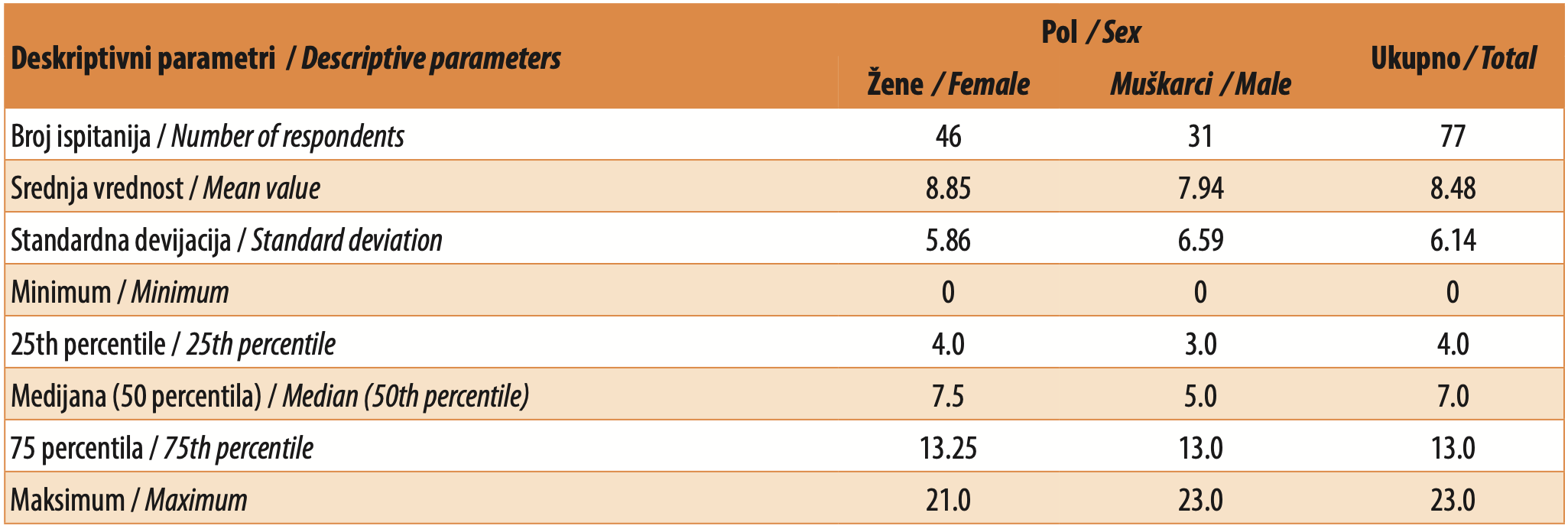
For each caregiver, the total PHQ-9 score was calculated. The mean value for the study sample was 8.48 ± 6.14, with a range from 0 to 23 points. The median PHQ-9 score among female caregivers was 7.5 (range 0–21), while among male caregivers it was 5.0 (range 0–23). The difference in total PHQ-9 scores between sexes was tested and no statistically significant difference was found (p = 0.423), Table 1.
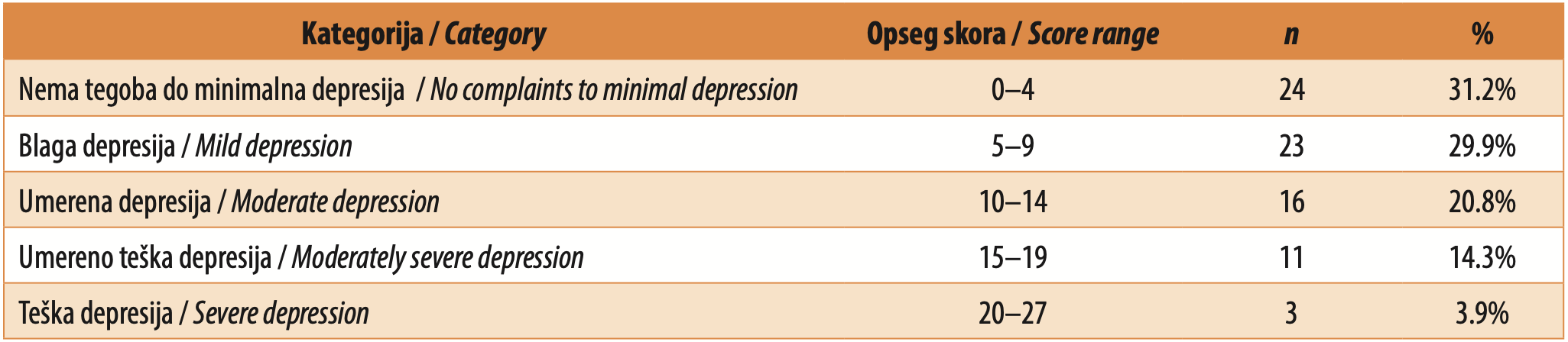
Based on the total PHQ-9 score and the categorization of depressive symptom severity, minimal or mild depressive symptoms were present in 47 (61.1%) participants. Minimal symptoms (score 0–4) were observed in 24 (31.2%) participants, while mild symptoms (score 5–9) were present in 23 (29.9%) caregivers. Symptoms with a PHQ-9 score ≥ 10 were recorded in 30 (38.9%) participants. Moderate symptoms (score 10–14) were present in 16 (20.8%), moderately severe symptoms (score 15–19) in 11 (14.3%), and severe symptoms (score 20–27) in 3 (3.9%) caregivers (Table 2).
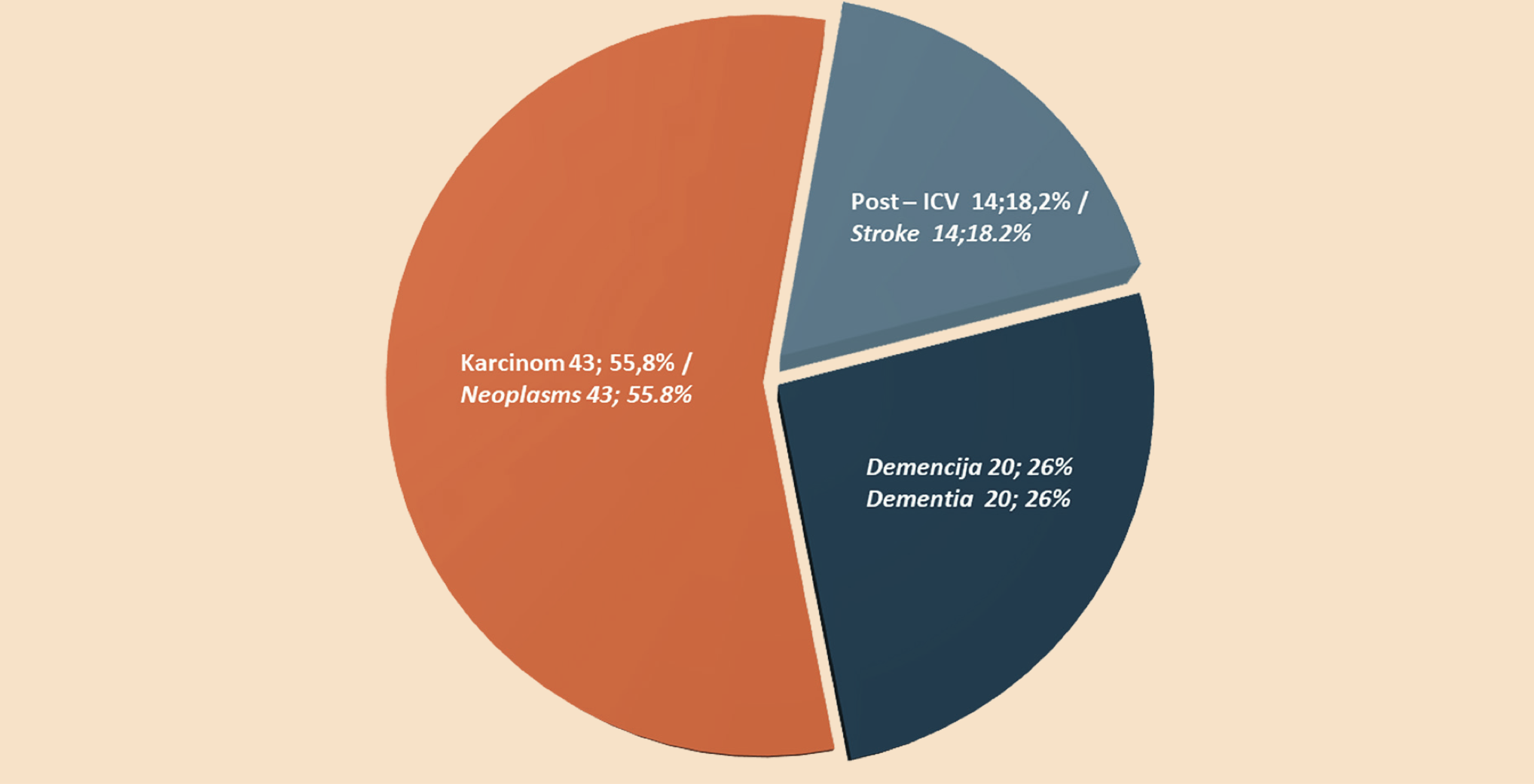
The distribution of caregivers according to the patient’s primary diagnosis is presented in Graph 1. Cancer was present in 43 (55.8%) patients, dementia in 20 (26.0%), while 14 (18.2%) patients had a diagnosis of post-ischemic cerebrovascular incident.
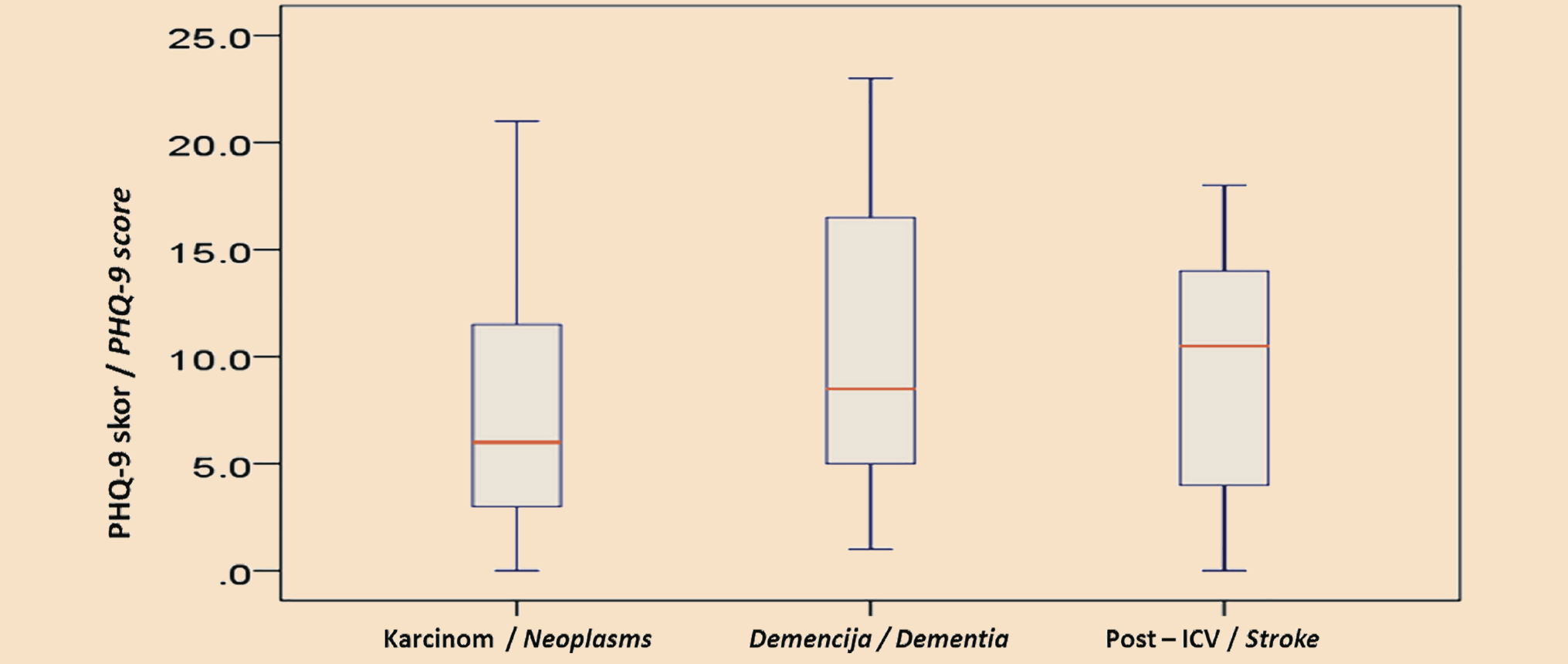
The median PHQ-9 score among caregivers of patients with cancer was 6.0 (0–21), among caregivers of patients with dementia 8.5 (1–23), while among caregivers of patients with post-ischemic cerebrovascular incident the median was 10.5 (0–18). The difference in PHQ-9 scores between groups according to the patient’s primary diagnosis was not statistically significant (p = 0.183), Graph 2.
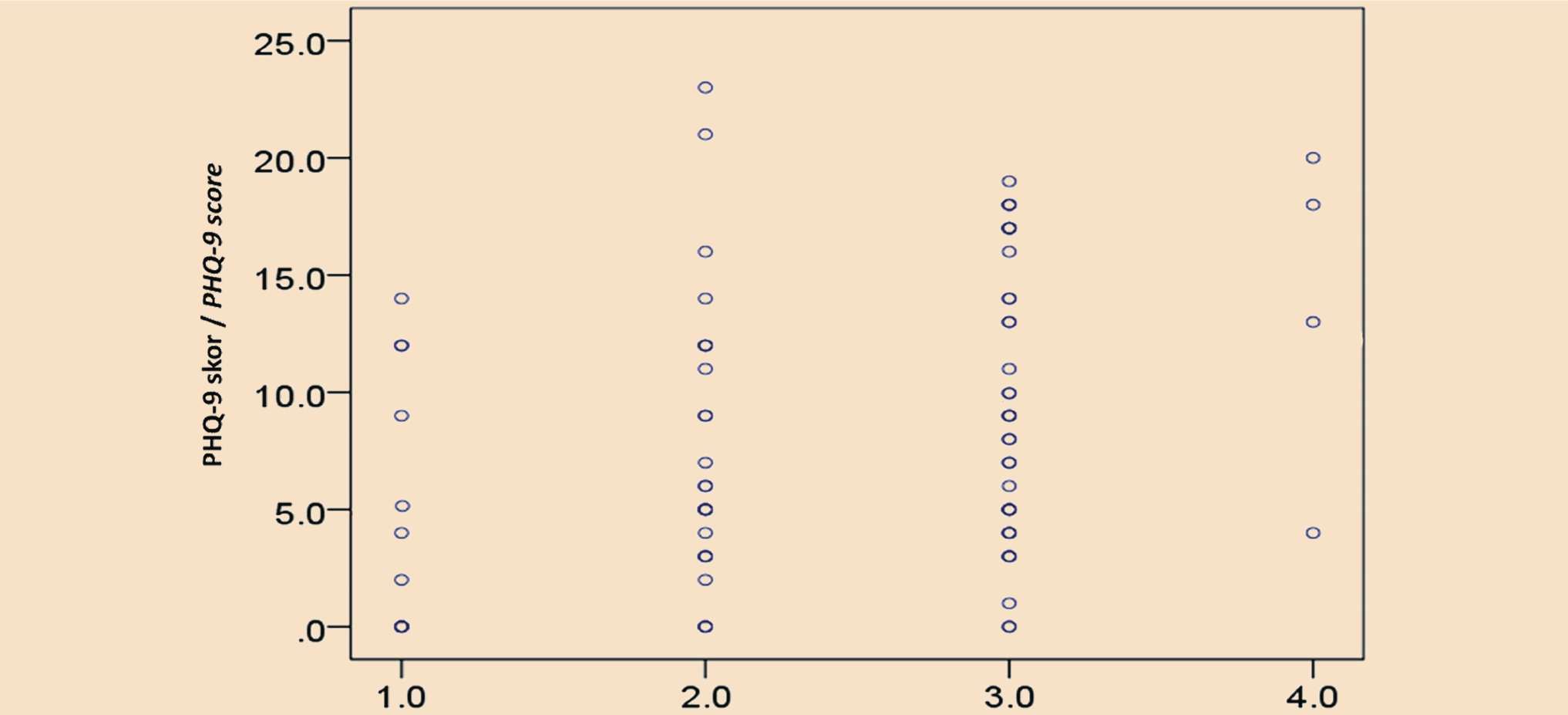
By examining the association between the PHQ-9 score and the subjective assessment of the impact of symptoms on daily functioning in the total sample of 77 caregivers, a statistically significant weak positive correlation was found (rs = 0.294; p = 0.009), Graph 3.
The association between the PHQ-9 score and caregivers’ daily functioning is presented by groups of participants according to the patient’s primary diagnosis (Table 3). In the group of caregivers of patients with post-ischemic cerebrovascular incident, a moderate positive correlation was observed (rs = 0.529; p = 0.052), although it did not reach statistical significance. No statistically significant association was found among caregivers of patients with cancer (rs = 0.175; p = 0.263) and dementia (rs = 0.212; p = 0.370).

DISCUSSION
In this study, the average PHQ-9 score among family members caring for patients receiving home treatment was 8.48 ± 6.14, while 38.9% of participants had a score ≥ 10. These findings indicate that a substantial proportion of family caregivers are exposed to moderate and more severe depressive symptoms. Tan and colleagues reported in their study that the average PHQ-9 score among caregivers of patients with dementia was 7.1 [12]. The prevalence reported in a meta-analytic study among caregivers of stroke survivors indicates that depression was present in 43.9% of participants [13], while depressive symptoms among caregivers of patients with malignant diseases reach approximately 47% [5]. A somewhat lower prevalence of 30.5% was reported among caregivers of patients with dementia [12]. An umbrella review of systematic reviews and meta-analyses synthesized evidence on depressive morbidity among caregivers of cancer patients and reported a pooled global prevalence of depression among informal caregivers of 38% [14]. Such consistency of findings confirms that family caregivers represent a population at increased risk for impaired mental health.
The analysis by sex showed no statistically significant difference in PHQ-9 scores, indicating that depressive symptoms were equally represented among male and female caregivers. This finding is consistent with some contemporary studies showing that although women more often assume the caregiving role, the intensity of depressive symptoms does not necessarily differ by sex [15]. However, some studies confirm significantly greater involvement of women in caregiving for patients with dementia, with a prevalence of 68% [12]. Additionally, recent research indicates that greater burden and feelings of loneliness among female caregivers are significantly associated with the intensity of depressive symptoms, while a sense of life purpose may play a mediating role in this relationship [16].
The analysis of differences according to the patient’s primary diagnosis did not reveal statistically significant differences in the level of depressive symptoms between groups. Although the medians were numerically higher among caregivers of patients with post-ICV and dementia, the observed differences did not reach statistical significance. This finding may be a consequence of the relatively small sample size and variability within groups. However, the numerical trend toward higher values among caregivers of patients with neurological diseases is consistent with previous studies indicating that neurocognitive disorders and sudden functional dependence of the patient represent a significant psychological burden for caregivers [4],[15].
The secondary aim of the study referred to the association between depressive symptoms and caregivers’ daily functioning. In the overall sample, a statistically significant weak positive correlation was found between PHQ-9 scores and the subjective assessment of the impact of symptoms on daily functioning. This finding indicates that as the intensity of depressive symptoms increases, the degree of impairment in caregivers’ work, family, and social activities also increases. A similar association between psychological burden and reduced quality of life has been confirmed in previous meta-analyses [17].
In the subgroup analysis according to the patient’s diagnosis, a moderate positive correlation was observed among caregivers of patients with post-ICV, with a level close to statistical significance. This trend may indicate a specific vulnerability of this group. The sudden onset of a cerebrovascular incident and the abrupt change in the patient’s functional status may lead to intense psychological burden for family members who assume the caregiving role without prior preparation. In contrast, in chronic conditions such as dementia or malignant diseases, the longer disease course may allow gradual adaptation and the development of coping mechanisms. Similarly, pooled analyses of informal caregivers of individuals with severe mental disorders have shown that greater functional impairment of the care recipient and female sex are significantly associated with depressive symptoms, while longer disease duration is associated with a lower risk of depression, which is interpreted as a process of caregiver adaptation [18].
The clinical significance of these findings lies in the need for systematic recognition and monitoring of the mental health of family caregivers within home care services. In this study, the PHQ-9 proved to be a practical and applicable instrument for routine screening of depressive symptoms, which is consistent with recommendations from contemporary research advocating the integration of caregiver mental health assessment into primary health care [6],[19].
A limitation of this study is the relatively small sample size, particularly in the subgroups according to the patient’s diagnosis, which may reduce the statistical power of the analysis and make detection of significant differences more difficult. Future studies with larger samples and the inclusion of additional sociodemographic and psychosocial variables could provide a more detailed insight into the risk factors for depressive symptoms among family caregivers. Studies among caregivers of persons with dementia have shown that certain sociodemographic factors, including age, education, and relationship with the patient, are significantly associated with caregivers’ psychological well-being, which further justifies the need for their systematic investigation in future studies [20].
CONCLUSION
The results of this study show that depressive symptoms are significantly present among family members caring for patients enrolled in the Home Care Service, with slightly more than one-third of participants having a PHQ9 score ≥ 10. The level of depressive symptoms did not differ according to sex or the patient’s primary diagnosis; however, observed differences in total PHQ-9 scores suggest possible variations in burden among subgroups.
The positive association between the intensity of depressive symptoms and the subjective assessment of impairment in caregivers’ daily functioning indicates that an increase in depressive symptoms is accompanied by a more pronounced impact on caregivers’ work, family, and social activities.
The obtained results emphasize the importance of systematic recognition and monitoring of the mental health of family caregivers within home care services. The PHQ-9 proved to be a practical and applicable instrument for screening depressive symptoms in this population.
Considering the limitations of the study, including the relatively small number of participants in certain subgroups, future research with larger samples is justified in order to confirm the findings of this study. The inclusion of a broader range of sociodemographic and psychosocial variables could enable a more precise identification of risk factors and the development of targeted support interventions.
Informations

-
Keywords:
-
Received:
-
Revised:
-
Accepted:
-
Online first:
-
DOI:
-
Cite this article:

Nikola Gavrilović
Home Care Service, Health Center Subotica
4 Kumičićeva Street, 24000 Subotica, Serbia
E-mail:
1. United Nations Department of Economic and Social Affairs. World population ageing 2020: highlights [Internet]. New York: United Nations; 2020 [cited 2025 Nov 24]. 40 p. Available from: https://digitallibrary.un.org/record/3898412/files/undesa_pd-2020_world_population_ageing_highlights.pdf [HTTP]
2. Kilmer G, Omura JD, Bouldin ED, Walker J, Spears K, Gore J, et al. Changes in health indicators among caregivers-United States, 2015–2016 to 2021–2022. MMWR Morb Mortal Wkly Rep. 2024 Aug 29;73(34):740-6. doi: 10.15585/mmwr.mm7334a2. [CROSSREF]
3. Lane NE, Hoben M, Amuah JE, Hogan DB, Baumbusch J, Gruneir A, et al. Prevalence and correlates of anxiety and depression in caregivers to assisted living residents during COVID-19: a cross-sectional study. BMC Geriatr. 2022 Aug 12;22(1):662. doi: 10.1186/s12877-022-03294-y. [CROSSREF]
4. Abdelhalim DS, Ahmed MM, Hussein HA, Khalaf OO, Sarhan MD. Burden of Care, Depression, and Anxiety Among Family Caregivers of People With Dementia. J Prim Care Community Health. 2024 Jan-Dec;15:21501319241288029. doi: 10.1177/21501319241288029. [CROSSREF]
5. Pan YC, Lin YS. Systematic Review and Meta-Analysis of Prevalence of Depression Among Caregivers of Cancer Patients. Front Psychiatry. 2022 May 12;13:817936. doi: 10.3389/fpsyt.2022.817936. [CROSSREF]
6. World Health Organization. WHO calls for urgent transformation of care and support systems for older people [Internet]. Geneva: WHO; 2024 Oct 1 [cited 2025 Nov 24]. Available from: https://www.who.int/news/item/01-10-2024-who-calls-for-urgent-transformation-of-care-and-support-systems-forolder-people [HTTP]
7. Alaqeel M, Alkhathaami F, Alshangiti A, Alanazi A, Alothri MA, Alqarni AT, et al. Depression and Quality of Life Among Caregivers of Pediatric Cancer Patients. Cureus. 2022 Apr 18;14(4):e24256. doi: 10.7759/cureus.24256. [CROSSREF]
8. Polikandrioti M, Tsami A, Tsoulou V, Maggita A. Quality of Life, Anxiety, and Depression in Caregivers of Community-Dwelling Heart Failure Patients. Healthcare (Basel). 2025 Aug 13;13(16):1986. doi: 10.3390/healthcare13161986. [CROSSREF]
9. Lin JD, Lin LP, Kuo MT, Hsu SW, Lee TN, Lai CI, et al. Assessment of the 9-item Patient Health Questionnaire (PHQ-9) as a screening tool for symptoms of depression in community caregivers for adults with intellectual disabilities. Res Dev Disabil. 2014 Jan;35(1):178-84. doi: 10.1016/j.ridd.2013.10.008. [CROSSREF]
10. Wan Ab Rahman WMA, Mazlan M. The Prevalence of Depression and Its Correlates Among Informal Caregivers of Stroke Patients in an Urban Community. Cureus. 2024 Jan 1;16(1):e51486. doi: 10.7759/cureus.51486. [CROSSREF]
11. Yan Y, Li M, Cai T, Wang X, Dong Y, Hu X, et al. Mood assessments of family caregivers of patients with severe brain injury in China. Qual Life Res. 2024 Feb;33(2):481-90. doi: 10.1007/s11136-023-03539-2. [CROSSREF]
12. Tan KP, Ang JK, Koh EBY, Pang NTP, Mat Saher Z. Relationship of Psychological Flexibility and Mindfulness to Caregiver Burden, and Depressive and Anxiety Symptoms in Caregivers of People with Dementia. Int J Environ Res Public Health. 2023 Feb 27;20(5):4232. doi: 10.3390/ijerph20054232. [CROSSREF]
13. Alemayehu TT, Geremew GW, Tegegne AA, Chanie GS, Walelgn G, Nakie G, et al. The global prevalence of depression and its associated factors among caregivers of stroke survivors. Updated systematic review and meta-analysis. J Public Health (Berl). 2025 Jun 28. doi: 10.1007/s10389-025-02501-5. [CROSSREF]
14. Habtie TE, Adisu MA, Feleke SF, Kitaw TA. Burden Beyond the Bedside: A Global Synthesis of Depression in Informal Cancer Caregivers: An Umbrella Review. J Pain Symptom Manage. 2026 Feb;71(2):e123-32. doi: 10.1016/j.jpainsymman.2025.10.033. [CROSSREF]
15. Soh XC, Hartanto A, Ling N, Reyes M, Sim L, Majeed NM. Prevalence of depression, anxiety, burden, burnout, and stress in informal caregivers: An umbrella review of meta-analyses. Arch Gerontol Geriatr Plus. 2025;2(3):100197. doi: 10.1016/j.aggp.2025.100197. [CROSSREF]
16. Aragonés Barberá I, Sanchis-Sanchis A, Morales-Murillo CP, Grau Sevilla MD; Familia y factores de riesgo y protección en discapacidad y psicopatología. Campus Capacitas. The effect of burden and loneliness on depression in female caregivers through purpose in life. BMC Public Health. 2025 Dec 8;26(1):168. doi: 10.1186/s12889-025-25882-4. [CROSSREF]
17. Gutiérrez-Sánchez B, Orgeta V, López-Martínez C, Del-Pino-Casado R. Association between Social Support and Depressive Symptoms in Informal Caregivers of Adult and Older Dependents: A Systematic Review and Meta-Analysis. J Clin Med. 2023 Oct 11;12(20):6468. doi: 10.3390/jcm12206468. [CROSSREF]
18. Liang Q, Xu M, Qiu L, Liu Y, Tian Y, Zuo X, et al. Prevalence and associated factors of burden, depression, and anxiety among informal caregivers of individuals with severe mental disorders within the “686 program”: a community-based cross-sectional study. Soc Psychiatry Psychiatr Epidemiol. 2026 Jan 29. doi: 10.1007/s00127-025-03040-w. [CROSSREF]
19. Alreshidi SM. Psychometric properties of the Patient Health Questionnaire-9 for Saudi Caregivers: A Cross-Sectional Study in Saudi Arabia. Inquiry. 2024 Jan-Dec;61:469580231221287. doi: 10.1177/00469580231221287. [CROSSREF]
20. Tatomirescu LF, Glavce CS, Prada GI, Borosanu A, Turcu S. Socio-demographic factors linked to psychological well-being in dementia caregivers. Healthcare (Basel). 2025 Sep 7;13(17):2235. doi: 10.3390/healthcare13172235. [CROSSREF]
- Table 1. Descriptive indicators of the PHQ-9 total score
- Table 2. Distribution of categories of depressive disorder according to PHQ-9
- Graph 1. Distribution of caregivers according to the patient’s primary diagnosis
- Graph 2. PHQ-9 score according to patient's primary diagnosis
- Graph 3. Correlation between PHQ-9 score and the impact of symptoms on caregivers’ daily functioning
- Table 3. Correlation between PHQ-9 score and the impact of symptoms on caregivers’ daily functioning according to the patient’s primary diagnosis