


Axillary brachial plexus block under procedural sedation for arteriovenous fistula formation in a child with end-stage renal disease – a case report
- University Children’s Hospital, Belgrade, Serbia
- Institute for Cardiovascular Diseases Dedinje, Belgrade, Serbia
ABSTRACT
Introduction/Objective: Arteriovenous (AV) fistula formation has become the gold standard for hemodialysis vascular access. The use of brachial plexus blocks (BPB) for antebrachial AV fistula formation in adults provides not just adequate analgesia but a potentially positive effect on primary fistula patency. Additionally, the resultant state of surgical anesthesia may enable the surgery to be performed under procedural sedation.
Case report: A 12-year-old patient was admitted for AV fistula formation for the purpose of hemodialysis due to end-stage renal disease. Kyphoscoliosis of the thoracic spine, the patient’s short neck with limited mobility, and her short stature posed a potential difficulty for intubation. Despite a recently resolved upper respiratory tract infection, which raised suspicion of airway hyperreactivity, the decision was made to proceed with surgical treatment and perform an axillary BPB under procedural sedation. Basic monitoring of vital functions was applied, with oxygen support at 3 l/min via mask. The ultrasound-guided block was performed using 8 ml of 0.5% levobupivacaine (1.4 mg/kg) and 5 ml of 2% lidocaine (3.33 mg/kg). During the one-hundred-minute surgical procedure, the patient maintained hemodynamic and respiratory stability and spontaneous breathing. The patient awoke without complications and was referred to the hospital ward. Her pain was managed with acetaminophen, as needed. The total perioperative opioid consumption was limited to the induction dose of 0.83 μg/ kg of fentanyl.
Conclusion: In this pediatric case, the use of axillary BPB provided adequate analgesia with minimal opioid administration for the formation of an AV fistula. It also enabled the surgical team to avoid an expectedly difficult intubation. One needs to keep in mind the maximum safe dose of local anesthetics, the nuances of their use in children with comorbidities, as well as the potential complications, among which local anesthetic systemic toxicity is the most important.
INTRODUCTION
Vascular access for hemodialysis can be established by forming an arteriovenous fistula or graft, or by placing a venous or intraperitoneal catheter. Due to lower rates of infection and thrombosis, as well as better blood flow, formation of an arteriovenous (AV) fistula is the gold standard for hemodialysis vascular access in adult patients [1], with the benefits of this method also recognized in the pediatric population [2],[3]. In adults, the positive effect of vasodilation induced by brachial plexus block (BPB) on the primary patency of forearm AV fistulas has been clearly described [4],[5],[6]. In children, this effect has not yet been investigated and can only be hypothesized. Although axillary BPB has previously been applied in certain pediatric patients in combination with general anesthesia, cases of performing the procedure under regional block and procedural sedation have not as yet been reported. As BPB, and more specifically axillary BPB, provides surgical anesthesia for procedures below the level of the elbow [7], patients at increased risk of complications associated with endotracheal intubation (mechanical injury, bronchospasm, failed intubation, etc.) and general anesthesia may be candidates for undergoing the procedure under regional anesthesia. However, an axillary brachial plexus block may also be associated with complications, such as block failure, nerve injury, accidental intravascular administration of local anesthetic, and consequent systemic toxicity.
CASE REPORT
A 12-year-old girl, 110 cm in height and weighing 36 kg, was admitted to the University Children’s Hospital Department of Nephrology for the formation of a forearm arteriovenous fistula. She had previously undergone surgical treatment for myelomeningocele. She was also being monitored for well-controlled epilepsy, hypothyroidism, anemia, and arterial hypertension. She was classified as American Society of Anesthesiologists (ASA) physical status III. Preoperatively, oral intake of food and fluids was restricted, with no anamnestic data or clinical signs of vomiting. Due to renal osteodystrophy, the patient had marked thoracic kyphoscoliosis, as well as short stature, and moderately limited neck mobility in all directions was also observed. The attending anesthesiologist assessed that endotracheal intubation might prove difficult. In addition to Macintosh and Miller laryngoscope blades of various sizes for direct laryngoscopy, a fiberoptic bronchoscope was also available. An additional risk factor was an upper respiratory tract infection that had resolved two weeks prior to the procedure. Despite the consequently increased risk of complications associated with endotracheal intubation, surgical treatment was indicated due to progression of the primary disease.
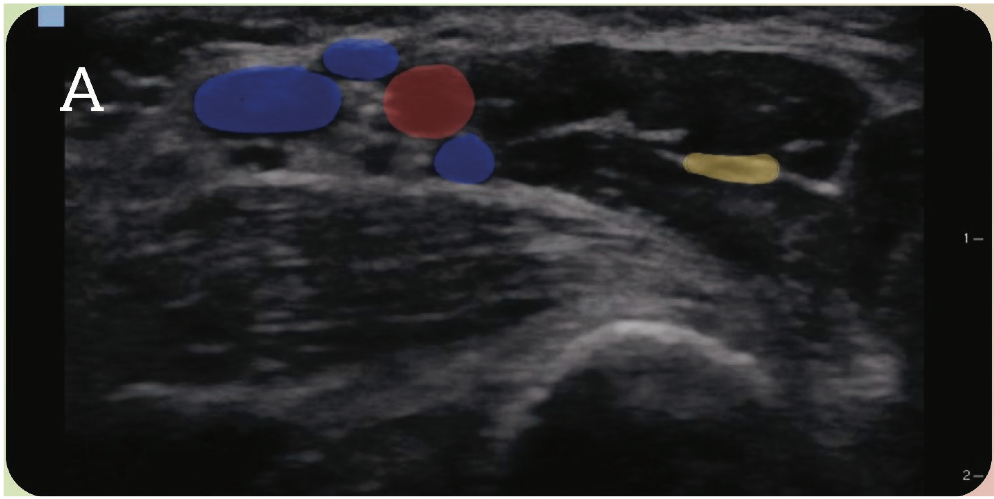
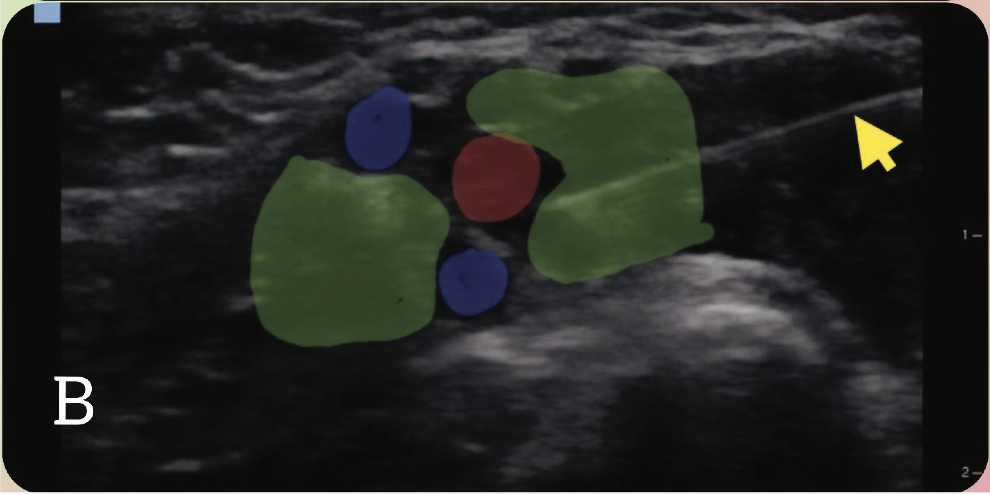
It was decided to perform an axillary BPB under procedural sedation. Immediately prior to induction of anesthesia, noninvasive blood pressure was registered at 125/87 mmHg. At induction, the patient received 1 mg of midazolam and 30 μg of fentanyl intravenously, and sedation was maintained with a propofol infusion at a dose of 6–8 mg/kg/h. The axillary BPB (Figure 1) was performed under aseptic conditions with ultrasound guidance (eZono 4000 device, 22G/50 mm needle, in-plane technique). A total of 8 ml of 0.5% levobupivacaine and 5 ml of 2% lidocaine was administered around the nerves of the plexus, while 1 mL of each of the aforementioned local anesthetics was administered around the musculocutaneous nerve, whose branches innervate the skin of the lateral forearm. The total administered doses were 1.4 mg/kg of levobupivacaine and 3.33 mg/kg of lidocaine. Standard monitoring of vital signs was applied.
During the procedure, the patient remained completely hemodynamically and respiratorily stable, with oxygen support at 3 l/min via face mask and with mean arterial pressure readings between 85 and 90 mmHg.
Emergence from anesthesia was uneventful and without complications requiring intervention, upon which the patient was transferred to the hospital ward. Postoperative analgesia was satisfactory, and 500 mg of intravenous acetaminophen was administered only after eight hours since the procedure had passed. Postoperative pain was monitored using the Numeric Rating Scale (NRS), and repeated doses of analgesics were administered in cases of reported pain intensity of three or higher. The total dose of acetaminophen during the first postoperative day was 1 g. As no opioids were administered postoperatively, total opioid use was limited to the induction dose of fentanyl (0.83 μg/kg). No postoperative complications were observed, including nerve injury, puncture-site infection, or toxic effects of local anesthetics.
DISCUSSION
Establishing reliable and long-lasting vascular access for dialysis in pediatric patients with end-stage renal disease is of critical importance. Although alternative options exist, such as venous and peritoneal catheters, AV fistula formation remains the gold standard [1]. Historically, such patients have been managed exclusively under general anesthesia. However, there has been a shift towards the use of various regional anesthesia techniques in the adult population [4],[5],[6]. Initially, local anesthetic infiltration was used. However, brachial plexus blocks have emerged as the primary modality for forearm fistula formation due to their ability to provide surgical anesthesia [7]. In adults, fistula formation under BPB is widely performed in awake patients or under sedation, whereas in children, this is still not the case, and procedures are predominantly performed under mandatory general anesthesia. In children, the use of peripheral nerve blocks in awake patients, patients under procedural sedation, or under general anesthesia has not been associated with an increased incidence of complications [8]. This is supported by the requirement that patients undergoing elective procedures must demonstrate strict adherence to preoperative fasting guidelines, and that factors possibly contributing to regurgitation and subsequent aspiration of gastric contents (e.g., gastroesophageal reflux, recent vomiting of any etiology, emetogenic surgical procedures, administration of emetogenic drugs) must be clearly identified [9].
Adequate postoperative pain control is of paramount importance and may prevent exaggerated pain responses later in life [10]. To achieve this while minimizing opioid use, peripheral nerve blocks have been proposed as an effective modality [11]. The benefit of this block has also been observed in terms of primary fistula patency. Specifically, in adult patients, better and more durable fistula patency outcomes have been reported compared with patients who did not receive a block [4],[5].
In the pediatric population, this effect has not yet been investigated and can only be hypothesized. Unfortunately, BPBs are still not routinely used in children undergoing forearm AV fistula formation. Children, as a population, are more prone to difficult intubation and airway hyperreactivity, which leads to a higher incidence of respiratory complications such as laryngospasm and bronchospasm, particularly in the presence of concomitant risk factors that contribute to such hyperreactivity [12–14]. Patients identified as high risk could undergo fistula formation under sedation combined with an axillary brachial plexus block, thereby avoiding potential complications associated with endotracheal intubation. Good clinical practice dictates that, even in such cases, preparedness for emergency intubation and management of potential laryngospasm and/or bronchospasm remains essential.
The combined use of short-acting and long-acting local anesthetics remains a subject of debate [15],[16]. The clinical experience in our hospital is consistent with studies suggesting more rapid achievement of surgical anesthesia conditions [17]. However, it has not been clearly demonstrated that combined administration of local anesthetics will not result in a faster onset of surgical anesthesia compared with the use of long-acting local anesthetics alone [18].
Although end-stage renal disease does not significantly affect the pharmacokinetics of amide local anesthetics [19],[20], precautionary measures regarding complications associated with their use are necessary, particularly with respect to systemic toxicity. Local anesthetic systemic toxicity (LAST) is rare but is also the most severe systemic complication in regional anesthesia. It results from the primary mechanism of local anesthetics action, namely, sodium channel blockade. Given the near-universal presence of sodium channels in tissues, the clinical presentation is highly variable (perioral numbness, metallic taste, tinnitus, dizziness, arterial hypertension or hypotension, tachyarrhythmia or bradyarrhythmia, which may escalate to asystole, seizures, altered consciousness, which may escalate to a coma) and depends on the amount of drug that has entered the circulation, as well as the organ system predominantly affected [21].
In the presented pediatric case, the use of an axillary brachial plexus block provided adequate intraoperative analgesia and reduced perioperative opioid consumption during the formation of a forearm AV fistula. This approach enabled the procedure to be performed under procedural sedation, thereby avoiding anticipated difficult intubation and potential complications associated with it. In potential routine application, it is essential to consider the maximum allowable doses of local anesthetics, the specifics of their use in children with comorbidities, as well as possible complications, among which local anesthetic systemic toxicity is the most significant.
Informations

-
Keywords:
-
Received:
-
Revised:
-
Accepted:
-
Online first:
-
DOI:
-
Cite this article:

Lazar Jakšić
University Children’s Hospital
10 Tiršova Street, 11000 Belgrade, Serbia
E-mail:
1. Preka E, Shroff R, Stronach L, Calder F, Stefanidis CJ. Update on the creation and maintenance of arteriovenous fistulas for haemodialysis in children. Pediatr Nephrol. 2021 Jul;36(7):1739-49. doi: 10.1007/s00467-020-04746-6. [CROSSREF]
2. Raina R, Joshi H, Chakraborty R, Sethi SK. Challenges of long-term vascular access in pediatric hemodialysis: Recommendations for practitioners. Hemodial Int. 2021 Jan;25(1):3-11. doi: 10.1111/hdi.12868. [CROSSREF]
3. Ahmed OF, Hamodat OM, Kakamad FH, Abduljabbar RS, Salih AM, Omar DA, et al. Outcomes of arteriovenous fistula for hemodialysis in pediatric age group. Ann Med Surg (Lond). 2021 Nov 23;72:103100. doi: 10.1016/j.amsu.2021.103100. [CROSSREF]
4. Montelongo S, Brooks DE, Klopfenstein J, Peden EK. Surgical creation of upper extremity arteriovenous fistula and grafts: a narrative review. Cardiovasc Diagn Ther. 2023 Feb 28;13(1):147-55. doi: 10.21037/cdt-21-565. [CROSSREF]
5. Tomas VG, Hollis N, Ouanes JP. Regional Anesthesia for Vascular Surgery and Pain Management. Anesthesiol Clin. 2022 Dec;40(4):751-73. doi: 10.1016/j.anclin.2022.08.016. [CROSSREF]
6. Weeks JJ, Johnson PA, Garcia-Tomas V. Regional anesthesia for peripheral vascular surgery: what does the evidence tell us? Curr Opin Anaesthesiol. 2025 Oct 1;38(5):645-51. doi: 10.1097/ACO.0000000000001551. [CROSSREF]
7. Nijs K, Hertogen P’, Buelens S, Coppens M, Teunkens A, Jalil H, et al. Axillary Brachial Plexus Block Compared with Other Regional Anesthesia Techniques in Distal Upper Limb Surgery: A Systematic Review and Meta-Analysis. J Clin Med. 2024 May 29;13(11):3185. doi: 10.3390/jcm13113185. [CROSSREF]
8. Pinto N, Sawardekar A, Suresh S. Regional Anesthesia: Options for the Pediatric Patient. Anesthesiol Clin. 2020 Sep;38(3):559-75. doi: 10.1016/j.anclin.2020.05.005. [CROSSREF]
9. He Y, Wang R, Wang F, Chen L, Shang T, Zheng L. The clinical effect and safety of new preoperative fasting time guidelines for elective surgery: a systematic review and meta-analysis. Gland Surg. 2022 Mar;11(3):563-75. doi: 10.21037/gs-22-49. [CROSSREF]
10. Eccleston C, Fisher E, Howard RF, Slater R, Forgeron P, Palermo TM, et al. Delivering transformative action in paediatric pain: a Lancet Child & Adolescent Health Commission. Lancet Child Adolesc Health. 2021 Jan;5(1):47-87. doi: 10.1016/S2352-4642(20)30277-7. [CROSSREF]
11. Raney EM, van Bosse HJP, Shea KG, Abzug JM, Schwend RM. Current State of the Opioid Epidemic as it Pertains to Pediatric Orthopaedics from the Advocacy Committee of the Pediatric Orthopaedic Society of North America. J Pediatr Orthop. 2018 May/Jun;38(5):e238-44. doi: 10.1097/BPO.0000000000001143. [CROSSREF]
12. Kenth J, Walker R. Assessment and management of the predicted difficult airway in neonates, infants and children. Anaesth Intensive Care Med. 2024 Oct;25(10):685-702. doi: 10.1016/j.mpaic.2024.07.006. [CROSSREF]
13. Kim HS, Kim YS, Lim BG, Lee JH, Song J, Kim H. Risk Assessment of Perioperative Respiratory Adverse Events and Validation of the COLDS Score in Children with Upper Respiratory Tract Infection. Medicina (Kaunas). 2022 Sep 23;58(10):1340. doi: 10.3390/medicina58101340. [CROSSREF]
14. Hii J, Templeton TW, Sommerfield D, Sommerfield A, Matava CT, von Ungern-Sternberg BS. Risk assessment and optimization strategies to reduce perioperative respiratory adverse events in pediatric anesthesia-Part 1 patient and surgical factors. Paediatr Anaesth. 2022 Feb;32(2):209-16. doi: 10.1111/pan.14377. [CROSSREF]
15. Lin C, Guerrero AL, Jesin J, Tangri R, Luginaah NA, Kumar K, et al. Comparing block characteristics of mixtures of short/intermediate- and long-acting local anesthetics for peripheral nerve block: a systematic review and meta-analysis. Braz J Anesthesiol. 2025 May-Jun;75(3):844617. doi: 10.1016/j.bjane.2025.844617. [CROSSREF]
16. Almasi R, Rezman B, Kriszta Z, Patczai B, Wiegand N, Bogar L. Onset times and duration of analgesic effect of various concentrations of local anesthetic solutions in standardized volume used for brachial plexus blocks. Heliyon. 2020 Sep 2;6(9):e04718. doi: 10.1016/j.heliyon.2020.e04718. [CROSSREF]
17. Aguilera G, Tabilo C, Jara Á, Aliste J. 0.25% bupivacaine-1% lidocaine vs 0.5% bupivacaine for ultrasound-guided infraclavicular brachial plexus block: a randomized controlled trial. Reg Anesth Pain Med. 2025 Aug 5;50(8):627-34. doi: 10.1136/rapm-2024-105511. [CROSSREF]
18. Pietroski Dos Santos N, Silva VP, Oliveira GSDS, Musacchio VC, Carvalho VH. Efficacy of long-acting local anesthetics versus their mixture with shorter-acting local anesthetics for peripheral nerve blocks guided by ultrasound: a systematic review with meta-analysis of randomized controlled trials. Reg Anesth Pain Med. 2026 Feb 5;51(2):132-41. doi: 10.1136/rapm-2024-106104. [CROSSREF]
19. Heppolette CAA, Brunnen D, Bampoe S, Odor PM. Clinical Pharmacokinetics and Pharmacodynamics of Levobupivacaine. Clin Pharmacokinet. 2020 Jun;59(6):715-45. doi: 10.1007/s40262-020-00868-0. [CROSSREF]
20. Uppal NN, Jhaveri M, Hong S, Shore-Lesserson L, Jhaveri KD, Izzedine H. Local anesthetics for the Nephrologist. Clin Kidney J. 2021 Jul 2;15(2):186-93. doi: 10.1093/ckj/sfab121. [CROSSREF] Erratum in: Clin Kidney J. 2021 Oct 05;15(1):182. doi: 10.1093/ckj/sfab144. [CROSSREF]
21. Schweitzer-Chaput A, Callot D, Bouazza N, Lesage F, Oualha M, Paret N, et al. Local anesthetics systemic toxicity in children: analysis of the French pharmacovigilance database. BMC Pediatr. 2023 Jun 24;23(1):321. doi: 10.1186/s12887-023-04126-7. [CROSSREF]
- Figure 1. A. Axillary artery (red), axillary veins (blue), musculocutaneous nerve (yellow). B. Axillary artery (red), axillary veins (blue), local anesthetic (green), needle (yellow arrow)
- Figure 1. A. Axillary artery (red), axillary veins (blue), musculocutaneous nerve (yellow). B. Axillary artery (red), axillary veins (blue), local anesthetic (green), needle (yellow arrow)