


The role of health information systems in transforming and enhancing the efficiency of Angola’s health system: challenges and opportunities
- Instituto Superior Politécnico Tundavala (ISPT), Huila – Angola, Lubango, Angola
- University of Belgrade, Faculty of Medicine, Belgrade, Serbia
- University of Belgrade, Faculty of Organizational Sciences, Belgrade, Serbia
ABSTRACT
Health Information Systems (HIS) are systems designed to collect, store, process, and provide information on both individual and population health, as well as on the management, organization, structure, and functioning of the health system. Their primary purpose is to support decision-making aimed at achieving national health goals. The research objectives were to describe the effectiveness of the Health Information System of Angola (HIS Angola), and to identify challenges for implementing and using HIS by users. The research was based on the assumption that the current form of the HIS provides only a minimal set of data necessary for formulating proposals for actions, policies, and practices aimed at improving the quality, financing, and management of health services, as well as reducing inequalities in access to health care. The research employed a bibliographic method and documentary analysis, combining a review of relevant literature on the role of the HIS in Angola and recommended strategies for its transformation and effectiveness, with a comparative analysis of health system indicators. The historical-logical method was used to explore the origin, development, and evolution of the HIS, while the deductive-inductive method was applied to examine the hypothesis regarding the effectiveness of Angola’s HIS. For the descriptive qualitative and quantitative analysis, we will use standard WHO indicators related to health information systems. These include indicators on health policy (e.g., strategic plans and implementation of HIS), health service delivery (e.g., access and utilization), and health system performance (e.g., response time and service quality). Additionally, we will consider indicators reflecting educational (e.g., IT training for health professionals) and financial (e.g., investments in health care and health information and communication technologies) aspects. The results indicate that Angola’s Health Information System (HIS) has improved through the transition to the DHIS2 platform, leading to enhanced data availability and better management of health services. However, significant challenges persist, including limited resources, inadequate infrastructure, uneven distribution of health personnel, and insufficient IT training. Indicators related to health service access and utilization, response time, and service quality suggest only modest progress, while financial investments remain inadequate to support further development of the system.
Conclusion: Angola’s HIS has the potential to significantly enhance health system management and service quality. However, to achieve greater effectiveness and improve health coverage and efficiency, sustained investment is needed in human resources, infrastructure, and training, along with a more equitable distribution of health professionals.
INTRODUCTION
Health organizations must be strategically managed, taking into account the complexity and diversity of health services. This requires an integrated model of information and knowledge, where strategic management relies on the continual use of information technologies and systems [1]. Since the emergence of electronic information systems after the First World War, particular attention in medicine has been devoted to digital standards and health information systems (HIS) [2]. These systems facilitate the fast and secure flow of information, while ensuring continuous access to and retrieval of data by healthcare professionals, thereby supporting the quality of healthcare delivery [3].
Health information systems are a key component in responding to the growing demands for healthcare, as service quality plays a crucial role in preserving health. The development and effective use of HIS significantly contribute to improving that quality [4]. Well-designed and effectively managed components of HIS, such as the collection, storage, processing, and analysis of health data, enable data-driven decision-making and efficient resource management, both of which are essential for delivering high-quality healthcare [5]. According to the World Health Organization, the primary goal of health information systems is to generate relevant information that supports transparent, evidence-based decision-making within the health system [6],[7]. From the perspective of healthcare professionals, HIS facilitate the collection and management of patient data across various healthcare settings [8]. In addition to supporting clinical care, HIS also contribute to research, education, disease surveillance, and the monitoring of service quality [9]. However, their effective functioning depends on the fulfillment of several preconditions, including political, administrative, organizational, and financial support, as well as the establishment of appropriate legal frameworks for data protection and sharing.
Despite the growing need for high-quality information, many health information systems in developing countries face significant challenges, including limited resources, inadequate infrastructure, and insufficient coordination [4]. While HIS offer substantial opportunities to enhance service quality, optimize administrative processes, and strengthen responses to public health emergencies, their effective implementation is often hindered by obstacles such as inadequate training, insufficient technological infrastructure, reimbursement issues, resistance to change, and gaps in legal frameworks for data protection [4]. Research aimed at overcoming these challenges is essential for building a more resilient, accessible, and efficient healthcare system.
The objectives of this research are to evaluate the effectiveness of Angola’s existing health information system and to identify the key challenges faced by users in its implementation and utilization.
The central assumption of the study is that, in its current form, HIS Angola provides at least a minimum set of essential information needed to formulate actionable proposals, policies, and practices aimed at improving the quality, financing, and management of health services, as well as reducing disparities in access to healthcare.
METHODOLOGY
The research employed a review of relevant literature on the role of HIS in Angola to conduct a qualitative analysis of documents outlining recommended strategies for its transformation and improved efficiency. This included indicators related to IT training for healthcare workers and financial aspects, such as investments in healthcare and in health information and communication technologies, alongside a quantitative analysis of the available health indicators within Angola’s HIS. The qualitative analysis employed the historical-logical method, with a focus on understanding the origin, development, and evolution of HIS. The deductive-inductive method was used to examine the hypothesis regarding the effectiveness of Angola’s HIS.
For the descriptive quantitative analysis of Angola’s HIS, WHO-standard qualitative and quantitative indicators were selected, such as:
1. Health policies (e.g., strategic plans and implementation of health information systems);
2. Population health status:
a. Vaccination coverage rate;
b. Maternal mortality rate per 100,000 live births;
c. Neonatal mortality rate per 1,000 live births;
d. Percentage of the population diagnosed with chronic diseases, such as diabetes and hypertension;
e. Number of new cases of infectious diseases, such as malaria, tuberculosis, and HIV/AIDS, per 100,000 population.
3. Healthcare service delivery (e.g., access and utilization) and health system performance (e.g., coverage of prenatal care):
a. Human resource availability: number of physicians per 10,000 population; number of nurses per 10,000 population;
b. Workforce structure indicators: % of employed physicians; % of nurses employed in hospitals; and the nurse-to-physician ratio;
c. Percentage of the population with access to basic healthcare services, including medical consultations and hospital care;
d. Total number of consultations per physician in primary healthcare;
e. Percentage of pregnant women receiving adequate prenatal care;
f. Hospitalization rate: number of hospitalizations per 100 population;
g. Hospital bed occupancy rate.
The analyzed data are presented in both tabular and graphical formats, facilitating their visualization in the context of the transformation and efficiency of Angola’s health system.
RESULTS
Characteristics of the Health System and the Effectiveness of Angola’s HIS
Angola’s distinctive health system, established in 1975 under Law 9/75, is focused on primary health care, disease prevention, health promotion, community-based care, inclusive decision-making, and the protection of vulnerable populations. Civil Registration and Vital Statistics (CRVS) serve as fundamental data sources not only for the health sector but also for the broader administrative system [10]. Due to Angola’s prolonged colonial history and the 27-year civil war that followed its independence in 1975, the country went many years without conducting a population census. The first National Demographic and Health Survey, along with the fourth Multiple Indicator Survey, covering births, child and maternal health, nutrition, and infectious diseases, was carried out between October 2015 and March 2016. These data now serve as a vital resource for monitoring progress and assessing the effectiveness of health policies and programs [11].
Angola’s health information system is overseen by an autonomous body within the Ministry of Health-the Office of Studies, Planning, and Statistics (GEPE). Since 2015, the Ministry of Health has been transitioning its health information system to the District Health Information Software 2 (DHIS2) platform, aiming to enhance data visibility and strengthen support for decision-making. The implementation of DHIS2 has been supported by key partners, including WHO, USAID, and UNICEF. On the DHIS2 platform, data are initially collected in paper format at Health facilities, then aggregated and submitted to the central system at the municipal or provincial level. However, some programs continue to use parallel reporting systems to capture specialized data that are not accommodated by the standard reporting framework. One example is data related to the control of neglected tropical diseases, which are also collected during mass drug administration campaigns. In such cases, data are gathered from schools and communities and then aggregated at the district level, much of it still recorded and processed manually on paper. Together, these systems play a critical role in supporting evidence-based health policymaking by enabling efficient resource allocation and real-time monitoring of key health indicators.
According to the Luanda Report on the health sector in Angola, published by the Embassy of India in May 2022, Angola is classified as an upper-middle-income country, with a population of 33 million, 67% of whom reside in urban areas. The country’s life expectancy at birth is 63.1 years. By gender, the population is composed of 49.4% men and 50.6% women. Poverty affects an estimated 48.4% of the population, based on 2019 data using the international poverty line of $1.90 per person per day. According to World Bank figures, only 2.96% of Angola’s gross domestic product was allocated to health expenditure in 2020. According to the same source, the Government of Angola financed approximately 42% of the total health sector budget in 2018, with the remainder covered by multilateral and bilateral partners engaged in health cooperation. However, fluctuations in gross domestic product, often driven by volatile oil prices, continue to impact the government’s capacity to invest consistently in robust data collection and analysis systems. Angola has a sizable labor force, with 52% of the population aged between 15 and 64, alongside a high fertility rate of 5.6 live births per woman. According to the National Strategic Plan for Neglected Tropical Diseases (2021–2025) and data from the National Institute of Statistics, epidemiological mapping conducted between 2014 and 2018–2019 updated critical information on tropical diseases, particularly schistosomias, which is essential for the effective planning of mass deworming campaigns [12],[13].
The program “Strengthening the Angolan Health System” has played a key role in supporting the Angolan government with the institutionalization of national health policies and the development of tools to enhance the Health Information System (HIS) [14]. This program supported the development of the DHIS2 User Manual along with its accompanying technical guide. Upon its introduction, the program focused on updating information, policies, and protocols in key areas such as HIV, family planning, malaria, and immunization. It was subsequently expanded to include data on tuberculosis and community-based activities, including those conducted by ADECOS (Agents for Community Development and Health) [10]. Since 2019, the National Program for the Control of Neglected Communicable Diseases (PNCDTN) has been working to integrate its data into the DHIS2 platform, ensuring comprehensive recording of information to enable continuous monitoring and efficient access to results. These efforts have been crucial in supporting informed decision-making at both central and local levels.
At the central level, the program Strengthening the Angolan Health System established a centralized DHIS2- based database for the Ministry of Health, enabling the monitoring of 125 key health indicators [15]. To enhance information management at health facilities, the Ministry utilizes a dataset known as Health Maps, maintained by the GEPE Research and Projects Department. These maps provide geographic information on health facilities, alongside detailed data on staffing levels, infrastructure, available services, hospital beds, ambulances, and other transport vehicles within each municipality.
Significant improvements were also achieved at the municipal level. In Huambo, for example, the program Strengthening the Angolan Health System trained 52 health units and the Provincial Directorate of Health to use digital tools, such as Excel, for generating monthly reports. This training led to a reduction in reporting errors and a marked improvement in data quality. In Luanda, the program successfully decreased errors in HIV registration reports within target health units from 9.05% to 1.58%, highlighting the positive impact of effective HIS utilization. The program also contributed significantly to improving the timely submission of monthly family planning reports, with compliance rising from 40% to 92% [15]. Additionally, it focused on training municipal and district managers in data utilization for health planning and budgeting. As a result, Huambo became the first province in Angola to develop comprehensive health plans for all its municipalities. Specifically, the program supported the creation of a five-year provincial health plan alongside 11 municipal health plans.
According to the latest WHO assessment, Angola has made significant progress in strengthening its health system through the provision of technological equipment to GEPE, supported by the European Union (EU). This donation includes six laptops, five of which were financed by the EU, aimed at enhancing the capacity and effectiveness of HIS. This donation is part of a broader initiative that includes the provision of 64 laptops and 354 smartphones to support the technical infrastructure of the Ministry of Health [16]. Additionally, with support from WHO, GEPE is engaged in revising the National Health Development Plan and the Strategic Plan for the National Health Information System (PESIS), as part of ongoing efforts to strengthen HIS nationwide. Despite these advances, Angola continues to face challenges in improving the availability and quality of data on key development indicators, such as the Sustainable Development Goals (SDGs) related to health, birth registration, and certified causes of death based on hospital diagnoses following ICD-10/11 classifications, among others [17]. WHO support is therefore focused on operationalizing the National Health Information System (NHIS) and developing a new strategic plan for 2024–2030, which will provide comprehensive guidance for strengthening the national health system.
With advancing technology and ongoing development in Angola’s health sector, the Ministry of Health (MINSA), in partnership with WHO and with financial support from the European Union, has initiated data collection for the Strategic Plan of the National Health Information System (NHIS) 2024–2030. This effort aims to enhance the quality of health services across the country, involving experts from various government ministries, UN agencies, and international organizations, under the leadership of GEPE and the WHO Regional Office for Africa [18]. Among its initiatives, WHO is committed to training the national team on auditing methodologies for the health information system, ensuring sustainable progress in strengthening Angola’s health data infrastructure.
Challenges in implementing and utilizing HIS
From Caneca’s perspective, considering Angola’s historical, social, political, and economic context, the health sector faces significant challenges, yet notable achievements have been made-especially following years of civil war. During the country’s reconstruction, Angola’s health system struggled to efficiently organize and manage health information [19]. The absence of reliable data has impeded the development of evidence-based public health policies. The destruction of infrastructure and the breakdown of the healthcare system have underscored the urgent need for a more efficient HIS that can deliver accurate data to support decision-making and enhance the delivery of health services.
HIS provides quantitative data, including descriptions of population health status and mortality trends over time, analyses of the causes of health problems, quantification of relationships between health outcomes and risk or protective factors, and evaluations of the effectiveness of public health programs and interventions. However, Angola’s HIS suffers from a lack of cohesion, resulting from fragmented development shaped by administrative and economic pressures over the years [20]. According to Sanjuluca, hospital healthcare in Angola remains inefficient. There is inadequate collection and generation of data on health financing and expenditures, which hampers effective monitoring of equity [21]. The fragmentation of Angola’s Health Information System (HIS) results in a poorly connected representation of patients’ health status, as hospitals, laboratories, and specialists do not share information due to data being stored in separate, disconnected databases. Therefore, it is essential for Angola to strengthen its HIS, transforming it into a valuable tool for health system managers and planners, while also enhancing the efficiency of health institution management.
Challenges such as unreliable data and system fragmentation began to be addressed with the support of the National Institute of Statistics, which played a pivotal role in integrating data from multiple sources. This integration facilitated the development of a more coherent and efficient Health Information System (HIS). Consequently, HIS, backed by the National Institute of Statistics, became a crucial tool in closing gaps in data collection and monitoring of health indicators, enabling a clearer understanding of Angola’s health situation.
Angola’s commitment to strengthening its health system is documented in reports detailing specialized training for experts on the implementation and use of health information systems. Additional training focused on enhancing knowledge of the prevention and control of healthcare-associated infections. In 2023, five workshops were conducted across the provinces of Huambo, Uíge, Luanda, Cunene, and Moxico, where 260 technicians received training aimed at improving the practical skills and expertise necessary for effective health risk management [22]. Furthermore, with support from WHO, the Angolan Ministry of Health conducted training on epidemiological intelligence and the use of DHIS2, a health information management system, to enhance disease surveillance and health data management. Epidemiological intelligence is an approach that strengthens public health surveillance by leveraging advanced data analytics and technologies for risk assessment and decision-making support. Beyond merely tracking diseases, epidemiological intelligence aims to predict health risks and deliver accurate information to safeguard population health.
According to an analysis of the general state budget conducted by UNICEF Angola, the 2024 budget is estimated at 24.7 billion kwanzas, with approximately 5.5 percent (around 1.36 billion kwanzas) allocated to health. This represents a nominal increase of 1.3 percent in the health budget compared to 2023. A significant portion of these funds is dedicated to the construction, refurbishment, and equipping of health infrastructure, aimed at expanding access to and improving the quality of services across various regions of the country [23]. Moreover, the budget underscores the importance of human capital, allocating resources for the training and professional development of health workers. Significant investments are directed towards programs combating child malnutrition, malaria vaccination, and other public health initiatives, reflecting government priorities to improve population health. However, funding for health information and communication technologies, while included, remains limited, indicating a need for greater focus in this area to enhance the management and efficiency of health services.
The primary goal of HIS in Angola is to enhance the collection, processing, analysis, and dissemination of health data to improve coordination, accessibility, quality, and efficiency of health interventions. Currently, managing the HIS remains one of the major challenges faced by healthcare institutions overall-and hospitals in particular-especially as they seek to leverage information technologies to support more effective clinical and administrative decision-making [21]. Therefore, as Angola continues to rebuild its health system, strengthening HIS will be essential to ensure that public health policies are evidence-based, thereby enhancing the equity, accessibility, and efficiency of health services.
Health indicators within Angola’s HIS
The analysis confirmed that Angola’s HIS includes 125 health indicators, which are essential for developing proposals for actions, policies, and practices aimed at improving the quality, financing, and management of health services, as well as reducing inequalities in access to healthcare.
Although DHIS2 serves as a fundamental tool for managing health data, direct access to the system is restricted. Only authorized users, such as healthcare technicians and managers, are permitted to access detailed and sensitive information, thereby ensuring data privacy and security.
Therefore, the Office of Studies, Planning and Statistics of the Ministry of Health of Angola, acting as a delegated body of the National Institute of Statistics, publishes the Yearbook of health statistics. This publication reflects the work of health technicians engaged in HIS at all levels. It presents key health indicators for Angola’s population and serves as an official reference for policymakers, partners, and the general public.
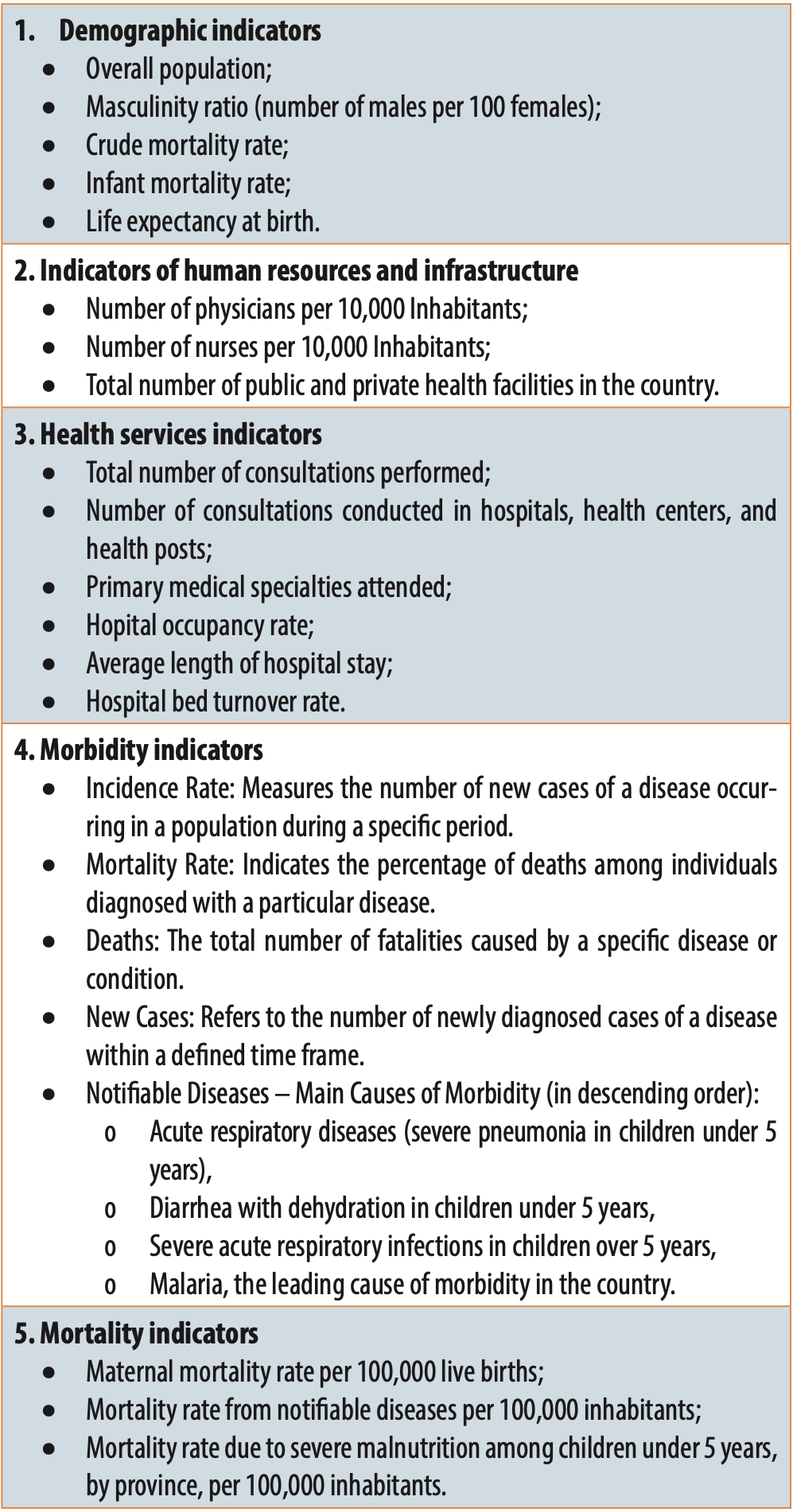
The Yearbook of Health Statistics 2021, available in both print and digital formats on the website of the National Institute of Statistics, offers a comprehensive and detailed overview of the country’s health landscape and serves as a vital tool for decision-making. According to the publication, Angola’s health indicators are organized into chapters reflecting various dimensions of the health system [13]. These indicators are derived from the Health Information System and the broader national health system, and are complemented by demographic data provided by the National Institute of Statistics (Table 1).
Indicator analysis for 2020-2021
Higher coverage rates for vaccines such as BCG (78.8%) and Rotavirus (68.5%) indicate stronger commitment and effectiveness in the implementation of vaccination campaigns targeting these diseases. In contrast, low coverage for yellow fever (44.0%) and TT2 vaccination among pregnant women (1.7%) points to challenges in healthcare access, logistical shortcomings, and weaknesses in targeted immunization programs for vulnerable groups, particularly pregnant women. Moderate coverage levels in 2021 for vaccines such as hepatitis B (57.5%), poliomyelitis (62.0% inactivated and 64.2% oral), and the pneumococcal conjugate vaccine (Pneumo 3) (58.4%) underscore the need to intensify efforts aimed at expanding immunization outreach.
As shown in Table 2, the most common direct causes of maternal mortality were hemorrhage (77.59 deaths in 2020 and 29.32 in 2021), toxemia (37.10 in 2020 and 54.15 in 2021), and abortion (11.76 in 2020 and 59.08 in 2021), with a dramatic increase in abortion-related deaths between the two years. Other contributing factors included puerperal infections, uterine rupture, and ectopic pregnancy. In total, direct maternal deaths rose significantly from 187.84 in 2020 to 1,254.93 in 2021. Indirect causes of maternal mortality, such as malaria (19.7 in 2020 and 61.64 in 2021) and HIV/AIDS (4.96 in 2020 and 7.71 in 2021), showed marked year-on-year increases. Tuberculosis and hepatitis also remained significant contributors, underscoring the need for an integrated health policy that addresses these coexisting conditions to mitigate their impact on maternal health. Notably, the total number of maternal deaths nearly doubled, rising from 239.04 in 2020 to 403.90 in 2021.
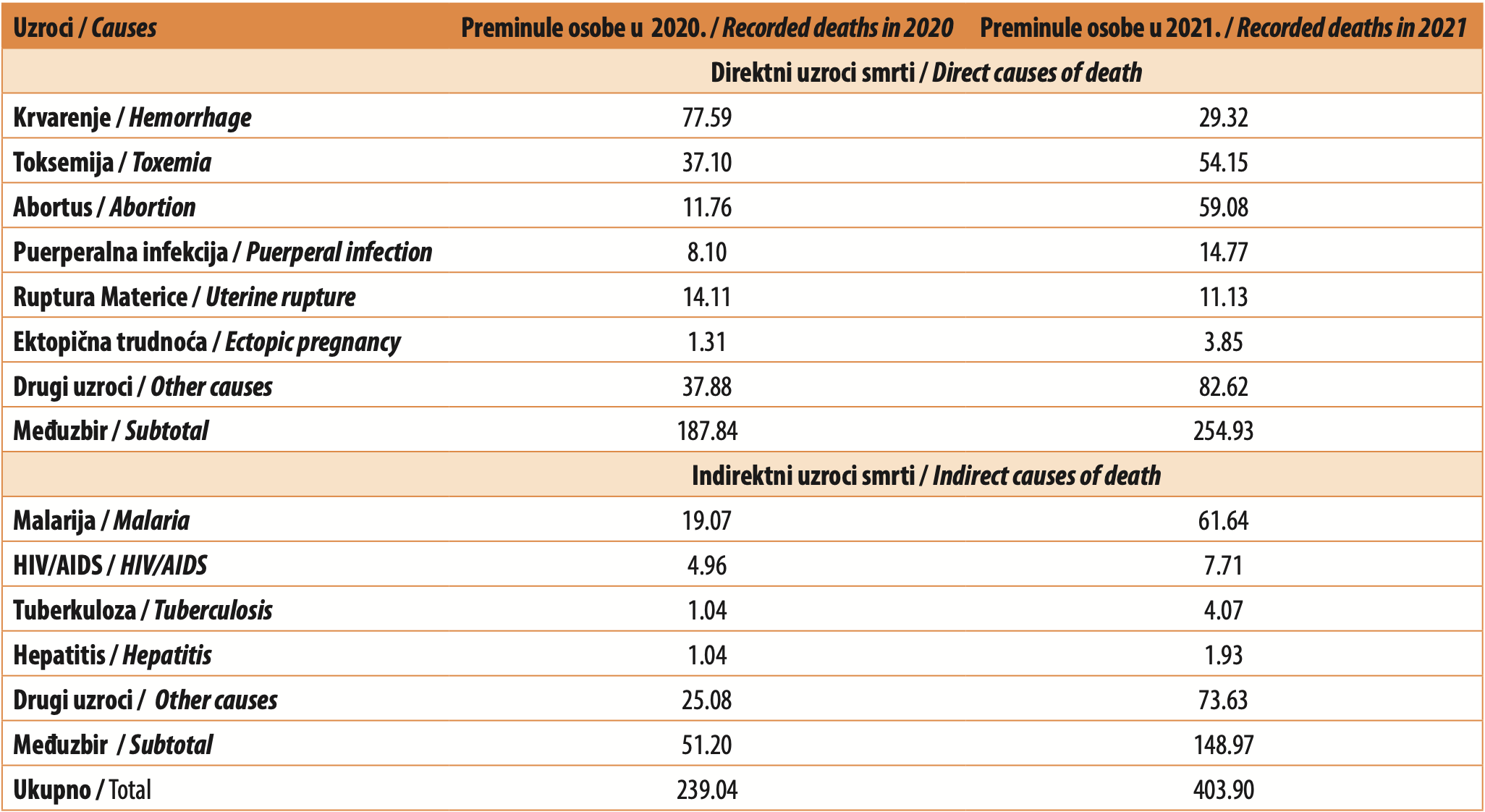
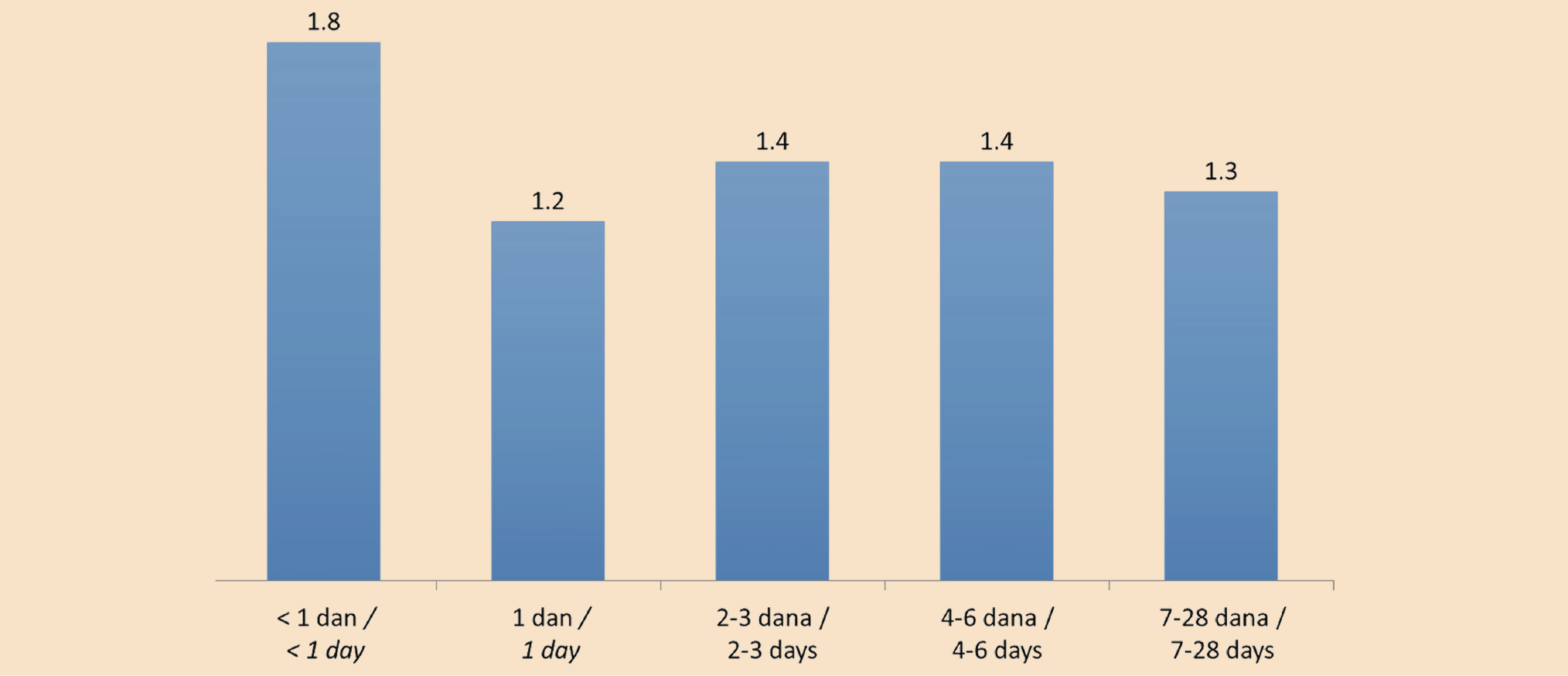
Figure 1 shows the neonatal mortality rates across different periods of early life. The highest rate was recorded within the first 24 hours of life (1.8). The overall neonatal mortality rate was 7.03 per 1,000 live births, indicating a high level of risk during the neonatal period and highlighting the need to improve the quality of newborn healthcare.
According to the Angola National Public Health Administration and the 2021 Health Statistical Yearbook, Angola’s total population in 2020 was 33,428,486. The incidence rate of new hypertension cases was 929.6 per 100,000 inhabitants. The prevalence of hypertension slightly increased from 0.93% in 2020 to 0.94% in 2021, suggesting a potential upward trend in this chronic condition. Regarding diabetes mellitus, the incidence rate of new cases was 53.81 per 100,000 in 2020 and slightly decreased to 52.66 in 2021. However, the proportion of the population living with diabetes rose notably from 0.97% in 2020 to 1.88% in 2021 [13].
During the same period, malaria recorded an alarming incidence of 22,974.06 new cases per 100,000 inhabitants in 2020, highlighting the disease’s persistence as one of the country’s major public health challenges (Table 2). In 2021, malaria case numbers remained high, demonstrating that despite ongoing control and prevention efforts, the disease continues to affect a substantial portion of the population. Tuberculosis also remains a significant health concern, with 192.94 new cases per 100,000 inhabitants in 2020. Although there was a slight decline to 182.01 new cases per 100,000 in 2021, tuberculosis continues to pose challenges-particularly in areas with limited healthcare infrastructure, where early diagnosis and effective treatment may be insufficient. Additionally, HIV/AIDS showed an increase, with 89.71 new cases per 100,000 in 2020 rising to 115.24 in 2021 [13]. Although the number of new HIV cases has declined, the epidemic remains one of Angola’s most pressing public health challenges. Successfully controlling it requires robust prevention strategies, comprehensive education, and the widespread availability of effective treatment. Equally important are improvements in healthcare infrastructure, enhanced access to early diagnosis, and the implementation of educational campaigns that promote preventive measures. Expanding treatment coverage, particularly in rural and vulnerable communities, is also crucial to curbing the epidemic.
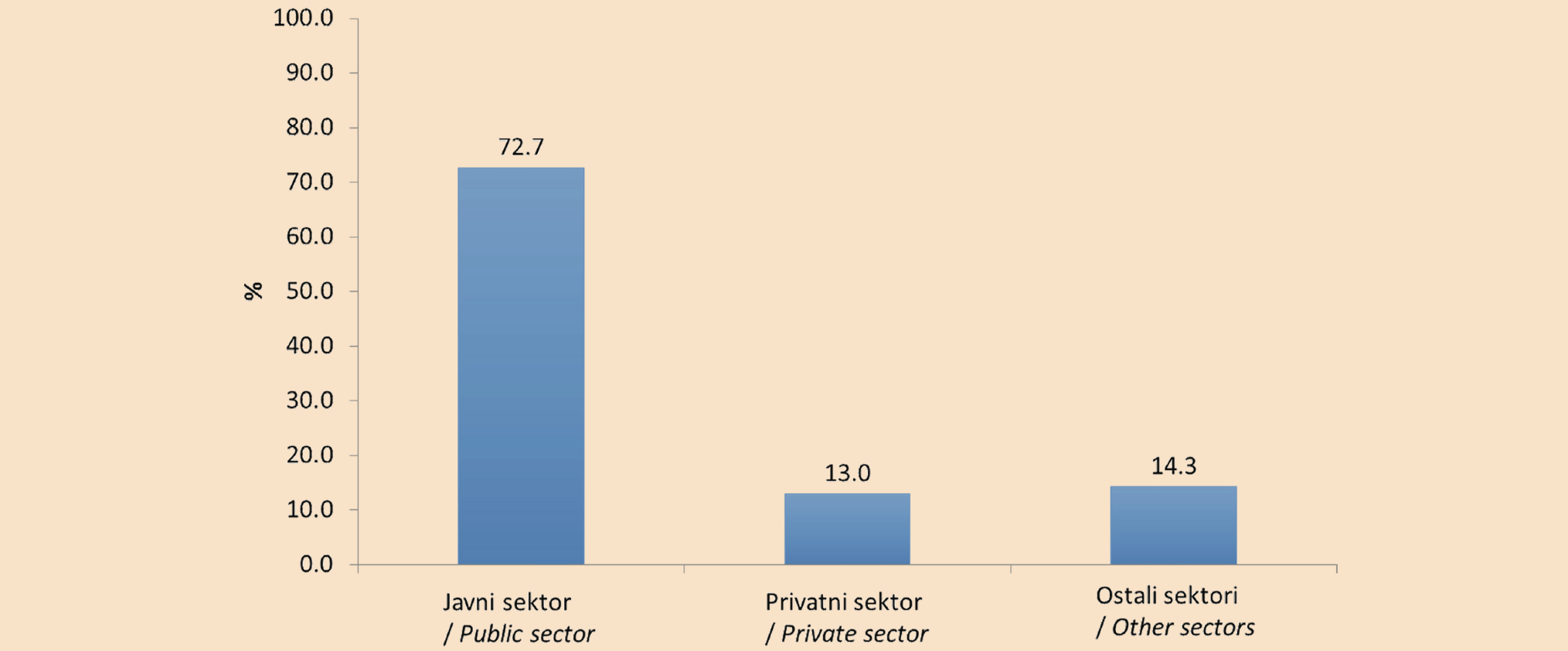
According to the National Human Resources Administration, Angola has only 2.48 doctors and 16.45 nurses per 10,000 inhabitants, with a marked disparity in their distribution between rural and urban areas. Data from the 2021 Health Statistical Yearbook of Angola also reveals an uneven allocation of employed doctors across public, private, and other sectors (Figure 2). Of the total 5,610 employed doctors, 72.7% work in the public sector, emphasizing the critical role of the public health system as the primary employer of medical specialists in the country. In contrast, 12.96% of doctors are employed in the private sector, while 14.3% work in other sectors.
According to provincial administration reports and the 2021 Health Statistical Yearbook, Angola’s public sector employs a substantial nursing workforce, with 40,006 nurses actively working in public health facilities. This workforce forms a vital pillar of the public health system, as nurses frequently provide direct patient care and support medical services. The nurseto-doctor ratio in the public sector stands at 7.13 to 1, reflecting a relatively balanced distribution that helps meet the operational needs of hospitals and health centers [13]. This relationship is crucial for ensuring that physicians receive the necessary support in patient care. However, it also highlights the urgent need to enhance the training and deployment of nurses in underserved areas, particularly in rural regions. According to the National Strategic Plan for Neglected Tropical Diseases (PEN-DTNs) 2021–2025, which draws on data from Angola’s National Development Plan, only 44.6% of the population had access to fixed health services in 2012. In Angola, fixed health services refer to care provided at permanent, physical facilities such as hospitals, health centers, clinics, and health stations, all operating from fixed locations with established infrastructure. This low coverage reflects the ongoing limitations of the health system, especially in the aftermath of the civil war, which caused extensive damage to healthcare infrastructure [12]. By 2017, access to fixed health services had increased to approximately 50%, marking progress; however, half of the population, particularly those in the most remote areas, still lacked adequate coverage. This modest improvement underscores the persistent structural barriers such as limited resources, inadequate infrastructure, and staff shortages that continue to hinder expanded healthcare access. In the public sector, with a total of 5,610 doctors, each physician conducted an average of 3,664 primary healthcare consultations during 2021. This workload amounts to over 10 consultations per doctor per day, assuming continuous year-round work, highlighting the substantial demand placed on healthcare specialists.
According to data from provincial administration reports, national hospitals, and the 2021 Health Statistical Yearbook of Angola, a substantial number of pregnant women received prenatal care in 2021, though there remains a need to further improve coverage and access. That year, a total of 1,373,062 prenatal consultations were conducted at health centers and health posts, while hospitals recorded 1,184,045 consultations. Together, these amounted to 2,557,107 prenatal consultations [13], reflecting significant efforts to support maternal health. However, the higher number of consultations in hospitals compared to health centers suggests that many women still seek care at more complex facilities, possibly due to pregnancy complications or a preference for specialized services.
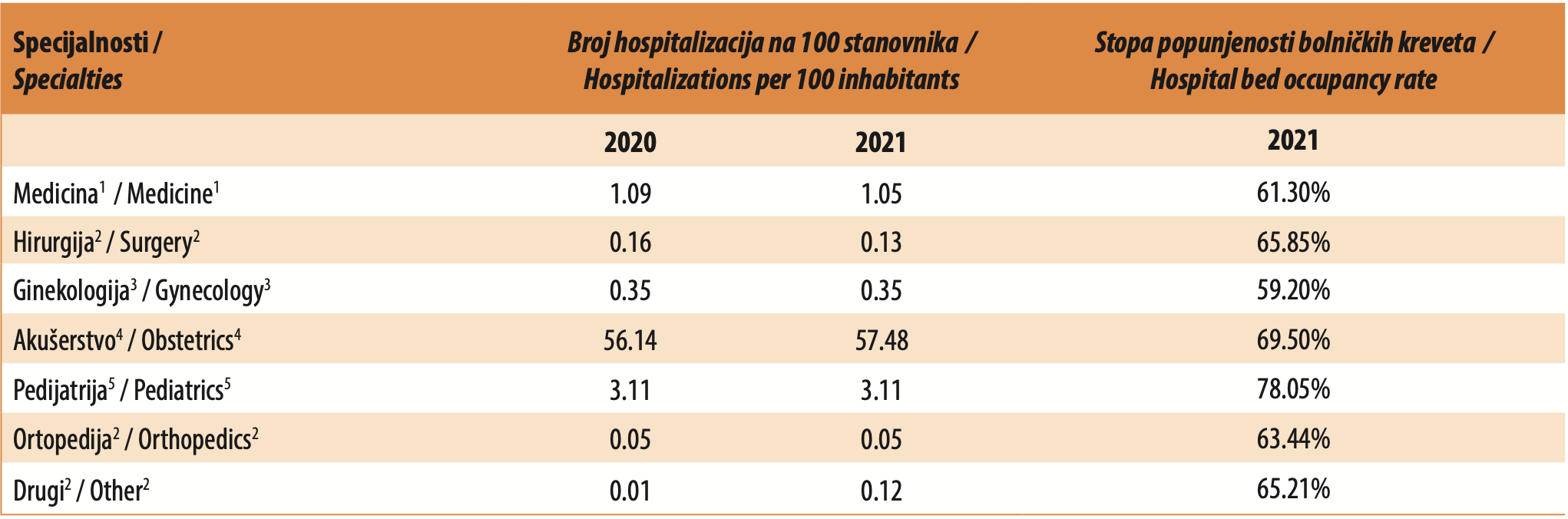
Obstetrics stands out as the specialty with the highest demand for hospital services, with hospitalization rates of 56.14 per 100 women of reproductive age in 2020 and 57.48 in 2021. This highlights the ongoing need for care related to pregnancy and childbirth, underscoring the critical role of this specialty within the health system. Internal medicine maintained stable hospitalization rates, at 1.09 in 2020 and 1.05 in 2021, reflecting a consistent pattern of admissions for general clinical conditions. Gynecology recorded lower hospitalization rates, remaining steady at 0.35 for both years. Pediatrics also showed stable demand, with hospitalization rates of 3.11 in both years, indicating sustained need for child healthcare services. Conversely, orthopedics had very low hospitalization rates of 0.05 in both years, suggesting infrequent hospital admissions in this specialty.
Regarding hospital bed occupancy across medical specialties in 2021, data in Table 3 highlight increasing pressure on the health system, particularly in pediatrics, obstetrics, and surgery. This situation underscores the need for more effective hospital management strategies to ensure quality care and maintain bed availability for patients. The internal medicine department recorded an occupancy rate of 61.30%, reflecting steady demand for ongoing medical care, likely related to chronic illnesses and conditions requiring extended follow-up. Surgery showed a higher occupancy rate of 65.85%. Gynecology had a comparatively lower rate of 59.20%, indicating less frequent hospitalizations in this specialty. Obstetrics stood out with the highest occupancy rate of 69.50%, likely due to the significant volume of births and the specialized care required during pregnancy and postpartum. Pediatrics has the highest hospital bed occupancy rate at 78.05%, indicating that pediatric services are under considerable strain-likely driven by infections and other conditions affecting children. This highlights an urgent need to strengthen pediatric infrastructure to meet growing demand. Orthopedics also shows a substantial occupancy rate of 63.44%, while the “Other” category records a high rate of 65.21%, which may reflect a diverse range of cases that do not fall neatly within specific specialties.
DISCUSSION
During nearly four decades of independence and civil war (1961–2002), Angola’s socioeconomic infrastructure, including roads, schools, and health facilities, was devastated, severely disrupting public service delivery. The country’s limited capacity to manage infectious diseases has contributed to a high disease burden, as evidenced by major outbreaks such as yellow fever in 2016 and cholera in 2017–2018, both of which significantly disrupted routine health services [10]. The country was left without a functioning health care system, reflected in maternal and infant mortality rates that were, and remain, among the highest compared to similar countries, and recorded some of the lowest gross and net primary school enrollment rates in sub-Saharan Africa.
The health status of the Angolan population is marked by high maternal and infant mortality, a heavy burden of infectious diseases, rising rates of chronic and degenerative conditions, and significant levels of preventable premature mortality [24]. Since 2005, while the incidence of underweight children and fertility rates have declined considerably, key indicators, such as infant and under-five mortality, maternal mortality, and HIV prevalence, have shown little improvement and remain high relative to the regional average [14]. Vaccines are among the most powerful tools available for protecting lives and preventing diseases like polio. By reducing the incidence of vaccine-preventable illnesses, they ease the burden on the healthcare system and free up critical resources for treating conditions that cannot be prevented through immunization [17]. Despite ongoing efforts, Angola continues to face significant challenges in achieving widespread immunization coverage. According to WHO data, it ranks among the three African countries with the highest number of zero-dose children (those who have not received even a single vaccine). An estimated half a million children remain unvaccinated against diseases targeted by the Penta 1 and Penta 3 vaccines. In addition, Angola must urgently strengthen polio immunization efforts in response to an ongoing outbreak fueled by virus importation from neighboring countries.
The high number of prenatal consultations suggests that a substantial portion of the female population has access to pregnancy care. However, the disparity between consultations at health centers and hospitals indicates that many women still seek care at higher-level facilities, possibly due to complications or a preference for specialized services. While the overall number of consultations is encouraging, it remains essential to expand access to antenatal care in remote areas and enhance the quality of services across all health facilities, ensuring that every pregnant woman receives adequate guidance, monitoring, and care for a healthy pregnancy. The doubling of maternal deaths in 2021 is deeply alarming and underscores the urgent need to improve access to health services, particularly for pregnant women facing complications or high-risk conditions such as malaria and HIV. Effective public policies focused on education, prevention, and treatment, especially in vulnerable regions, are essential to reverse this trend and safeguard maternal health. These high mortality rates also point to an urgent need to strengthen birth conditions and neonatal care, as many maternal and newborn deaths are preventable through timely interventions, skilled medical assistance, and improved health infrastructure. Additionally, elevated infant mortality between 7 and 28 days of life highlights the critical importance of postnatal care in preventing early-life complications, such as infections and respiratory illnesses. It is worth noting that the rise in mortality during the early days of life underscores the urgent need for more effective maternal and child health programs. This includes strengthening neonatal care units, enhancing the training of healthcare workers, and expanding access to quality medical services for women and children, particularly in vulnerable areas. According to UNICEF’s 2015 report Children and Women in Angola, malaria, diarrhea, acute respiratory infections, and measles remain among the leading causes of death in children under five. Public health policies must therefore address not only the conditions surrounding childbirth but also ensure continuity of care in the immediate postnatal period and intensify efforts to prevent these common, yet largely avoidable, causes of infant mortality. In Angola, malaria, tuberculosis, and HIV remain widespread and continue to pose major public health challenges. At the same time, the growing prevalence of chronic non-communicable diseases, particularly hypertension and diabetes mellitus, highlights the need for sustained attention to public health strategies. Although diabetes prevalence is still relatively low, its rising impact calls for strict monitoring, early detection, effective treatment, and robust prevention policies to reduce its burden and improve the quality of life for those affected. While indicators show modest improvements in access to consultations and hospital services, significant structural barriers persist, including limited resources, inadequate infrastructure, and a shortage of healthcare personnel. Overcoming these obstacles is essential to ensuring broader and more equitable access to health services.
Although state funding for health remains relatively low, at just 5% of total public expenditure, it has become more equitable and efficient, with public investment in primary health care having tripled.
Human resources are critical for building a sustainable public health system by developing and maintaining a highly qualified workforce equipped with the necessary technical training, scientific expertise, and specialized knowledge [25]. Angola currently has only 2.48 doctors and 16.45 nurses per 10,000 inhabitants and these figures fall well below those of countries with stronger health systems. The World Health Organization recommends an average of 10 doctors per 10,000 inhabitants to ensure adequate population health care.
Although the number of nurses is relatively more favorable, it remains insufficient to ensure efficient, high-quality coverage for the entire population. Additionally, the uneven distribution of healthcare professionals between rural and urban areas presents a significant barrier to equitable access to health services. Research highlights the importance of continued investment in the training and qualification of nurses, alongside efforts to optimize their distribution, in order to reduce regional disparities and improve access to care across the country.
The fact that two-thirds of doctors work in the public sector reflects the government’s commitment to providing affordable medical services to the broader population. While the private sector and other providers are smaller in number, they serve important roles catering to specific groups, such as the upper middle class and companies offering healthcare to their employees. This dominance of the public sector underscores the population’s reliance on public health services for medical care. However, disparities in the geographic distribution of doctors, particularly in rural and remote areas, limit the availability and quality of care, as the number of public doctors in these regions often falls short of demand.
Doctors in primary health care face significant workload pressures, managing a high volume of patients daily. This intense demand increases the risk of professional burnout, which can ultimately compromise the quality of care provided.
It is worth mentioning that the ratio between the number of doctors and the volume of consultations underscores the urgent need to increase the number of public sector doctors to reduce individual workloads and enhance care efficiency. Additionally, strategies like expanding healthcare access through trained nurses and implementing digital health solutions can help ease this pressure and improve service delivery.
The Health Information System in Angola has been a crucial tool in supporting the formulation of public health policies, particularly in the fight against neglected tropical diseases. Managed by the Office of Studies, Planning and Statistics (GEPE) within the Ministry of Health, Angola’s HIS has undergone a significant transformation since 2015 with the implementation of the DHIS2 platform. This modernization has improved data accessibility and visibility for health managers. The transition to DHIS2 marks a substantial advancement, enabling stronger decision-making support across different levels of the health system, as emphasized in the National Strategic Plan for Neglected Tropical Diseases in Angola (PEN-DTN 2021–2025) [12]. Strengthening HIS not only facilitates the implementation of health policies but also enables informed decision-making regarding resource allocation and workforce training, thereby directly contributing to the improvement of Angola’s health system. This progress is closely linked to the country’s economic performance and the level of investment dedicated to sustaining these initiatives [26]. Effective public health decision-making relies on the integration of six key health information subsystems: censuses, household surveys, public health surveillance, vital event monitoring, health service statistics, and resource tracking. In most developing countries, except for targeted disease-specific programs, public health surveillance primarily depends on passive reporting from health facilities designed to cover the entire population [27]. Additionally, sample-based surveys are conducted to manage costs.
Given the growing recognition in recent years of the importance of information exchange in decision-making [28], it is important to note that this research relies solely on publicly available data, whether estimates or original collected data, and does not include information from internal health sector documents.
In addition to the data collected by Angola’s HIS, global health data from WHO are also available [29]. Among these, health services data play a crucial role in patient management, facility administration, disease surveillance, and monitoring of service delivery and resource utilization [18]. While routine health facility data are regularly collected and reported through routine health information systems [30], other valuable sources of patient data exist. These include electronic health records, patient surveys, claims and administrative data, information on social determinants of health, disease registries, drug consumption records, laboratory results, epidemiological studies, clinical trials, and peer-reviewed research-publications vetted by experts in the field prior to publication [31]. Information on the functioning of Angola’s HIS can be obtained from various sectors and agencies responsible for data generation, synthesis, analysis, and utilization at national, regional, and global levels [6]. This information is invaluable for assessing the effectiveness of the healthcare system, advancing toward universal health coverage (UHC) and the Sustainable Development Goals (SDGs) [17], and enhancing the quality of work among health professionals [4].
Improved information management can also enhance the efficiency of pharmaceutical resource management. For example, implementing a subnational information system in South Africa’s Eastern Cape province improved access to essential medicines while reducing drug stockpiles by 39 percent. Such advancements not only lead to better health outcomes but also boost productivity, ultimately contributing to higher gross domestic product growth rates [27].
Annual reports from Angola’s HIS shape our understanding of the country’s health system progress, the opportunities available to citizens, and influence both national and global health policy discussions [32]. The technological advancement of Angola’s HIS should be aligned with health priorities and the goal of universal health coverage [33]. Data from the HIS highlight that primary health care services-such as immunization-are crucial for improving health outcomes and promoting health equity [34], underscoring the need for optimal allocation of scarce resources [35]. Moreover, strengthening HIS is a priority to support informed decision-making on effective policies, services, and health behaviors [36]. To fulfill this role, Angola’s HIS must rely not only on all available and relevant information [37] but also on comprehensive, high-quality data from both population-based and facility-based sources [38],[39], particularly those related to patient health and safety [40].
Although Angola’s HIS is not without flaws, its mechanisms for collecting, processing, analyzing, and transmitting information, as well as for supporting research, planning, and disease control, require significant improvement. Enhancing these functions is essential to better structure, operationalize, monitor, and evaluate the performance and quality of health services [9], as well as to improve the speed, safety, and cost-effectiveness of patient care [41]. Moreover, the collection of accurate and reliable data is fundamental for informed decision-making across all components of the health system. It underpins the development and implementation of management and regulatory policies, health research, human resource development, education and training, service delivery, and financing.
CONCLUSION
Angola’s modern Health Information System (HIS) was established by the Ministry of Health in 2015 and comprises 125 health indicators organized into key categories: demographic data, human resources and infrastructure, health services, morbidity, and mortality. HIS Angola functions as an integrated mechanism for collecting, processing, analyzing, and transmitting health data to improve patient care, monitor population health trends, and identify at-risk groups. The system is managed by the Office for Studies, Planning, and Statistics within the Ministry of Health, which oversees data collection, analysis, and dissemination. In collaboration with the World Health Organization and with financial support from the European Union, this office has initiated the development of the Strategic Plan for the National Health Information System covering the period 2024–2030. This plan aims to enhance the quality and accessibility of health information to support evidence-based decision-making. Efforts must address key challenges such as the lack of reliable data, insufficient digital infrastructure, fragmentation within the system (resulting from its piecemeal development over time) hospital inefficiencies, and inadequate information system management. If left unresolved, these issues undermine the effective monitoring and evaluation of health plans and programs, as well as the management of preventive, diagnostic, curative, and rehabilitative care.
Informations

-
Keywords:
-
Received:
-
Revised:
-
Accepted:
-
Online first:
-
DOI:
-
Cite this article:

Francisca da Caridade Felix Chitanga
Instituto Superior Politécnico Tundavala (ISPT)
30 Rua Patrice Lumumba Street, Lubango, Angola
E-mail:
1. Varandas CAL. Análise integrada dos sistemas de informação em saúde. Covilhã (Portugal): Universidade da Beira Interior, Ciências Sociais e Humanas; 2014.
2. Vaganova E, Ishchuk T, Zemtsov A, Zhdanov D. Health information systems: background and trends of development worldwide and in Russia. In: Proceedings of the 10th International Joint Conference on Biomedical Engineering Systems and Technologies (BIOSTEC 2017); 2017 Feb; Porto, Portugal. SCITEPRESS; 2017. p. 424-8. doi: 10.5220/0006244504240428. [CROSSREF]
3. Sandi AAA. A importância dos sistemas de informação em saúde: estudo de caso na USF CelaSaúde [dissertação]. Coimbra: Universidade de Coimbra; 2015.
4. Winter A, Ammenwerth E, Haux R, Marschollek M, Steiner B, Jahn F. Health information systems: technological and management perspectives. 3rd ed. Cham (Switzerland): Springer Nature Switzerland AG; 2023.
5. Muhanga MI, Mapoma CC. An analysis of drivers of health care seeking sources preferences in selected wards in Eastern Tanzania. Lusaka (Zambia): School of Humanities and Social Sciences, The University of Zambia; 2019.
6. World Health Organization. Framework and standards for country health information systems. 2nd ed. Geneva: WHO; 2008.
7. World Health Organization. Health information systems: toolkit on monitoring health systems strengthening. Geneva: WHO; 2008.
8. Ayabakan S, Zheng IB, Kirksey K. The impact of health information sharing on duplicate testing. MIS Q. 2017;41(4):1083-103. doi: 10.25300/ MISQ/2017/41.4.04. [CROSSREF]
9. Holmes ES, Santos SR, Almeida AF, Oliveira JHD, Carvalho GDA, Fonseca LCT, et al. Health information systems in the decision-making process in primary care. Int Arch Med. 2016;9(2):1-7. doi: 10.3823/1873. [CROSSREF]
10. Japan International Cooperation Agency. Data collection survey on the health system in Angola. Tokyo: Japan International Cooperation Agency TA Networking Corporation Samauma Consulting LLC; 2020. Available from: https://openjicareport.jica.go.jp/pdf/1000045911.pdf [HTTP]
11. Instituto Nacional de Estatística (INE), Ministério da Saúde (Minsa). Inquérito de Indicadores Múltiplos e de Saúde (IIMS) 2015-2016: relatório final. Luanda: INE; 2017. Available from: https://dhsprogram.com/pubs/pdf/fr327/fr327.pdf [HTTP]
12. Ministério da Saúde de Angola. Plano Estratégico Nacional das Doenças Tropicais Negligenciadas (PEN-DTNs) 2021–2025. Luanda: Ministério da Saúde; 2022.
13. Instituto Nacional de Estatística de Angola. Anuário de estatísticas de saúde 2021. Luanda: INE; 2021. Available from: https://ine.gov.ao/ArquivosCarregados//Carregados/Publicacao_638375138220811576.pdf
14. Connor C, Averbug D, Miralles M. Angola health system assessment 2010. Bethesda (MD): Health Systems 20/20, Abt Associates Inc.; 2010. [accessed 2024 October 2]. Available from: https://www.hfgproject.org/wp-content/uploads/2015/02/Angola-Health-System-Assessment-2010.pdf
15. United States Agency for International Development Angola. Strengthening Angolan systems for health (SASH): final report, October 1, 2011 to April 30, 2017. Luanda: USAID Angola; 2017.
16. World Health Organization. Supporting the improvement of the health information system in Angola. Geneva: WHO; 2023. [accessed 2024 September 20]. Available from: https://reliefweb.int/report/angola/supporting-improvement-health-information-system-angola. [HTTP]
17. World Health Organization. Angola develops health information system strategic plan. WHO Africa; 2024. [accessed 2024 September 23]. Available from: https://www.afro.who.int/countries/angola/news/angola-develops-health-information-system-strategic-plan.
18. World Health Organization. WHO toolkit for routine health information systems data. Geneva: WHO; 2024.
19. Caneca AMJ, Chaximbe OCM, Sarreta FO. Sistema de saúde em Angola: contextualização, princípios e desafios. Rev Angol Ciênc. 2021;3(2):350-70. doi: 10.54580/R0302.05. [CROSSREF]
20. Abouzahr C, Boerma T. Health information systems: the foundations of public health. Bull World Health Organ. 2005;83(8):578-83.
21. Sanjuluca THP. Sistema de informação hospitalar: o processo de inovação tecnológica no Hospital Maternidade do Lubango - Angola [dissertação]. Covilhã: Universidade Beira Interior; 2023.
22. Organização Mundial da Saúde. Saúde para todos: órgão informativo da representação da OMS em Angola – abril 2023 – edição trimestral. Luanda: OMS Angola; 2023. Available from: https://www.afro.who.int/pt/countries/angola/publication/newsletter-orgao-informativo-da-representacao-da-oms-em-angola-abril-2023-edicao-trimestral [HTTP]
23. UNICEF Angola. Uma análise do Orçamento Geral do Estado: saúde e nutrição. Luanda: UNICEF Angola; 2024.
24. Queza AJ. Sistema de saúde em Angola: uma proposta à luz da reforma do Serviço Nacional de Saúde de Portugal [dissertação]. Porto: Universidade do Porto; 2010.
25. Organização Mundial da Saúde. Manual de políticas e estratégias para a qualidade dos cuidados de saúde: uma abordagem prática para formular políticas e estratégias destinadas a melhorar a qualidade dos cuidados de saúde. Genebra: Organização Mundial da Saúde; 2020.
26. Sanjuluca TH, Correia RC, Almeida AA. Assessing the use of hospital information systems (HIS) to support decision-making: a cross-sectional study in public hospitals in Huila, sanitary region of southern Angola. Covilhã: Universidade da Beira Interior; 2022.
27. Stansfield SK, Walsh J, Prata N, Evans T. Information to improve decision making for health. In: Jamison DT, Breman JG, Measham AR, Alleyne G, Claeson M, Evans DB, et al., editors. Disease control priorities in developing countries. 2nd ed. Washington (DC): The International Bank for Reconstruction and Development/The World Bank Group; 2006. Chapter 54. Available from: https://www.ncbi.nlm.nih.gov/books/NBK11728/ [HTTP]
28. Schreurs B, Guenter H, Jawahar IM, Schumacher D, Emmerik HV, Notelaers G. Pay-level satisfaction and employee outcomes: the moderating effect of employee-involvement climate. Hum Resour Manage. 2013;52(3):399-421. doi: 10.1002/hrm.21533. [CROSSREF]
29. Kennedy S. The healthcare data cycle: generation, collection, and processing. TechTarget; 2023.
30. Kwok CS, Muntean EA, Mallen CD, Borovac JA. Data collection theory in healthcare research: the minimum dataset in quantitative studies. Clin Pract. 2022;12(6):832-44. doi: 10.3390/clinpract12060088. [CROSSREF]
31. Ehrenstein V, Kharrazi H, Lehmann H, Taylor CO. Obtaining data from electronic health records. In: Gliklich RE, Leavy MB, Dreyer NA, editors. Tools and technologies for registry interoperability, registries for evaluating patient outcomes: a user’s guide. 3rd ed, Addendum 2. Rockville (MD): Agency for Healthcare Research and Quality (US); 2019. Available from: https://www.ncbi.nlm.nih.gov/books/NBK551879/ [HTTP]
32. Jolly R. Statisticians of the world unite: the human development challenge awaits. J Hum Dev Capab. 2002;3(2):263-72. doi: 10.1080/14649880220147347. [CROSSREF]
33. Epizitone A, Moyane SP, Agbehadji IE. Health information system and health care applications performance in the healthcare arena: a bibliometric analysis. Healthcare. 2022;10(11):2273. doi: 10.3390/healthcare10112273. [CROSSREF]
34. Mulvaney T. The importance of data-driven decision making in community health practice. UHC Solutions; 2023.
35. Mutale W, Chintu N, Amoroso C, Williams KA, Phillips J, Baynes C, et al. Improving health information systems for decision making across five sub-Saharan African countries: implementation strategies from the African Health Initiative. BMC Health Serv Res. 2013;13(Suppl 2):S9. doi: 10.1186/1472-6963-13-S2-S9. [CROSSREF]
36. Tilahun B, Teklu A, Mancuso A, Endehabtu BF, Gashu KD, Mekonnen AZ. Using health data for decision-making at each level of the health system to achieve universal health coverage in Ethiopia: the case of an immunization programme in a low-resource setting. Health Res Policy Syst. 2021 Aug 11;19(Suppl 2):48. doi: 10.1186/s12961-021-00694-1. [CROSSREF]
37. O’Neill TA, Hancock SE, Zivkov K, Larson NL, Law SJ. Team decision making in virtual and face-to-face environments. Group Decis Negot. 2015;25(5):995- 1020. doi: 10.1007/s10726-015-9465-3. [CROSSREF]
38. Kihuba E, Gathara D, Mwinga S, Mulaku M, Kosgei R, Mogoa W, et al. Assessing the ability of health information systems in hospitals to support evidence-informed decisions in Kenya. Glob Health Action. 2014 Jul 31;7:24859. doi: 10.3402/gha.v7.24859. [CROSSREF]
39. Pahlke J, Strasser S, Vieider FM. Responsibility effects in decision making under risk. J Risk Uncertain. 2015;51(2):125-46. doi: 10.1007/s11166-015-9223-6. [CROSSREF]
40. Alduais F, Raoush A, Samara A, Sartawi K. The impact of information sharing on the quality of decision-making: from the point of view of employees in Jordanian private hospitals. Cogent Bus Manag. 2023;10(1). doi: 10.1080/23311975.2023.2195028. [CROSSREF]
41. Brook C. What is a health information system? Fortra, Digital Guardian; 2018.
- Table 1. Indicator groups in Angola’s HIS
- Table 2. Maternal Mortality Rate per 100,000 Live Births by Direct and Indirect Causes, 2020 and 2021
- Figure 1. Infant mortality rate per 1,000 live births
- Figure 2. Share of doctors employed across different sectors (%)
- Table 3. Hospitalization Rates and Hospital Capacity