


Hemorrhagic complications associated with the use of direct oral anticoagulants
- University Clinical Center of Serbia, Clinic for Hematology, Belgrade, Serbia
- University of Belgrade, Faculty of Medicine, Belgrade, Serbia
ABSTRACT
The milestone of treating and preventing venous thromboembolism (VTE) is the application of anticoagulants. For many years the cornerstone was the use of vitamin K antagonists (VKAs), but it was associated with numerous obstacles and complications. With the introduction of a new generation of direct oral anticoagulants (DOAC), some of the difficulties, such as delayed onset/offset of the action, individual dose modifications, inhibition of several coagulation factors, need for frequent monitoring of prothrombin time, multiple drug interactions, have been overcome, while maintaining an adequate safety profile. Therefore, DOACs have rapidly replaced VKAs as a standard of care in the treatment and prevention of VTE, as well as in the prevention of ischemic complications in patients with non-valvular atrial fibrillation. However, the expected consequence of the use of anticoagulant drugs is increased bleeding risk. Several randomized and retrospective studies have analyzed the risk of bleeding associated with the use of DOACs compared to VKAs and between DOACs. It has been clearly shown that intracranial hemorrhage risk is decreased with DOAC compared to VKA, while most studies have shown that the risk of major bleeding is the same or even lower with DOAC. Considering DOAC’s efficacy, excellent safety, and simple application compared with VKAs, it does not surprise their increasingly frequent application in everyday clinical practice. Will VKAs gradually become a part of history, or will their use be limited to a specific, clearly defined population? The time has to show.
INTRODUCTION
Vitamin K antagonists (VKAs) have been a cornerstone in preventing and treating venous thromboembolism (VTE) for over half a century. However, their use also has numerous difficulties, such as a delayed onset/ offset of action, individual dosage variability, numerous drug and nutrient interactions, and the need for frequent monitoring of the therapeutic range [1]. All of the above led to the generation of new medicines, direct oral anticoagulants (DOACs), which, by blocking Factor IIa (dabigatran) or Factor Xa (rivaroxaban, edoxaban, apixaban), achieve the desired anticoagulant effect [2]. DOACs, as a class of drugs, are effective and safe, at least as VKAs, with fixed-dose schedules, fewer drug-drug interactions, and no need for monitoring [2]. The mentioned benefits have led to the fact that DOACs have largely replaced VKAs, so they are now increasingly used in the prevention and treatment of VTE, as well as in the prevention of ischemic stroke in patients with non-valvular atrial fibrillation (NVAF) [2],[3]. However, VKAs are still a preferable option in patients with valvular AF and antiphospholipid syndrome [4]. The natural consequence of the anticoagulant effect of both VKA and DOAC is bleeding, which can be severe and sometimes life-threatening. Management of DOACs associated with bleeding can be challenging for several reasons: routine coagulation tests do not demonstrate anticoagulation activity, reversible agents are often not available, and in some cases, they can even be prothrombotic [5]. From a clinical point of view, it is crucial to establish how frequently bleeding associated with DOAC use could be expected and what the predictive factors are for this complication. According to this, further strategies and treatment plans could be made.
BLEEDING RISK IN PATIENTS WITH ACUTE VTE
Several randomized controlled trials (RCT) have compared the efficacy and safety of different DOACs with VKA or low molecular weight heparin (LMWH) in patients with acute VTE [6]. Within the mentioned studies, the incidence of major and non-major bleeding was monitored (Table 1). Bleeding was defined as major if it was clinically overt and if it was associated with a fall in the hemoglobin level of at least 20 g per liter, resulted in the need for transfusion of 2 or more units of red cells, involved a critical site (e.g., intracranial, retroperitoneal), or was fatal. All other hemorrhages of clinical importance were characterized as non-major bleedings [7]. In the RE-COVER study, which compared the safety of dabigatran versus warfarin, the risk of major bleeding was similar in both arms (HR 0.82; 95% CI, 0.45-1.48, p = 0.38), while the risk of any bleeding was lower in dabigatran treated arm (HR 0.71, 95% CI, 0.59-0.85, p < 0.001) [8]. Two studies, EINSTEIN-PE and EINSTEIN-DVT, and their pooled analysis compared the safety of rivaroxaban to enoxaban or warfarin. It was shown that the risk of major bleeding in the rivaroxaban arm was significantly lower compared to standard therapy (HR 0.54, 95% CI, 0.37-0.79, p = 0.002), and the absolute risk of bleeding was reduced by 0.8% in favor of rivaroxaban [9],[10],[11]. Data from the AMPLIFY study showed apixaban superiority compared to warfarin for major bleeding (HR 0.31, 95% CI, 0.17-0.55, p < 0.001), while the Hokusai-VTE study showed that the incidence of major bleeding was similar between edoxaban and conventional therapy (HR 0.84, 95% CI, 0.59-1.21, p = 0.35) [12],[13]. All of the studies mentioned above demonstrated that the frequency of intracranial hemorrhage in DOAC-treated patients, despite the type of DOAC used, is lower than that of warfarin. Regarding gastrointestinal bleeding, it was slightly more familiar with dabigatran, less common with apixaban, and the same with rivaroxaban and edoxaban [8],[9],[10],[11],[12],[13].
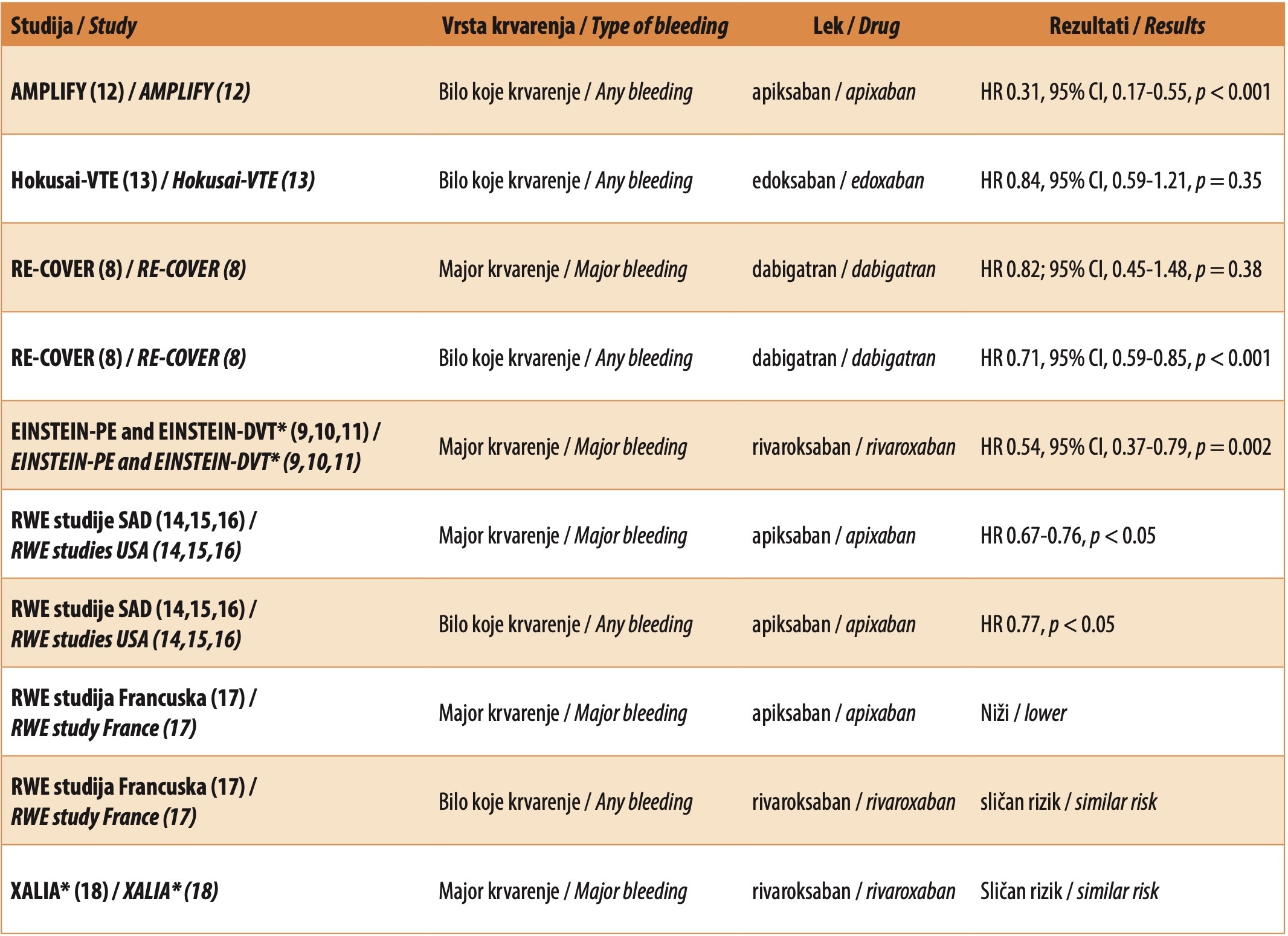
Although the results of the RCTs speak in favor of DOAC, data from RWE (Real World Evidence) studies are different. Three large RWE studies from the United States of America (USA) comparing apixaban and warfarin showed that the frequency of major bleeding was lower in patients treated with apixaban (HR 0.67-0.76). Furthermore, the frequency of non-major clinically significant bleeding was also lower with apixaban (HR 0.77) during the follow-up period of 6 months [14],[15],[16]. A study in France on 10,440 patients with VTE treated with apixaban and 36,922 patients treated with rivaroxaban reported that the risk of major bleeding was lower with apixaban than with warfarin (10,775 patients), while it was similar in patients treated with rivaroxaban and warfarin during a 6-month follow-up [17]. Regarding rivaroxaban, the authors of the XALIA study came to a similar conclusion, confirming that the risk of major bleeding was almost identical between rivaroxaban and standard therapy (enoxaban/warfarin) [18]. The GARFIELD-VTE observational study showed no statistically significant difference in the occurrence of either major or any other bleeding in patients with VTE treated with DOAC and VKA [19].
Results from both RCT and RWE studies have demonstrated that most DOACs have an identical or lower risk of bleeding in patients with acute VTE compared with standard therapy. Yet, it remains a question: are the bleeding risks associated with the use of different DOAC drugs comparable? Evaluating the risk of bleeding in patients on rivaroxaban and apixaban, Jin et al. showed that the incidence of non-intracranial bleeding was lower in the apixaban-treated arm [20]. A more recent meta-analysis confirmed a lower frequency of major bleeding with apixaban compared to rivaroxaban, while they found no differences between apixaban and dabigatran or dabigatran and rivaroxaban [21].
BLEEDING RISK IN PATIENTS WITH EXTENDED VTE TREATMENT
The treatment of VTE is based on the use of anticoagulant therapy, and according to the current guidelines, primary treatment usually lasts 3-6 months. In patients with VTE provoked by transient risk factors (surgical or non-surgical), therapy is completed in the primary phase [22]. On the other hand, particular concerns are needed in patients with unprovoked VTE or those exposed to chronic risk factors. The guidelines in this group suggest extended secondary therapy and the use of anticoagulants to prevent recurrent VTE [22]. The EPSTEIN-Extended study, which analyzed the safety and efficacy of extended use of rivaroxaban compared to placebo for 6-12 months, showed that the risk of recurrent VTE was reduced by 82% in the rivaroxaban arm, with 0.7% incidence of major bleeding, and 5.4% of clinically relevant non-major bleeding [9]. Apixaban, either in the therapeutic dose (5mg) or in the thromboprophylaxis dose (2.5 mg), significantly reduced the risk of recurrent VTE events compared to placebo, without increasing the risk of major bleeding (0.5% in the placebo group, 0.2% in the apixaban 2.5mg group and 0.1% in the apixaban 5mg group) [23]. A meta-analysis that included 16 RTCs and 22,000 patients showed that the use of any oral anticoagulant (VKAs or DOACs) significantly reduced the risk of new thromboembolism compared to placebo or Aspirin. The higher incidence of major bleeding was noted only in the VKA arm compared to Aspirin/placebo [24]. A more recent meta-analysis (14 RTC and 13 cohort studies), comparing the extended use of DOACs or VKAs for another three months in patients with first unprovoked thrombosis, described that the long-term risks and outcomes of anticoagulant-related major bleeding were significant with both VKAs and DOACs [25].
Based on these observations, additional analyses and data from RWE will be needed to reach a definitive conclusion on the safety of long-term use of DOACs.
BLEEDING RISK IN PATIENTS WITH NONVALVULAR AF
Direct oral anticoagulants are used to prevent ischemic stroke and systemic embolization in patients with NVAF [2],[3]. Several RTCs (ROCKET AF, RE-LY, ENGAGE AF-TIMI 48, ARISTOTLE) compared bleeding risks between DOACs and standard VKA therapy (Table 2).
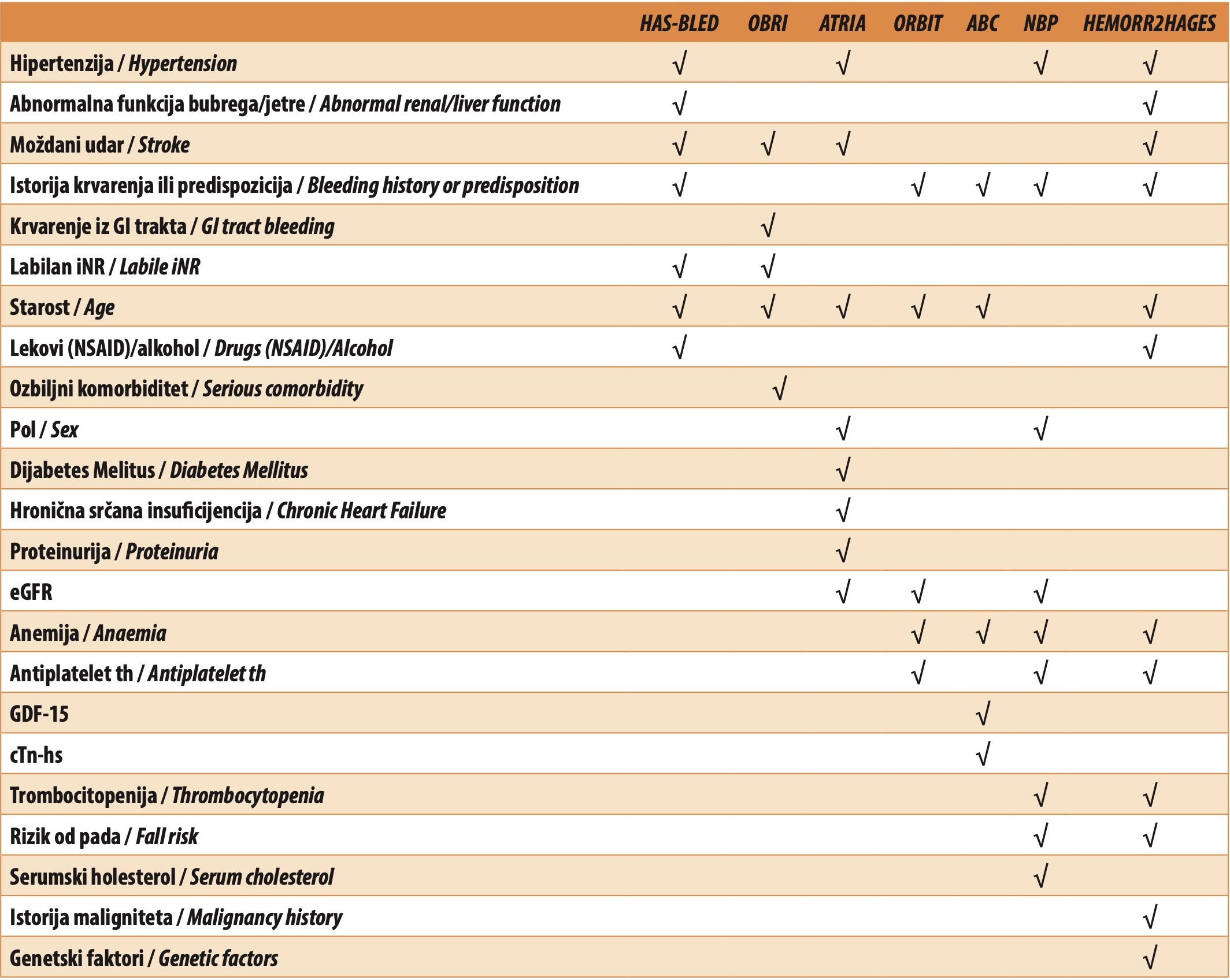
The risk of major bleeding was lower in patients treated with dabigatran 110 mg (HR 0.80), apixaban (HR 0.69), and low/high dose edoxaban (HR 0.47/0.80) compared to warfarin. In comparison, the risk was similar in the dabigatran 150 mg and rivaroxaban arm compared to warfarin. The risk of intracranial hemorrhage was significantly decreased by using DOACs than VKAs. The risk of gastrointestinal bleeding was higher with rivaroxaban, dabigatran 150mg, and high-dose edoxaban compared to warfarin [26],[27],[28],[29]. A meta-analysis of 94,656 patients showed that apixaban 5 mg/12h, dabigatran 110 mg/12h, edoxaban 30 mg/day, and edoxaban 60 mg/day lead to a significantly lower risk of major bleeding compared to warfarin. The risk of major bleeding was higher with dabigatran 150 mg/12h than with apixaban 5 mg/12h, with rivaroxaban 20 mg/12h compared to apixaban 5 mg/12h, and with rivaroxaban 20 mg/12h compared to edoxaban 60 mg/day. However, the risk of intracranial bleeding was low, with almost all DOACs at all doses [30].
A more recent meta-analysis, which included a large number of retrospective cohort studies and almost half a million patients from Europe with NVAF, comparing the safety of DOACs versus VKAs concluded that there is no greater risk of major bleeding with DOACs versus VKAs (HR 0.94, 95% CI, 0.87–1.02). Conversely, the differences were observed between different DOACs. Thus, for example, patients on rivaroxaban had a slightly higher bleeding frequency than VKAs, while the frequency with dabigatran and apixaban compared to VKAs was lower [31]. Additionally, the results of other studies confirmed that the risk of bleeding and effectiveness vary within different DOACs. The German study observed that edoxaban is more effective in reducing the risk of ischemic stroke and systemic embolization compared to other DOACs and VKAs, carrying a lower risk of bleeding compared to rivaroxaban and VKAs, and the same as apixaban [32]. Comparing DOACs, several studies have emphasized that apixaban is safer when considering the risk of both major bleeding and gastrointestinal/intracranial bleeding compared to rivaroxaban and even dabigatran, while its efficacy compared to other DOACs is still a subject of debate [33],[34].
PREDICTORS OF BLEEDING
Anticoagulant therapy has an annual rate of bleeding between 2-4% among patients receiving VKA, and the annual risk of intracranial hemorrhage is 0.61%. In the case of VTE, major bleeding occurs in 7.22/100 patients/year, with a mortality rate of 9% [35]. Therefore, it is crucial to identify certain predictive factors for hemorrhagic complications and to stratify patients into risk groups.
History of previous bleeding is the most important risk factor associated with major bleeding in patients on anticoagulant therapy. In addition to the above, other relevant risk factors are older age, liver or kidney diseases, malignancies, thrombocytopenia, concomitant use of antiplatelet therapy, and excessive anticoagulation due to inadequately high doses of DOACs or poorly controlled INR (International Normalized Ratio). The existence of minimal mucosal lesions in the gastrointestinal or urinary tract should not be ignored either [6].
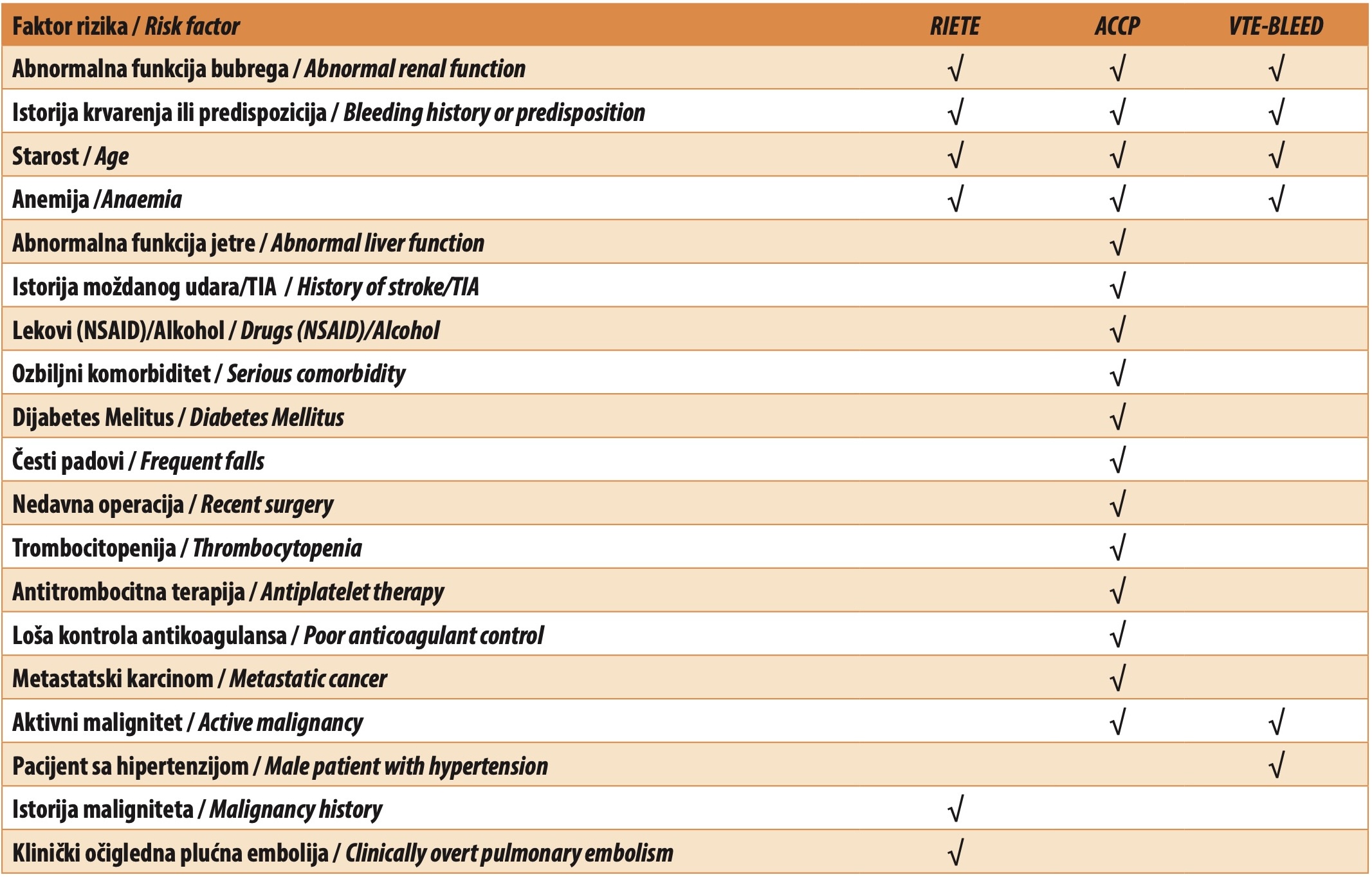
Intending to identify those patients at increased bleeding risk, there are numerous scoring systems available today. Among the most used and validated in patients with AF is HAS-BLED (“Hypertension, Abnormal renal/liver function, Stroke, Bleeding history or predisposition, Labile INR, Elderly ≥ 65, Drugs (NSAID)/alcohol”), which stratifies patients into three risk groups (low, moderate and high). Patients with a high risk of bleeding according to HAS-BLED score ≥ 3 have an annual rate of significant bleeding > 3.74% [36]. Also, other scoring systems exist for patients with AF: OBRI, ATRIA, ORBIT, ABC, NBP, HEMORR2HAGES [6]. Similarly, in patients with VTE on oral anticoagulant therapy, there are different scoring systems (RIETE, Registro Informatizado de Enfermedad TromboEmbólica; ACCP, American College of Chest Physician; VTE-BLEED) combining age, severity of anemia, previous bleeding, liver/kidney function, platelet count, concomitant therapy, other comorbidities, existence of cancer to stratify the patient into the appropriate risk group (Table 3) [6].
Therefore, careful evaluation of individual patient bleeding risk factors and clinical judgment remains the best approach to minimizing the personal risk of bleeding during anticoagulant treatment.
RESUMING ANTICOAGULATION THERAPY AFTER BLEEDING
Restarting anticoagulation therapy after the resolution of bleeding is a challenging clinical decision. It should be made individually for every patient, usually by a multidisciplinary team, including hemostasis specialists, cardiologists, gastroenterologists, neurologists, and intensive care specialists [37]. On the one hand, early restart can increase the risk of rebleeding, while on the other hand, later continuation of anticoagulation therapy increases patients’ risk of thromboembolic events and mortality [38]. Data regarding restarting DOACs in patients who experienced bleeding are scarce. A cohort study by Tapaskar et al. showed that the restart of warfarin was associated with an increased risk of recurrent gastrointestinal bleeding (HR, 2.12; 95% CI, 1.43–3.14; p < 0.001), while DOAC resumption was not associated with recurrent bleeding (HR, 1.43; 95% CI, 0.81–2.52; p = 0.22). However, the same study showed that rivaroxaban was the only individual DOAC associated with recurrent gastrointestinal bleeding (HR, 2.73; 95% CI, 1.43–5.20; p = 0.002) [39]. When the word is about intracranial hemorrhage, Poli et al. showed that patients taking warfarin were at higher risk of intracranial hemorrhage recurrence than patients taking DOACs (OR 1.9;95% CI 0.7–6.7). However, non-cerebral major re-bleeding was more common in the DOAC cohort [40]. On the other end of the spectrum, resuming anticoagulants was associated with fewer thromboembolic events and decreased mortality [41],[42]. After resolving the bleeding, determining the right timing for DOAC restart is the most challenging question. Sengupta et al. showed that reintroducing DOACs within 30 days after bleeding was not associated with thromboembolism within 90 days (HR, 0.98; 95% CI, 0.37-2.21) or recurrent gastrointestinal bleeding (HR, 1.44; 95% CI 0.72-2.68) [43]. According to BSG/ESGE guidelines, restarting DOACs as soon as possible by day seven after their interruption could be reasonable in most cases [44]. However, it should be noted that this conclusion was made in parallel with warfarin, and data from randomized controlled trials are lacking.
CONCLUSION
Compared to VKA, DOACs are at least as effective in treating and preventing VTE as in preventing ischemic insult and systemic embolization in patients with AF, with a confirmed significantly lower risk of intracranial bleeding. Also, most studies showed that the risk of major bleeding is lower when using DOACs, while the risk of gastrointestinal bleeding is variable and depends on the type of DOACs.
Numerous scoring systems have been developed to help objectify, clearly stratify, and identify patients at higher risk of bleeding. However, individual bleeding risk profiling and selection of the appropriate DOACs based on the patient’s comorbidities, age, previous bleeding, general condition, and drug interactions can further reduce the risk of hemorrhagic complications. Also, more intensive and frequent monitoring would be important in patients at high risk of bleeding. Based on the above, the question arises whether DOACs will replace VKAs as a more acceptable form of VTE prevention and treatment in most clinical indications after over a century.
Informations

-
Keywords:
-
Received:
-
Revised:
-
Accepted:
-
Online first:
-
DOI:
-
Cite this article:

Mirjana Mitrović
Clinic for Hematology, University Clinical Center of Serbia
2 Koste Todorovića Street, 11000 Belgrade, Serbia
E-mail:
1. Riva N, Ageno W. Pros and cons of vitamin K antagonists and non–vitamin K antagonist oral anticoagulants. Semin Thromb Hemost. 2015 Mar;41(2):178- 87. doi: 10.1055/s-0035-1544231. [CROSSREF]
2. Milling TJ Jr, Ziebell CM. A review of oral anticoagulants, old and new, in major bleeding and the need for urgent surgery. Trends Cardiovasc Med. 2020 Feb;30(2):86-90. doi: 10.1016/j.tcm.2019.03.004. [CROSSREF]
3. Yao X, Abraham NS, Sangaralingham LR, Bellolio MF, McBane RD, Shah ND, et al. Effectiveness and safety of dabigatran, rivaroxaban, and apixaban versus warfarin in nonvalvular atrial fibrillation. J Am Heart Assoc. 2016 Jun 13;5(6):e003725. doi: 10.1161/JAHA.116.003725. [CROSSREF]
4. Chen A, Stecker E, Warden BA. Direct oral anticoagulant use: a practical guide to common clinical challenges. J Am Heart Assoc. 2020 Jul 7;9(13):e017559. doi: 10.1161/JAHA.120.017559. [CROSSREF]
5. Ten Cate H, Henskens YM, Lancé MD. Practical guidance on the use of laboratory testing in managing bleeding in patients receiving direct oral anticoagulants. Vasc Health Risk Manag. 2017 Dec 13;13:457-67. doi: 10.2147/VHRM. S126265. [CROSSREF]
6. Ballestri S, Romagnoli E, Arioli D, Coluccio V, Marrazzo A, Athanasiou A, et al. Risk and management of bleeding complications with direct oral anticoagulants in patients with atrial fibrillation and venous thromboembolism: a narrative review. Adv Ther. 2023 Jan;40(1):41-66. doi: 10.1007/s12325-022-02333-9. [CROSSREF]
7. Schulman S, Kearon C; Subcommittee on Control of Anticoagulation of the Scientific and Standardization Committee of the International Society on Thrombosis and Haemostasis. Definition of major bleeding in clinical investigations of antihemostatic medicinal products in non-surgical patients. J Thromb Haemost. 2005 Apr;3(4):692-4. doi: 10.1111/j.1538- 7836.2005.01204.x. [CROSSREF]
8. Schulman S, Kearon C, Kakkar AK, Mismetti P, Schellong S, Eriksson H, et al. Dabigatran versus warfarin in the treatment of acute venous thromboembolism. N Engl J Med. 2009 Dec 10;361(24):2342-52. doi: 10.1056/NEJMoa0906598. [CROSSREF]
9. EINSTEIN Investigators; Bauersachs R, Berkowitz SD, Brenner B, Buller HR, Decousus H, Gallus AS, et al. Oral rivaroxaban for symptomatic venous thromboembolism. N Engl J Med. 2010 Dec 23;363(26):2499-510. doi: 10.1056/NEJMoa1007903. [CROSSREF]
10. EINSTEIN–PE Investigators; Büller HR, Prins MH, Lensin AW, Decousus H, Jacobson BF, Minar E, et al. Oral rivaroxaban for the treatment of symptomatic pulmonary embolism. N Engl J Med. 2012 Apr 5;366(14):1287-97. doi: 10.1056/NEJMoa1113572. [CROSSREF]
11. Prins MH, Lensing AW, Bauersachs R, van Bellen B, Bounameaux H, Brighton TA, et al. Oral rivaroxaban versus standard therapy for treating symptomatic venous thromboembolism: a pooled analysis of the EINSTEIN-DVT and PE randomized studies. Thromb J. 2013 Sep 20;11(1):21. doi: 10.1186/1477-9560-11-21. [CROSSREF]
12. Agnelli G, Buller HR, Cohen A, Curto M, Gallus AS, Johnson M, et al.; AMPLIFY Investigators. Oral apixaban for the treatment of acute venous thromboembolism. N Engl J Med. 2013 Aug 29;369(9):799-808. doi: 10.1056/NEJMoa1302507. [CROSSREF]
13. Hokusai-VTE Investigators; Büller HR, Décousus H, Grosso MA, Mercuri M, Middeldorp S, Prins MH, et al. Edoxaban versus warfarin for the treatment of symptomatic venous thromboembolism. N Engl J Med. 2013 Oct 10;369(15):1406-15. doi: 10.1056/NEJMoa1306638. [CROSSREF]
14. Guo JD, Hlavacek P, Rosenblatt L, Keshishian A, Russ C, Mardekian J, et al. Safety and effectiveness of apixaban compared with warfarin among clinically relevant subgroups of venous thromboembolism patients in the United States Medicare population. Thromb Res. 2021 Feb;198:163-70. doi: 10.1016/j.thromres.2020.11.039. [CROSSREF]
15. Dawwas GK, Smith SM, Dietrich E, Lo-Ciganic W-H, Park H. Comparative effectiveness and safety of apixaban versus warfarin in patients with venous thromboembolism. Am J Health Syst Pharm. 2020 Jan 24;77(3):188-95. doi: 10.1093/ajhp/zxz307. [CROSSREF]
16. Weycker D, Li X, Wygant GD, Lee T, Hamilton M, Luo X, et al. Effectiveness and safety of apixaban versus warfarin as outpatient treatment of venous thromboembolism in U.S. clinical practice. Thromb Haemost. 2018 Nov;118(11):1951-61. doi: 10.1055/s-0038-1673689. [CROSSREF]
17. Bertoletti L, Gusto G, Khachatryan A, Quignot N, Chaves J, Moniot A, et al. Effectiveness and safety of oral anticoagulants in treating acute venous thromboembolism: a nationwide comparative cohort study in France. Thromb Haemost. 2022 Aug;122(8):1384-96. doi: 10.1055/a-1731-3922. [CROSSREF]
18. Haas S, Mantovani LG, Kreutz R, Monje D, Schneider J, Zell ER, et al. Anticoagulant treatment for venous thromboembolism: a pooled analysis and additional results of the XALIA and XALIA‐LEA noninterventional studies. Res Pract Thromb Haemost. 2021 Mar 20;5(3):426-38. doi: 10.1002/rth2.12489. [CROSSREF]
19. Bounameaux H, Haas S, Farjat AE, Ageno W, Weitz JI, Goldhaber SZ, et al. Comparative effectiveness of oral anticoagulants in venous thromboembolism: GARFIELD-VTE. Thromb Res. 2020 Jul;191:103-12. doi: 10.1016/j. thromres.2020.04.036. [CROSSREF]
20. Jin MC, Sussman ES, Feng AY, Han SS, Skirboll SL, Berube C, et al. Hemorrhage risk of direct oral anticoagulants in real-world venous thromboembolism patients. Thromb Res. 2021 Aug;204:126-33. doi: 10.1016/j. thromres.2021.06.015. [CROSSREF]
21. Liu ZY, Zhang HX, Ma LY, Mu GY, Xie QF, Zhou S, et al. Non-vitamin K antagonist oral anticoagulants in venous thromboembolism patients: a meta-analysis of real-world studies. BMC Cardiovasc Disord. 2022 Mar 14;22(1):105. doi: 10.1186/s12872-022-02550-8. [CROSSREF]
22. Ortel TL, Neumann I, Ageno W, Beyth R, Clark NP, Cuker A, et al. American Society of Hematology 2020 guidelines for management of venous thromboembolism: treatment of deep vein thrombosis and pulmonary embolism. Blood Adv. 2020 Oct 13;4(19):4693-738. doi: 10.1182/bloodadvances.2020001830. [CROSSREF]
23. Agnelli G, Buller HR, Cohen A, Curto M, Gallus AS, Johnson M, et al.; AMPLIFY-EXT Investigators. Apixaban for extended treatment of venous thromboembolism. N Engl J Med. 2013 Feb 21;368(8):699-708. doi: 10.1056/NEJMoa1207541. [CROSSREF]
24. Wang KL, van Es N, Cameron C, Castellucci LA, Büller HR, Carrier M. Extended treatment of venous thromboembolism: a systematic review and network meta-analysis. Heart. 2019 Apr;105(7):545-52. doi: 10.1136/heartjnl-2018-313617. [CROSSREF]
25. Khan F, Tritschler T, Kimpton M, Wells PS, Kearon C, Weitz JI, et al.; MAJESTIC Collaborators. Long-term risk for significant bleeding during extended oral anticoagulant therapy for first unprovoked venous thromboembolism: a systematic review and meta-analysis. Ann Intern Med. 2021 Oct;174(10):1420-9. doi: 10.7326/M21-1094. [CROSSREF]
26. Connolly SJ, Ezekowitz MD, Yusuf S, Eikelboom J, Oldgren J, Parekh A, et al.; RE-LY Steering Committee and Investigators. Dabigatran versus warfarin in patients with atrial fibrillation. N Engl J Med. 2009 Sep 17;361(12):1139-51. doi: 10.1056/NEJMoa0905561. [CROSSREF]
27. Patel MR, Mahaffey KW, Garg J, Pan G, Singer DE, Hacke W, et al.; ROCKET AF Investigators. Rivaroxaban versus warfarin in nonvalvular atrial fibrillation. N Engl J Med. 2011 Sep 8;365(10):883-91. doi: 10.1056/NEJMoa1009638. [CROSSREF]
28. Granger CB, Alexander JH, McMurray JJV, Lopes RD, Hylek EM, Hanna M, et al.; ARISTOTLE Committees and Investigators. Apixaban versus warfarin in patients with atrial fibrillation. N Engl J Med. 2011 Sep 15;365(11):981-92. doi: 10.1056/NEJMoa1107039. [CROSSREF]
29. Giugliano RP, Ruff CT, Braunwald E, Murphy SA, Wiviott SD, Halperin JL, et al.; ENGAGE AF-TIMI 48 Investigators. Edoxaban versus warfarin in patients with atrial fibrillation. N Engl J Med. 2013 Nov 28;369(22):2093-104. doi: 10.1056/ NEJMoa1310907. [CROSSREF]
30. López-López JA, Sterne JAC, Thom HHZ, Higgins JPT, Hingorani AD, Okoli GN, et al. Oral anticoagulants for stroke prevention in atrial fibrillation: systematic review, network meta-analysis, and cost-effectiveness analysis. BMJ. 2017 Nov 28;359:j5058. doi: 10.1136/bmj.j5058. [CROSSREF]
31. van den Ham HA, Souverein PC, Klungel OH, Platt RW, Ernst P, Dell’Aniello S, et al. Major bleeding in users of direct oral anticoagulants in atrial fibrillation: a pooled analysis of multiple population‐based cohort studies results. Pharmacoepidemiol Drug Saf. 2021 Oct;30(10):1339-52. doi: 10.1002/ pds.5317. [CROSSREF]
32. Marston XL, Wang R, Yeh YC, Zimmermann L, Ye X, Gao X, et al. Comparison of clinical outcomes of edoxaban versus apixaban, dabigatran, rivaroxaban, and vitamin K antagonists in patients with atrial fibrillation in Germany: a real-world cohort study. Int J Cardiol. 2022 Jan 1;346:93-9. doi: 10.1016/j. ijcard.2021.11.008. [CROSSREF]
33. Fralick M, Colacci M, Schneeweiss S, Huybrechts KF, Lin KJ, Gagne JJ. Effectiveness and safety of apixaban compared with rivaroxaban for patients with atrial fibrillation in routine practice: a cohort study. Ann Intern Med. 2020 Apr 7;172(7):463-73. doi: 10.7326/M19-2522. [CROSSREF]
34. Zhang J, Wang X, Liu X, Larsen TB, Witt DM, Ye Z, et al. Comparative effectiveness and safety of direct-acting oral anticoagulants in nonvalvular atrial fibrillation for stroke prevention: a systematic review and meta-analysis. Eur J Epidemiol. 2021 Aug;36(8):793-812. doi: 10.1007/s10654-021-00751-7. [CROSSREF]
35. Páramo JA. Predicción y tratamiento de la hemorragia en pacientes anticoagulados. Med Clin (Barc). 2021 Jan 8;156(1):20-5. English, Spanish. doi: 10.1016/j.medcli.2020.06.065. [CROSSREF]
36. Pisters R, Lane DA, Nieuwlaat R, de Vos CB, Crijns HJGM, Lip GYH. A novel user-friendly score (HAS-BLED) to assess 1-year risk of major bleeding in patients with atrial fibrillation: the Euro Heart Survey. Chest. 2010 Nov;138(5):1093-100. doi: 10.1378/chest.10-0134. [CROSSREF]
37. Martin AC, Benamouzig R, Gouin-Thibault I, Schmidt J. Management of gastrointestinal bleeding and resumption of oral anticoagulant therapy in patients with atrial fibrillation: a multidisciplinary discussion. Am J Cardiovasc Drugs. 2023 Jul;23(4):407-18. doi: 10.1007/s40256-023-00582-9. [CROSSREF]
38. Jain H, Singh G, Kaul V, Gambhir HS. Management dilemmas in restarting anticoagulation after gastrointestinal bleeding. Proc (Bayl Univ Med Cent). 2022 Mar 9;35(3):322-7. doi: 10.1080/08998280.2022.2043707. [CROSSREF]
39. Tapaskar N, Ham SA, Micic D, Sengupta N. Restarting warfarin vs direct oral anticoagulants after major gastrointestinal bleeding and associated outcomes in atrial fibrillation: a cohort study. Clin Gastroenterol Hepatol. 2022 Feb;20(2):381-9.e9. doi: 10.1016/j.cgh.2020.11.029. [CROSSREF]
40. Poli D, Antonucci E, Vignini E, Martinese L, Testa S, Simioni P, et al.; START2 Registry investigators. Anticoagulation resumption after intracranial hemorrhage in patients treated with VKA and DOACs. Eur J Intern Med. 2020 Oct;80:73-7. doi: 10.1016/j.ejim.2020.05.020. [CROSSREF]
41. Little D, Chai-Adisaksopha C, Hillis C, Witt DM, Monreal M, Crowther MA, et al. Resumption of anticoagulant therapy after anticoagulant-related gastrointestinal bleeding: a systematic review and meta-analysis. Thromb Res. 2019 Mar;175:102-9. doi: 10.1016/j.thromres.2019.01.020. [CROSSREF]
42. Tapaskar N, Pang A, Werner DA, Sengupta N. Resuming anticoagulation following hospitalization for gastrointestinal bleeding is associated with reduced thromboembolic events and improved mortality: results from a systematic review and meta-analysis. Dig Dis Sci. 2021 Feb;66(2):554-66. doi: 10.1007/s10620-020-06248-9. [CROSSREF]
43. Sengupta N, Marshall AL, Jones BA, Ham S, Tapper EB. Rebleeding vs thromboembolism after hospitalization for gastrointestinal bleeding in patients on direct oral anticoagulants. Clin Gastroenterol Hepatol. 2018 Dec;16(12):1893- 1900.e2. doi: 10.1016/j.cgh.2018.05.005. [CROSSREF]
44. Veitch AM, Radaelli F, Alikhan R, Dumonceau JM, Eaton D, Jerrome J, et al. Endoscopy in patients on antiplatelet or anticoagulant therapy: British Society of Gastroenterology (BSG) and European Society of Gastrointestinal Endoscopy (ESGE) guideline update. Gut. 2021 Sep;70(9):1611-28. doi: 10.1136/ gutjnl-2021-325184. [CROSSREF]