


The influence of insulin resistance on therapeutic response in newly diagnosed patients with multiple myeloma
- University Clinical Center of Vojvodina, Clinic for Hematology, Novi Sad, Serbia
- University of Novi Sad, Faculty of Medicine, Novi Sad, Serbia
- University Clinical Center of Vojvodina, Clinic for Endocrinology, Diabetes and Metabolic Diseases, Novi Sad, Serbia
ABSTRACT
Introduction: According to the results of previous research, it was found that the dysfunction of the insulin-like growth factor (IGF) system, which is the basis of insulin resistance with hyperinsulinemia, acts as a proliferative tumor factor, and its neoplastic potential is also exhibited in multiple myeloma.
Study aim: The study aims to determine whether there is an association between insulin resistance in patients newly diagnosed with multiple myeloma (NDMM) and the achieved therapeutic response after induction chemotherapy.
Materials and methods: The prospective study included 35 NDMM patients (60% women and 40% men), treated at the Clinical Center of Vojvodina Clinic for Hematology. Glycemia and insulinemia levels were determined after fasting and postprandially, upon which the values of HOMA-IRIf (after fasting) and HOMA-IRIpp (postprandially) were calculated. HOMA-IRI values > 2.2 were the criteria for insulin resistance. The analyses were performed twice – before the initial chemotherapy and after the completion of the treatment. The therapeutic response was evaluated according to the criteria of the Serbian Myeloma Group (SMG) and the International Myeloma Working Group IMWG). Statistical analyses were performed in the SPSS program, Version 22.
Results: The average patient age was 63.85 years. In total, 86% of patients responded favorably to the therapy. The average value of HOMA-IRIf before treatment was 1.82 ± 0.79 and it was 1.80 ± 0.72 after therapy. The central median value of HOMA-IRIpp before treatment was 5.46, with an interquartile range of 1.07 – 20.57, and after treatment, it was 5.86 with an interquartile range of 1.22 – 28.22. A significant negative correlation between HOMA-IRIf after applied treatment and achieved therapeutic response was observed, (p = 0.040).
Conclusion: Active concomitant therapy of insulin resistance in NDMM could improve the response to applied antimyeloma treatment.
INTRODUCTION
Multiple myeloma (MM) is a malignant disease belonging to the group of monoclonal gammopathies originating in the bone marrow. It is characterized by the uncontrolled proliferation of tumorous B-lymphocytes – plasma cells, which produce pathologically altered immunoglobulins (M-protein). It was found that MM accounts for 1.8% of all malignant diseases and 10% of hematological malignancies. In Europe, 4.5 – 6/100,000 people are diagnosed annually [1],[2]. Multiple myeloma is considered a disease of older age, with a higher frequency in the male population. Although significant progress has been made in the treatment of MM in the past 20 years, this disease is still incurable, and the course and outcome are insufficiently predictable [3],[4]. In order to detect the prognostic and therapeutic potential of new biochemical and molecular indicators, further supplementary research is necessary.
Insulin resistance is impaired or completely incapacitated uptake of glucose into the peripheral tissues in patients affected by this condition, as compared to the healthy population, which leads to an increase in the serum level of insulin, with a reduction in the expression of insulin receptors in the peripheral tissues and the consequent development of changes at the post-receptor level [5]. The results of previous research show that the role of hyperinsulinemia and increased bioavailability of insulin-like growth factor 1 (IGF-1) in the development of the malignant process is undeniable [6]. Potential mechanisms of this are the following:
- possible DNA damage with the development of acquired mutations due to increased production of free oxygen radicals
- changes at the post-receptor level with hyperstimulation of numerous cell signaling pathways and the influence on cell metabolism mediated by the effect of insulin growth factors, which directly stimulates cell proliferation [5].
An elevated serum level of insulin in the liver increases the production of IGF1 and reduces the synthesis of insulin-like growth factor binding proteins 1 and 2 - IGFBP1 and IGFBP2. Insulin can stimulate tumor growth directly or through the influence of IGF-1, with a consequent promitogenic and antiapoptotic effect, as shown in Figure 1 [6]. In this case, insulin first reacts with the insulin receptor (INSR), which is an integral membrane protein and plays a crucial role in the formation of the cell’s biological response to insulin stimulation. Hyperexpression of INSR leads to a change in the biological response of the cell to insulin with an impact on proliferation, maturation, and apoptosis. These changes can significantly contribute to the neoplastic transformation of the cell [6]. In addition to direct insulin binding, IGF-1 and IGF-2 can also bind to INSR, with a similar effect.
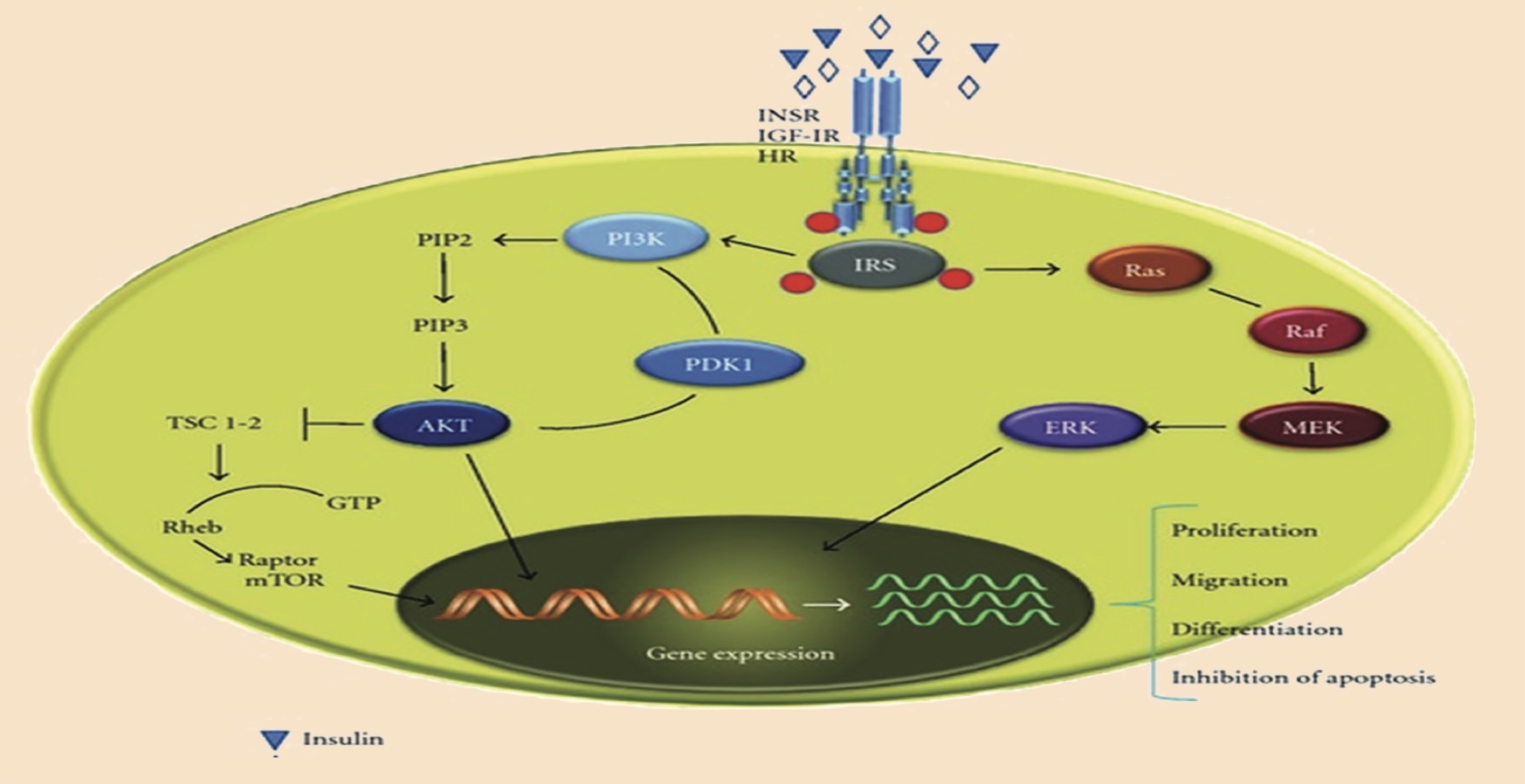 6]" width="2117" height="1089">
Notwithstanding the numerous studies carried out so far, the mediation of insulin resistance in carcinogenesis has not been elucidated in a way that would allow for and establish new diagnostic and therapeutic modalities to prevent malignancy, or in the case of already existing malignant disease, to improve the course, response to therapy and treatment outcomes [7].
STUDY AIM
The study aimed to determine whether there is a connection between insulin resistance in patients newly diagnosed with multiple myeloma (NDMM) and the achieved therapeutic response after induction chemotherapy.
MATERIALS AND METHODS
The research was conducted between 2017 and 2021 at the Clinic for Hematology of the University Clinical Center of Vojvodina, after obtaining the consent of the Ethics Committee. It included 35 patients newly diagnosed with multiple myeloma, aged 18 – 85 years, who had not received any anti-myeloma therapy until the time of inclusion into this prospective study. Also, the subjects did not use drugs with an impact on insulin sensitivity, insulin production, and insulin secretion (oral hypoglycemics based on metformin, sulfonylurea derivatives, thiazolidinediones, SGLT-2 inhibitors, GLP1-R agonists, insulin therapy), nor hypolipidemic drugs with an impact on insulin sensitivity (statins, fibrates). Another proven malignancy in a patient was an exclusion criterion.
In the initial phase of the study, after the doctor-patient interview, the subjects were physically examined, upon which biochemical, additional hematological, and radiological analyses were performed, as specified by the protocol of the Serbian Myeloma Group (SMG) for initially determining the stage of NDMM [4].
Additional hematological and biochemical analyses included the complete blood count (CBC), kidney function tests (urea, creatinine, creatinine clearance in 24-h urine collection), tests related to the activity of the underlying disease (serum level of lactate dehydrogenase (LDH), serum level of beta-2-microglobulin (β2M), serum protein electrophoresis (SPEP), serum levels of immunoglobulins IgA, IgM, and IgG, serum levels of free light chains (FLC) κ and λ, serum immunofixation test, and 24-h urine collection), as well as standard inflammatory markers (erythrocyte sedimentation rate (ESR), C-reactive protein (CRP)).
To assess insulin resistance, fasting and postprandial glycemia and insulinemia values were measured, which were further calculated according to the given formula: fasting glycemia (mmol/l) x fasting insulinemia (mIU/l) / 22.5, to calculate the value of the homeostatic model assessment-insulin resistance index (HOMA-IRI) [8]. HOMA-IRI values > 2.2 were the criterion for diagnosing insulin resistance [9]. The values of HOMA-IRIf (fasting HOMA-IRI) and HOMA-IRIpp (postprandial, provoked, where the values of glycemia and insulinemia were calculated 2 h after the meal) were calculated.
All tests were performed at two points in time: before starting the therapy and after the patient’s treatment was completed. The therapeutic response was evaluated according to the valid SMG and International Myeloma Working Group (IMWG) criteria, as shown in Table 1, and qualified as follows: stringent complete remission (sCR), complete remission (CR), very good partial response (VGPR), partial remission (PR), stable disease (SDi), disease progression (PD) [10].

For each patient, longitudinal data were collected from the database for two points in time: before entering the chemotherapy process and after treatment with induction chemotherapy, after six to seven treatment cycles.
The statistical analyses were carried out in the SPSS (Version 22) statistical package, and the graphical representations were transposed into the Excel format for better visibility. In order to display descriptive indicators and frequency distribution, descriptive statistics were used, i.e. standard descriptive statistical indicators: arithmetic mean, standard deviation, skewness, and kurtosis, and for variables not distributed according to the normal distribution, median and range were presented as descriptive parameters. The t-test for dependent samples and the Wilcoxon signed-rank test were used to indicate changes in parameters before and after induction chemotherapy, depending on whether normally distributed variables or non-normally distributed variables were analyzed. Interrelationships of the variables were examined using the Spearman correlation coefficient, given that the achieved therapeutic response in this study was an ordinal variable. Statistical hypotheses were tested at a statistical significance level (alpha level) of 0.05.
RESULTS
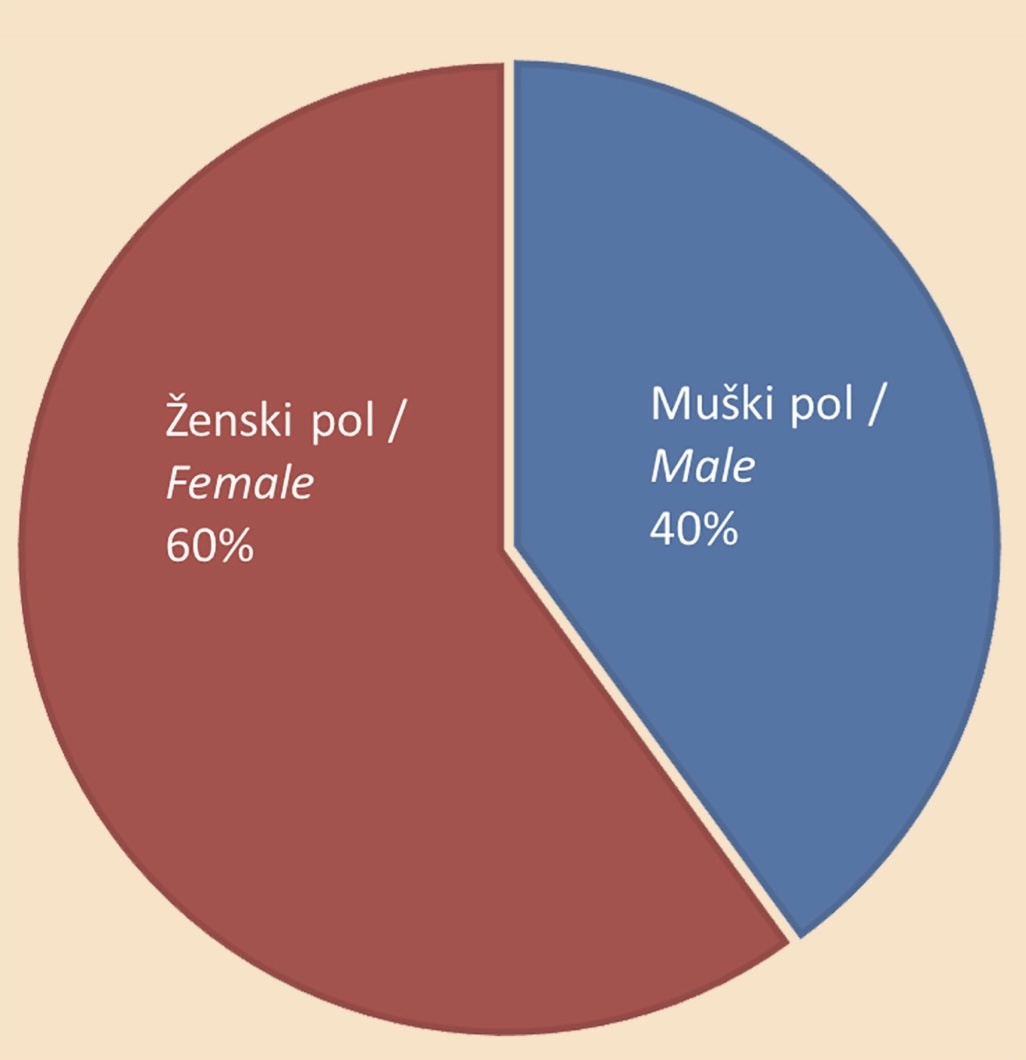
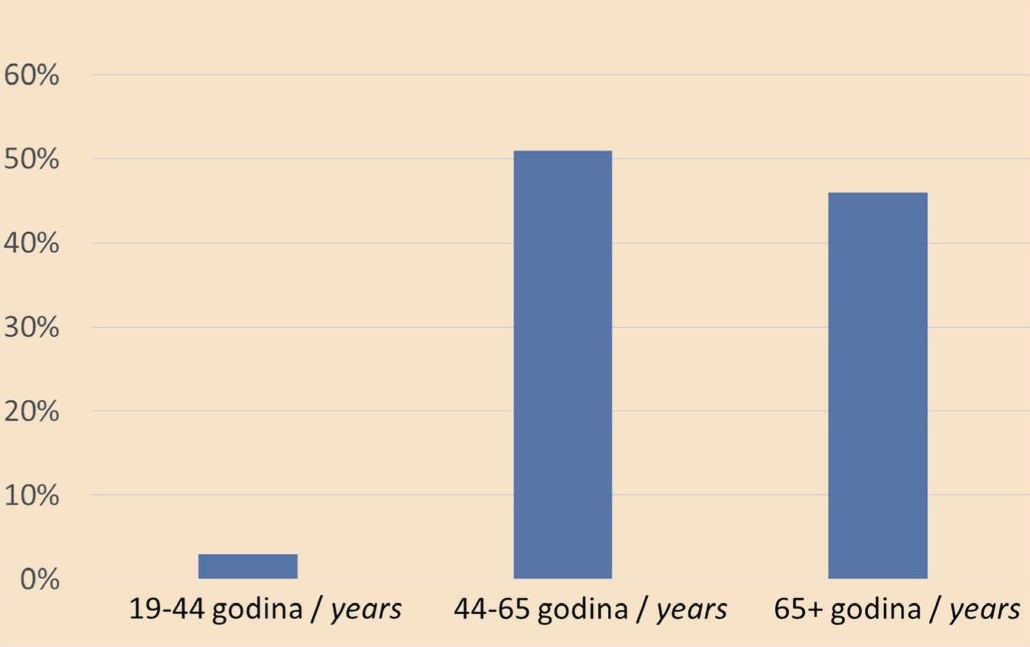
The sex ratio of newly diagnosed patients with multiple myeloma was as follows: 60% women and 40% men (Chart 1), however, this difference was not statistically significant (p = 0.320). The average age of the respondents was 63.85 years. Statistically significant differences were detected in the structure of respon dents in relation to age groups (p < 0.001). Only 3% of respondents were aged 19 – 41 years, and 51% of respondents were aged 45 – 65 years (data presented in Graph 2). Although as many as 60% of NDMM subjects were in clinical stage III, the heterogeneity of the subjects regarding this variable was not statistically significant (p = 0.200).
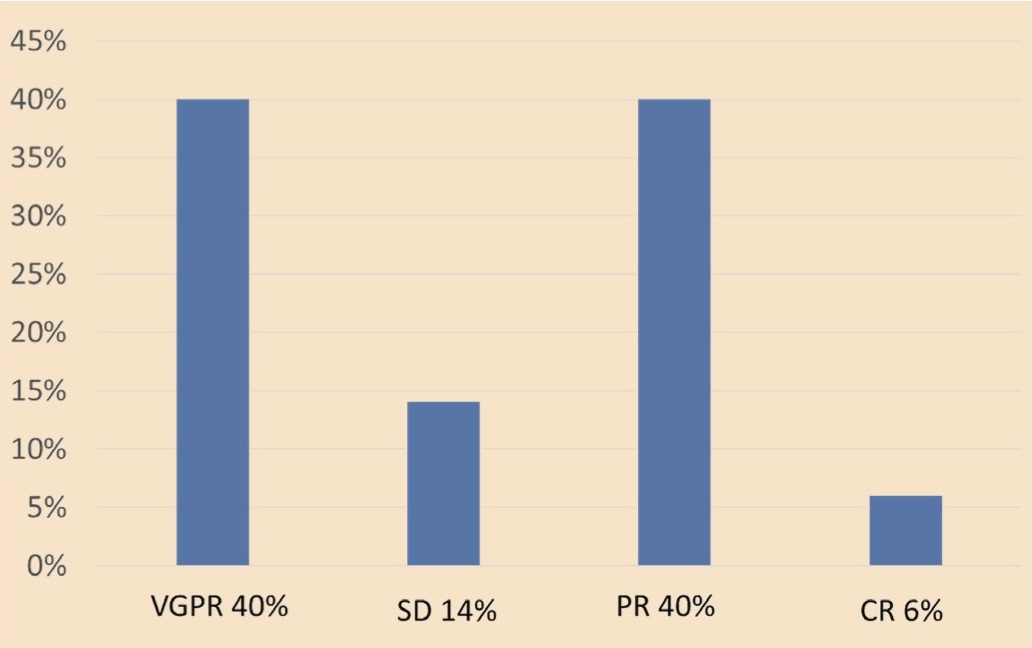
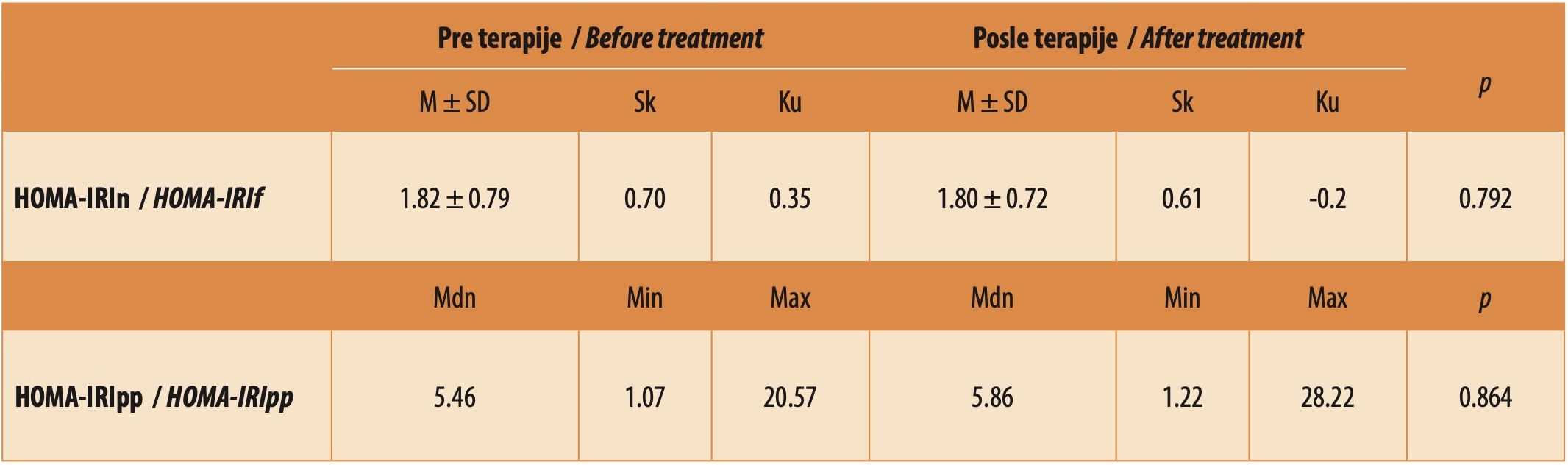
After induction chemotherapy, according to Graph 3, as many as 86% of subjects achieved a response to treatment: 6% CR, 40% PR, and 40% VGPR. The average value of HOMA-IRIf before treatment was 1.82 ± 0.79 and after treatment, it was 1.80 ± 0.72. The average value of HOMA-IRIpp both before and after the applied therapy met the criteria for insulin resistance (HOMA-IRIpp ≥ 2.2). The central median value of HOMA-IRIpp before treatment was 5.46 with an interquartile range of 1.07 - 20.57, and after treatment, it was 5.86 with an interquartile range of 1.22 - 28.22. After the treatment, no statistically significant decrease in HOMA-IRIf (p = 0.792) and HOMA-IRIpp (p = 0.864) values was detected. The data are presented in Table 2.
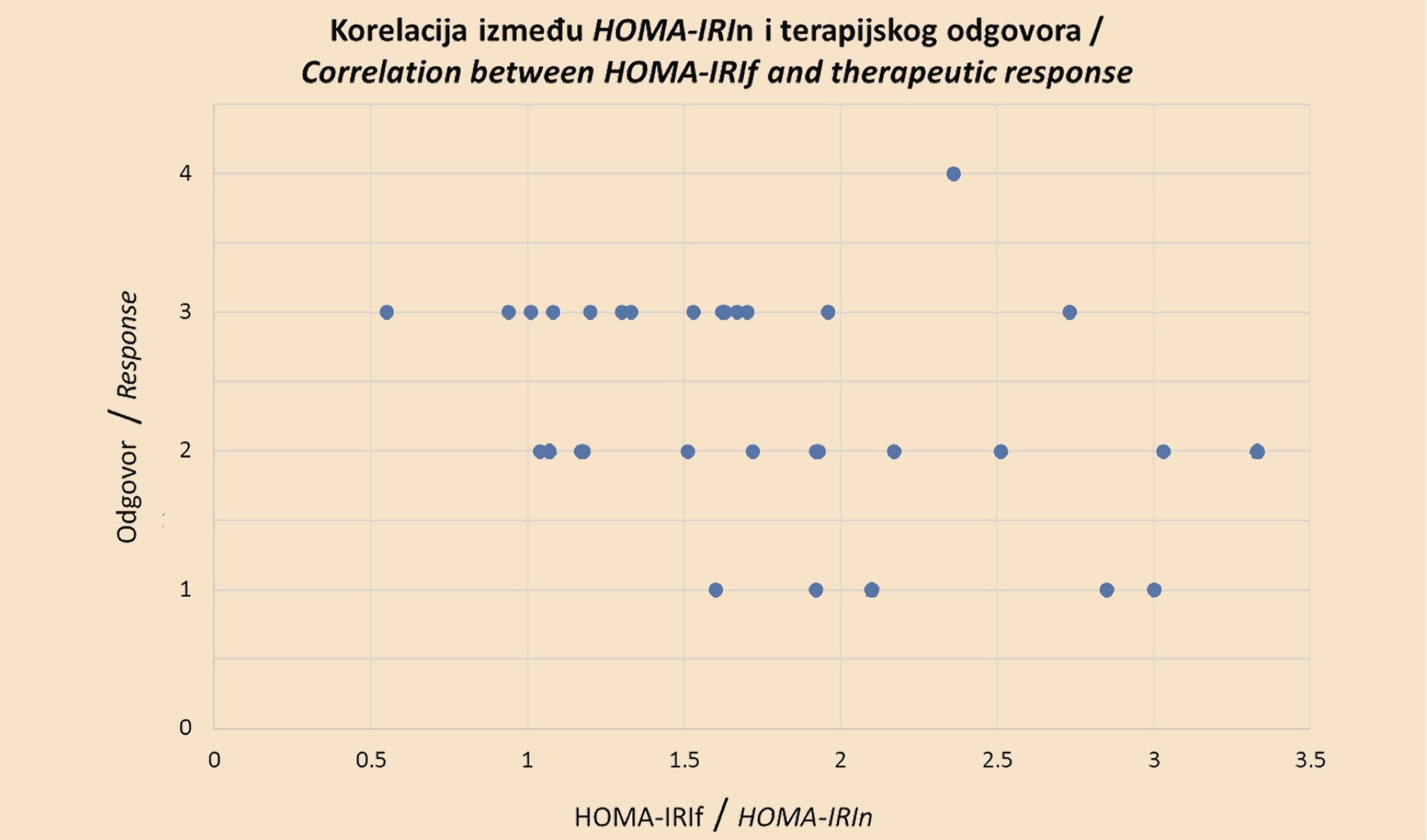
Further analyses confirmed the negative correlation between the achieved therapeutic response and fasting insulin resistance values, measured after the treatment. Namely, higher values of HOMA-IRIf measured after treatment imply a poorer therapeutic response (p = 0.040), as shown in Graph 4.
DISCUSSION
The analysis of insulin resistance in the non-diabetic population of NDMM patients was conducted to evaluate its possible prognostic significance, as well as its possible influence on the course and outcome of treatment. Although initially preserved insulin sensitivity was verified in our NDMM patients, the calculated average values of HOMA-IRIpp, before and after the treatment, were in the category of provoked insulin resistance. Also, a negative correlation of insulin resistance after applied therapy and achieved therapeutic response was detected. Patients with higher calculated HOMA-IRIf values after treatment had a poorer response to therapy. NDMM patients with a better response to the applied therapy had a lower HOMA-IRIf. It can be said that lower HOMA-IRI values in NDMM patients indicate a higher probability of remission, as well as a lower possibility of no response to therapy or progression under therapy. Such results could certainly be expected, bearing in mind the already detected metabolic vulnerability of multiple myeloma, whose main agent is the IGF (insulin-like growth factor) system [11],[12]. This system consists of the following: two growth factors - IGF1 and IGF2, two receptors - IGF1 receptor (IGF1R) and IGF2 receptor (IGF2R), and IGFBP protease [11]. It is important to note that IGF1 and IGF2 are peptides that structurally overlap, to a great extent, with the structure of proinsulin, and previous research has proven their influence on the lifespan and proliferative index of plasma cells, angiogenesis, and osteoclast activity [13],[14],[15]. A high degree of overlap was detected in the structure of insulin and IGF, therefore, the IGF system may be directly involved in glucose homeostasis regulation, by binding to insulin receptors [11],[16]. Dysfunction of the IGF system favors the development of insulin resistance and an increase in serum insulin levels, leading to the “oversaturation” of insulin receptors with IGF1 and IGF2, consequently bringing about changes at the post-receptor level, stimulating the proliferation of plasma cells and disease progression [13],[17]. This leads to the conclusion that insulin receptors could be suitable biological targets for developing new modalities in the treatment of MM [18],[19]. Another conclusion would be that the administration of human insulin in the diabetic myeloma population can be considered as a potential factor contributing to the progression of MM [19],[20].
Bearing in mind the mechanism whereby the oral antidiabetic drug metformin achieves its effect by modulating the INSR/IGF1R signaling pathway, the antitumor effect of this drug, proven by the results of numerous previous studies, should also be considered [14],[15]. In their prospective study, Boursi et al. demonstrated that the application of metformin in diabetic patients with monoclonal gammopathy of undetermined significance (MGUS) significantly reduces the risk of disease progression to multiple myeloma [21]. The antitumor effect of metformin in the population of patients with monoclonal gammopathy was confirmed in their research by Papachristou et al., with the idea of extending the research to the non-diabetic population as well [22]. The effectiveness of metformin administration in the non-diabetic population of MGUS patients, with an assessment of the reduction in the risk of disease progression to active MM, is currently the subject of research in the clinical study NCT04850846, whose results have yet to be published [23].
CONCLUSION
Given that research conducted in the past ten years testifies to the pronounced metabolic sensitivity of multiple myeloma, the adverse effect of insulin resistance on the achieved therapeutic response is not surprising. Accordingly, an active concomitant therapeutic approach in treating insulin resistance and accompanying hyperinsulinemia – initial and/or provoked, in the non-diabetic population of NDMM patients, would be a significant contribution to achieving a more favorable response to standard antimyeloma therapy.
ABBREVIATIONS AND ACRONYMS
β2M – beta-2-microglobulin
CR – complete remission
CRP – C-reactive protein
EPSP – serum protein electrophoresis
GLP1-R – glucagon-like peptide-1 receptor
HOMA-IRI – homeostatic model assessment-insulin resistance index
HOMA-IRIf – homeostatic model assessment-insulin resistance index, after fasting
HOMA-IRIpp – homeostatic model assessment-insulin resistance index, postprandially
IMWG – International Myeloma Working Group
INSR – insulin receptor
Ku – kurtosis LDH – lactate dehydrogenase
M – mean
Maks – maximum
Mdn – median
MM – multiple myeloma MGUS – monoclonal gammopathy of undetermined significance
Min – minimum
NDMM – newly diagnosed multiple myeloma
PR – partial remission
PD – progressive disease
SD – standard deviation
SDi – stable disease
Sk – skewness
SGLT 2 – sodium-glucose cotransporter 2
FLCκ – kappa free light chains
FLCλ – lambda free light chains
sCR – stringent complete remission
SMG – Serbian Myeloma Group
VGPR – very good partial response
Informations

-
Keywords:
-
Received:
-
Revised:
-
Accepted:
-
Online first:
-
DOI:
-
Cite this article:


Nada Vlaisavljević
Clinic for Hematology, University Clinical Center of Vojvodina
1-9 Hajduk Veljka Street, 21000 Novi Sad, Serbia
E-mail:
1. Albagoush SA, Shumway C, Azevedo AM. Multiple myeloma [Internet]. 2023. [Citirano: 30. jun, 2024]. Dostupno: https://www.ncbi.nlm.nih.gov/books/NBK534764/ [HTTP]
2. Ludwig H, Novis Durie S, Meckl A, Hinke A, Durie B. Multiple myeloma incidence and mortality around the globe; interrelations between health access and quality, economic resources, and patient empowerment. Oncologist. 2020 Sep;25(9):e1406-e13. doi: 10.1634/theoncologist.2020-0141. [CROSSREF]
3. Janjić D, Suvajdžić-Vuković N, Popović S, Mihaljević B, Marisavljević D, Elezović I, et al. Klinička hematologija. Beograd: Zavod za udžbenike; 2012.
4. Bila J. Multipli mijelom: dijagnostički i terapijski vodič. 5th ed. Beograd: Medicinski fakultet Univerziteta u Beogradu; 2022.
5. Lebovitz HE, Banerji MA. Treatment of insulin resistance in diabetes mellitus. Eur J Pharmacol. 2004 Apr 19;490(1-3):135-46. doi: 10.1016/j.ejphar.2004.02.051. [CROSSREF]
6. Arcidiacono B, Iiritano S, Nocera A, Possidente K, Nevolo MT, Ventura V, et al. Insulin resistance and cancer risk: an overview of the pathogenetic mechanisms. Exp Diabetes Res. 2012;2012:789174. doi: 10.1155/2012/789174. [CROSSREF]
7. Shushanov SS, Kalinina AA, Kravtsova TA, Sherbakov AM, Chernykh YB, Akentieva NP. Dual effect exhibited by insulin in myeloma and lymphoblastoid cells. Biointerface Research in Applied Chemistry. 2022;12(3):2715-28. doi: 10.33263/BRIAC123.27152728. [CROSSREF]
8. Tresaco B, Bueno G, Pineda I, Moreno LA, Garagorri JM, Bueno M. Homeostatic model assessment (HOMA) index cut-off values to identify the metabolic syndrome in children. J Physiol Biochem. 2005 Jun;61(2):381-8. doi: 10.1007/BF03167055. [CROSSREF]
9. Horáková D, ŠtěpánekL, Janout V, Janoutová J, Pastucha D, Kollárová H. Optimal homeostasis model assessment of insulin resistance (HOMA-IR) cut-offs: a cross-sectional study in the Czech population. Medicina (Kaunas). 2019 May 17;55(5):158. doi: 10.3390/medicina55050158. [CROSSREF]
10. Garderet L, D'Souza A, Jacobs P, van Biezen A, Schönland S, Kroeger N, et al. Response assessment in myeloma: Practical manual on consistent reporting in an era of dramatic therapeutic advances. Biol Blood Marrow Transplant. 2017 Jul;23(7):1193-202. doi: 10.1016/j.bbmt.2017.03.009. [CROSSREF]
11. Talia C, Connolly L, Fowler PA. The insulin-like growth factor system: A target for endocrine disruptors? Environ Int. 2021 Feb;147:106311. doi: 10.1016/j.envint.2020.106311. [CROSSREF]
12. Bieghs L, Johnsen HE, Maes K, Menu E, Van Valckenborgh E, Overgaard MT, et al. The insulin-like growth factor system in multiple myeloma: diagnostic and therapeutic potential. Oncotarget. 2016 Jul 26;7(30):48732-52. doi: 10.18632/oncotarget.8982. [CROSSREF]
13. Gavriatopoulou M, Paschou SA, Ntanasis-Stathopoulos I, Dimopoulos MA. Metabolic disorders in multiple myeloma. Int J Mol Sci. 2021 Oct 22;22(21):11430. doi: 10.3390/ijms222111430. [CROSSREF]
14. Tanaka Y, Okabe S, Tauchi T, Ito Y, Ohyashiki K. Targeting insulin-like growth factor in multiple myeloma: novel strategies in the treatment of proteasome inhibitor resistant cells. Blood. 2018;132(Suppl 1):5155. doi: 10.1182/blood-2018-99-114750. [CROSSREF]
15. Bost F, Sahra IB, Le Marchand-Brustel Y, Tanti JF. Metformin and cancer therapy. Curr Opin Oncol. 2012 Jan;24(1):103-8. doi: 10.1097/CCO.0b013e32834d8155. [CROSSREF]
16. Sélénou C, Brioude F, Giabicani E, Sobrier ML, Netchine I. IGF2: development, genetic and epigenetic abnormalities. Cells. 2022 Jun 10;11(12):1886. doi: 10.3390/cells11121886. [CROSSREF]
17. Gao L, Li L, Hu J, Li G, Zhang Y, Dai X, et al. Metformin inhibits multiple myeloma serum-induced endothelial cell thrombosis by down-regulating miR532. Ann Vasc Surg. 2022 Sep;85:347-57.e2. doi: 10.1016/j.avsg.2022.04.035. [CROSSREF]
18. Arcaro A. Targeting the insulin-like growth factor-1 receptor in human cancer. Front Pharmacol. 2013 Mar 22;4:30. doi: 10.3389/fphar.2013.00030. [CROSSREF]
19. Lamhamedi-Cherradi SE, Menegaz BA, Ramamoorthy V, Vishwamitra D, Wang Y, Maywald RL, et al. IGF-1R and mTOR blockade: novel resistance mechanisms and synergistic drug combinations for Ewing sarcoma. J Natl Cancer Inst. 2016 Aug 30;108(12):djw182. doi: 10.1093/jnci/djw182. [CROSSREF]
20. Sprynski AC, Hose D, Kassambara A, Vincent L, Jourdan M, Rossi JF, et al. Insulin is a potent myeloma cell growth factor through insulin/IGF-1 hybrid receptor activation. Leukemia. 2010 Nov;24(11):1940-50. doi: 10.1038/ leu.2010.192. [CROSSREF]
21. Boursi B, Mamtani R, Yang YH, Weiss BM. Impact of metformin on the progression of MGUS to multiple myeloma. Leuk Lymphoma. 2017 May;58(5):1265- 67. doi: 10.1080/10428194.2016.1236375. [CROSSREF]
22. Papachristou S, Popovic DS, Papanas N. Reduced progression of monoclonal gammopathy of undetermined significance to multiple myeloma in type 2 diabetes mellitus: will metformin never stop its pleasant surprises? Adv Ther. 2022 Jun;39(6):2283-6. doi: 10.1007/s12325-022-02125-1. [CROSSREF]
23. National Library of Medicine (NIH). National Center for Biotechnology Information. Investigation of metformin for the prevention of progression of precursor multiple myeloma [Internet]. 2024 [Citirano: 3. jul, 2024]. Dostupno: https://clinicaltrials.gov/ct2/show/NCT04850846 [HTTP]
- Picture 1. Presentation of the effect of INSR stimulation and the initiation of the cascade of signaling pathways underlying the biological response of the cell to insulin (reproduced with permission of the publisher) [6]
- Table 1. Classification of response to administered therapy, MM
- Graph 1. Male to female ratio in the MM group
- Graph 2. Respondent distribution by age intervals in the MM group
- Graph 3. Presentation of achieved therapeutic response in the MM respondent group
- Table 2. Descriptive presentation of HOMA-IRIf and HOMA-IRIpp in the analyzed NDMM patients
- Graph 4. Presentation of the negative Spearman correlation of HOMA-IRIf and achieved therapeutic response in NDMM