


Frequency and significance of the development of febrile neutropenia in patients with hematological malignancies treated in the day-care unit of a tertiary institution
- University Clinical Center of Serbia, Clinic for Hematology, Belgrade, Serbia
- University of Belgrade, Faculty of Medicine, Belgrade, Serbia
ABSTRACT
Introduction: Chemotherapy-induced neutropenia is often complicated by the development of febrile neutropenia (FN) which is associated with infections, dose reductions/delay of chemotherapy, quality of life deterioration, and increased treatment costs.
Study aim: The study aims to research the association between risk factors for FN and the significance of applying G-CSF in patients with hematological malignancies.
Materials and methods: We evaluated 90 patients with lymphoma, multiple myeloma (MM), and myelodysplastic syndrome (MDS) treated at the Day-care Unit of the University Clinical Center of Serbia (UCCS) Clinic for Hematology, between January and June 2024.
Results: The study included 90 patients with the following diagnoses: 70 (77.8%) patients with lymphomas, 12 (13.3%) patients with MM, and 8 (8.9%) patients with MDS, of whom 42.2% (38/90) male and 57.8% (52/90) female. FN was observed in 22 (24.4%) patients, while 68 (75.6%) patients did not develop FN. The distribution of FN by lymphoma type was as follows: 57.9% in aggressive lymphomas, 31.6% in indolent lymphomas, and 10.5% in Hodgkin’s lymphoma. FN was associated with a higher incidence of advanced clinical stages of disease, with 70% in stages III and IV. Patients with FN had significantly higher rates of bulky tumor mass (54.5% vs. 25%; p = 0.010), more lines of chemotherapy (p = 0.020), more cycles of chemotherapy (p = 0.027), more immunotherapy cycles (p = 0.025), as well as more infections (59.1% vs. 27.9%; p = 0.008), antibiotic use (95.5% vs. 33.8%; p = 0.004), and G-CSF administration (54.5% vs. 11.8%; p < 0.001), with more G-CSF ampoules used (5.0 vs. 1.0; p < 0.001). Higher CRP levels were also significantly associated with FN (7.2% vs. 3.3%; p = 0.012).
Conclusion: Our study has shown that the number of lines of therapy, the number of immunochemotherapy cycles, the clinical stage, the presence of bulky tumor mass, and the aggressiveness of the lymphoma affected FN development.
INTRODUCTION
Chemotherapy-induced neutropenia is one of the most common side effects of treatment and is often complicated by febrile neutropenia (FN). Neutropenia occurs in almost a fifth of hematological patients, except for patients who undergo hematopoietic stem cell transplantation, among whom this incidence ranges from 70% to 100%, in contrast to other oncology patients, where it ranges from 5% to 10%. The toxic effect of chemotherapy on the hematopoietic system is a limiting factor in adequate drug dosing. Complications of neutropenia caused by the myelosuppressive effect of chemotherapy play a major role in the increase in morbidity and mortality in cancer patients. The occurrence of febrile neutropenia is associated with the development of life-threatening infections, chemotherapy treatment delay, impaired quality of life, and increased treatment costs, all of which affect the treatment outcome [1],[2].
That is exactly why it is very important to identify the risk factors leading to febrile neutropenia, during and before starting specific hematological treatment. The most important factor is the type of chemotherapy, although so far, no standard scoring system has been established for comparing the aggressiveness of different chemotherapeutics [3]. The second most important factor is the underlying disease, although this information is rarely mentioned in research because some of the hematological malignancies, in contrast to solid tumors, inherently include neutropenia [4]. Body surface area, bone marrow infiltration, age at diagnosis, the initial or the number of monocytes and lymphocytes after the first cycle, as well as the hemoglobin level, are mentioned in literature as risk factors for the occurrence of febrile neutropenia [5],[6],[7],[8].
In literature, risk factors are categorized as those associated with the patients themselves and those that are particular to the type of therapy. The first group of risk factors includes previous chemotherapy treatment, initial neutropenia, bone marrow infiltration due to the underlying disease, clinical stage of the disease, presence of comorbidities, a poorer ECOG (Eastern Cooperative Oncology Group) performance status, previous infections, age, as well as the type of malignancy, noting that patients with hematological malignancies are at increased risk of developing neutropenia, as compared to patients with solid tumors, both due to the very nature of the underlying disease and the intensity of the therapy. Risk factors particular to the type of therapy can be explained by the fact that some drugs are more myelotoxic than others. Also, it has been proven that neutropenia is more often found in the initial therapy cycles.
The degree and development of neutropenia directly affect the risk of infection. Neutropenia is usually categorized into four grades, according to its severity. Grade 1 neutropenia is when the absolute neutrophil count (ANC) is ≥ 1.5 and < 2.0 x 10⁹ /l, grade 2 is when ANC is ≥ 1.0 and < 1.5 x 10⁹ /l, grade 3 is when ANC is ≥ 0.5 and < 1.00 x 10⁹ /l, while grade 4 is when the ANC value is < 0.5 x 10⁹ /l. Febrile neutropenia is a condition wherein ANC is ≤ 0.5 x 10⁹ /l and the body temperature is ≥ 38.3°C. It is known that in inflammatory response, it is neutrophil granulocytes that play an important role in cellular immunity as part of non-specific defense of the body. Their number is compromised partly due to the cytotoxic effect of the therapy, and partly due to the very nature of the underlying disease. Precisely because of this, the symptoms and signs of infection in these patients are often hidden, and the only manifestation may be elevated body temperature. Over 50% of patients with febrile neutropenia will develop septic syndrome, 20% – 30% will develop a severe form of sepsis, and 5% – 10% will have septic shock. In that event, hospitalization and the application of intensive antibiotic therapy with broad-spectrum intravenous antibiotics are necessary, given the degree of immunocompromise of such patients. The most common are infections of the digestive tract, lungs, and skin. The most common causative agents are gram-negative bacteria Escherichia coli, Klebsiella pneumoniae, Pseudomonas aeruginosa, as well as aerobic, gram-positive cocci Staphylococcus, Streptococcus species, and Enterococcus. However, the frequent presence of fungal infections should not be ignored either [3]. The Infectious Diseases Society of America (IDSA) has published guidelines for the treatment of febrile neutropenia. For most patients, intravenous administration of antibiotics in a hospital setting is the treatment standard. Antibiotic therapy should be chosen taking into account the interactions of antibiotics with other drugs, as well as the parameters of kidney and liver function, depending on the pharmacokinetics of the drug [9].
Colony-stimulating factors (CSFs) of hematopoiesis reduce the duration and severity of the degree of neutropenia and its complications, enabling faster recovery of blood parameters and earlier continuation of chemotherapy [10].
STUDY AIM
The study aims to examine the association between risk factors for the development of febrile neutropenia and the significance of applying granulocyte colony-stimulating factor (G-CSF) in hematological patients treated at the Day Hospital of the Hematology Clinic of the University Clinical Center of Serbia.
MATERIALS AND METHODS
This is a retrospective study. Patient demographic characteristics included the following: age at diagnosis, gender, type of hematological malignancy, clinical stage of disease, the ECOG performance status, bone marrow infiltration, presence of bulky tumor mass, comorbidities, previous presence of infection, as well as initial basic laboratory parameters. Diagnoses were established according to current guidelines for the given disease. The sample included 90 patients diagnosed with lymphoma, multiple myeloma (MM), or myelodysplastic syndrome (MDS), treated at the Day-care Unit of the University Clinical Center of Serbia (UCCS) Clinic for Hematology, between January and June 2024.
For the description of numerical data, depending on the normality of the data distribution, the arithmetic mean ± standard deviation or the median (range: minmax) was used, while categorical data were presented as frequencies, the number of respondents (percentage). The t-test, the Mann-Whitney test, and the Chisquare test were used to test the significance of the difference among the examined groups of patients. Observed clinical and laboratory parameters that were statistically significant at the p < 0.01 level were included in the multiple regression analysis model to assess predictors of the development of febrile neutropenia. The criterion for statistical significance was p < 0.05 and the SPSS Statistics 22 (SPSS Inc., Chicago, IL, USA) software was used for statistical data processing. The results are presented in textual and tabular form.
RESULTS
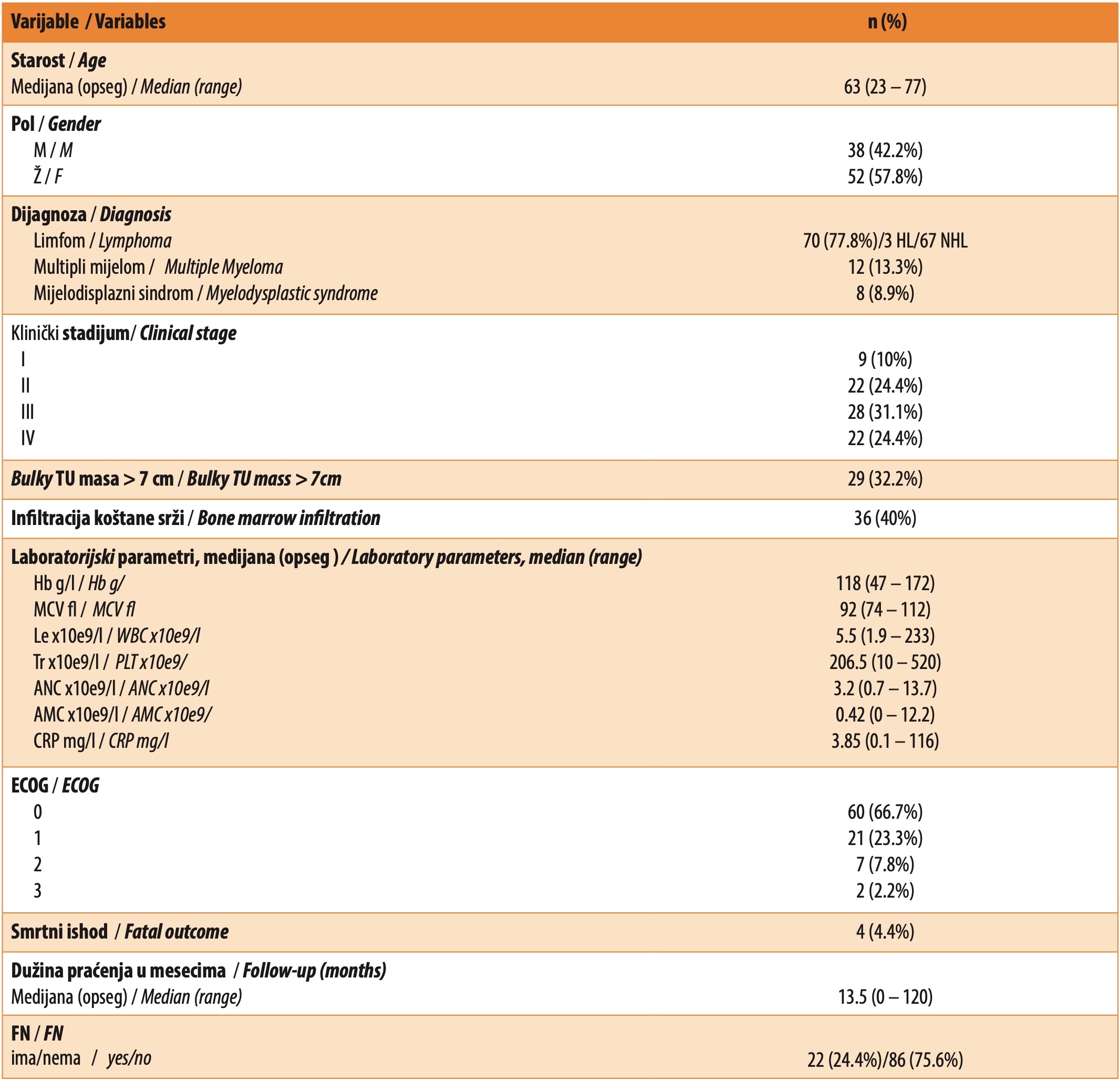
The study included 90 patients aged 60.0 ± 12.1 years. The median age was 63 years (range: 23 – 77). The distribution according to diagnosis was as follows: 70 (77.8%) patients with lymphoma, 12 (13.3%) patients with multiple myeloma, and 8 (8.9%) patients with myelodysplastic syndrome. Male patients accounted for 42.2% (38/90) while female patients accounted for 57.8% (52/90). Median follow-up was 13.5 months (0 – 120). Death occurred in four patients (4.4%).
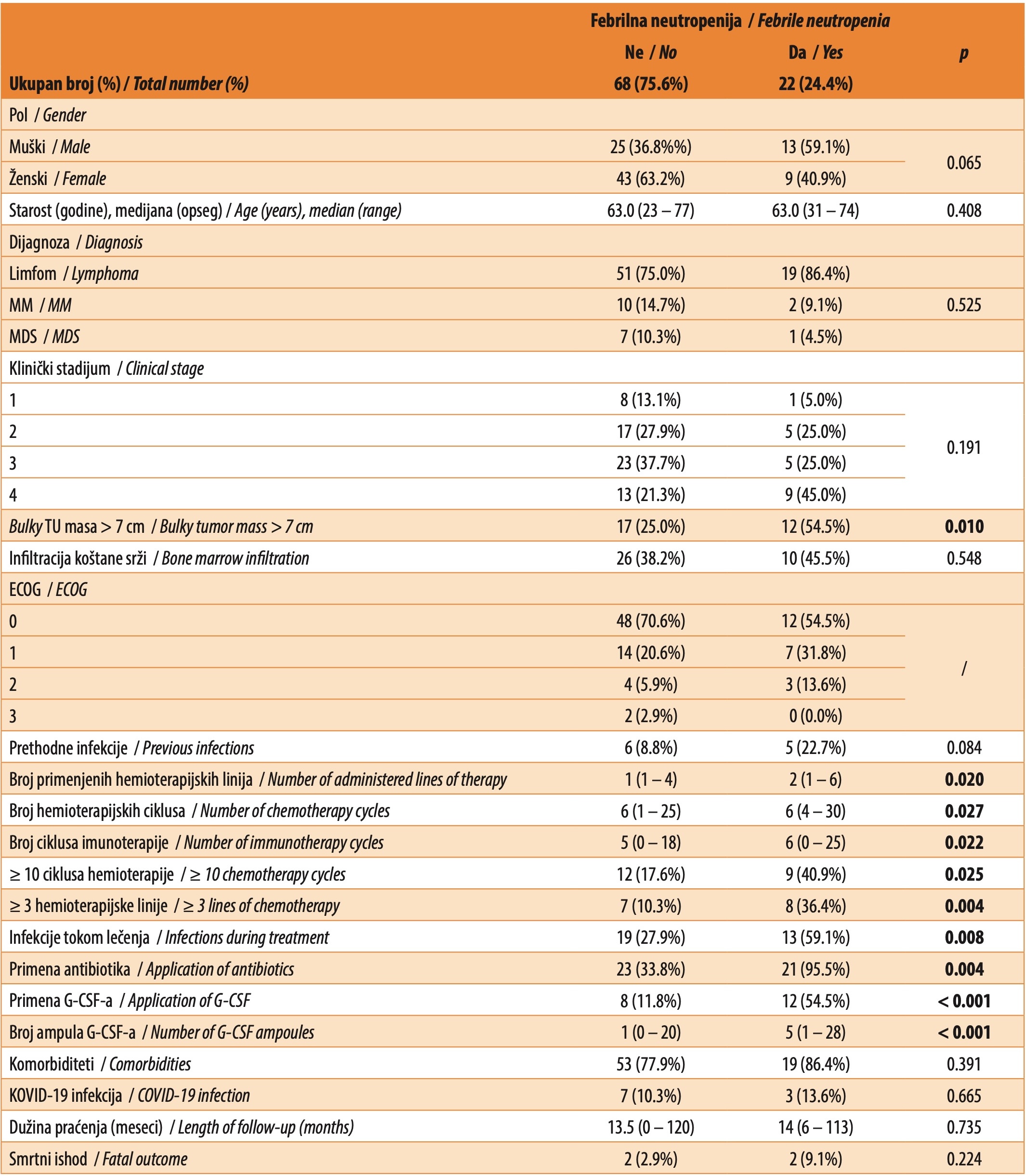
FN was recorded in 22 (24.4%) patients, while 68 (75.6%) patients did not develop febrile neutropenia. In the group of patients with febrile neutropenia, the frequency of male patients was 59.1% (versus 42.2% female; p = 0.065). The frequency of diagnoses did not differ significantly in relation to the presence of febrile neutropenia (p = 0.525) – in the group of patients with febrile neutropenia, 86.4% were diagnosed with lymphoma, 9.1% had MM and 4.5% MDS. The distribution of febrile neutropenia according to the type of lymphoma was as follows: 57.9% in the aggressive type, 31.6% in the indolent type, and 10.5% in Hodgkin’s lymphoma.
Of the total number of patients, in 9 (10%) subjects the disease was categorized as clinical stage (CS) I, 22 (24.4%) patients had CS II, 28 (31.1%) patients had CS III, while 22 (24.4%) patients had CS IV, while no significant difference was found between patients with and without febrile neutropenia (p = 0.191). An association of febrile neutropenia with a higher frequency of more advanced clinical stages of the disease was observed, and for stages III and IV the frequency was 70.0%.
In patients with febrile neutropenia, the presence of a bulky tumor mass (> 7 cm) was significantly more frequent and was found in 54.5% of these patients, compared to patients without febrile neutropenia, in whom it was confirmed in 25% of cases (p = 0.010). Bone marrow infiltration did not show a significant difference in relation to the development of febrile neutropenia (p = 0.548), nor in relation to the ECOG performance status. In our sample, the distribution of patients according to the ECOG performance status was as follows: ECOG 0 was present in 60 (66.7%) patients, ECOG 1 was established in 21 (23.3%) patients, ECOG 2 was present in 7 (7.8%) patients, while two (2.2%) patients had ECOG 3 (Table 1).
Patients with febrile neutropenia had a statistically significantly higher number of applied lines of chemotherapy (p = 0.020), chemotherapy cycles (p = 0.027), and immunotherapy cycles (p = 0.025). Patients who developed FN significantly more often had ≥ 3 lines of chemotherapy administered (36.4% vs. 10.3%; p = 0.004), as well as ≥ 10 chemotherapy cycles (40.9% vs. 17.6%; p = 0.025) or immunotherapy (IT) cycles administered, (31.6% vs. 11.3%; p = 0.042). Also, in patients with febrile neutropenia, there was a significantly higher frequency of infection during treatment (59.1% vs. 27.9%; p = 0.008), as well as a significantly higher frequency of antibiotics use (95.5% vs. 33.8%; p = 0.004), a significantly higher frequency of G-CSF administration (54.5% vs. 11.8%; p < 0.001), and a significantly higher number of administered ampoules of G-CSF (5.0 vs. 1.0; p < 0.001). The clinical parameters that were observed not to differ between patients with and without febrile neutropenia were as follows: comorbidities (p = 0.391), COVID-19 infection (p = 0.665), length of follow-up (p = 0.735), and the fatal outcome (p = 0.224), (Table 2).
Among the patients who developed FN, grade 1 neutropenia was observed in one (4.5%) patient, grade 2 was found in four (18.2%) patients, grade 3 in 10 (45.5%) patients, and grade 4 in 7 (31.8%) patients.
Laboratory parameters were also compared between patients with and without febrile neutropenia and only C-reactive protein (CRP) levels showed a significant difference, with higher values in patients who developed FN (7.2% vs. 3.3%; p = 0.012). Other parameters, namely: hemoglobin (Hb), (p = 0.449), mean corpuscular volume (MCV), (p = 0.237), white blood cell count (WBC), (p = 0.602), platelet count (PLT), (p = 0.981), absolute neutrophil count (ANC), (p = 0.430), and absolute monocyte count (AMC), (p = 0.960), did not differ significantly in relation to the development of febrile neutropenia (Table 3).

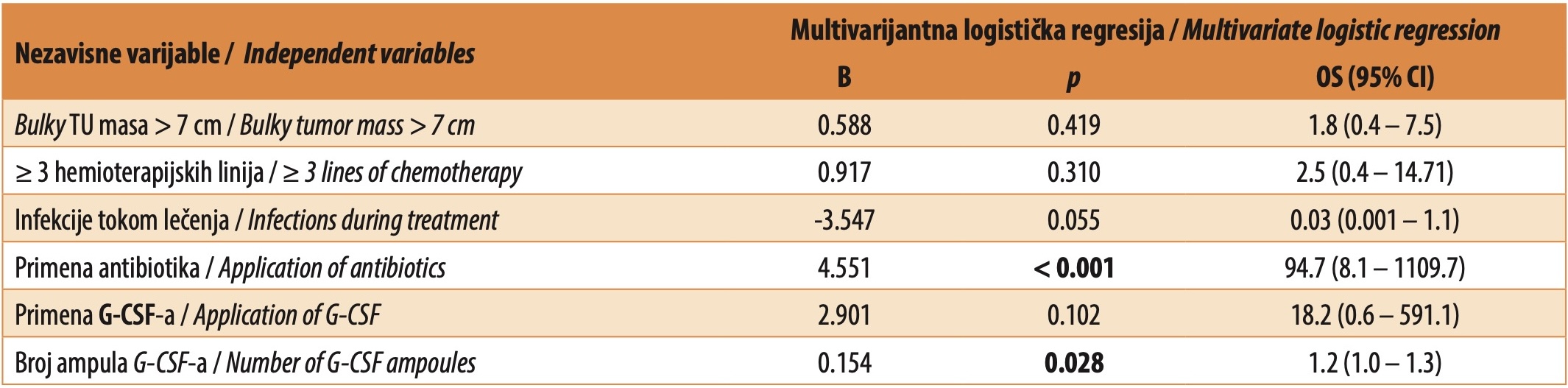
All predictors with statistical significance at the level of 0.01 in the univariate analysis were included in the multivariate regression analysis model with the development of febrile neutropenia as the dependent variable. The model contains six predictors and is statistically significant (p < 0.001). The use of antibiotics (B = 4.551; p < 0.001) and the number of administered ampoules of G-CSF (B = 0.154; p = 0.028) were distinctly significant predictors of the development of febrile neutropenia (Table 4).
DISCUSSION
Our study demonstrated a statistically significant difference in the occurrence of febrile neutropenia in patients who had previously received chemotherapy, which is in keeping with available literature data. The addition of monoclonal antibodies to chemotherapy protocols increases the risk of febrile neutropenia [11],[12]. We have proven that the occurrence of febrile neutropenia was more frequent in patients who received several lines of therapy: ≥3 lines of therapy (36.4% vs. 10.3%; p = 0.004), but also in those who received a higher number of cycles of the same cytostatic drug: ≥ 10 cycles of chemotherapy (40.9% vs. 17.6%; p = 0.025), including immunotherapy (31.6% vs. 11.3%; p = 0.042).
Regarding the distribution of febrile neutropenia according to the type of lymphoma, the results of our study show the lowest frequency in Hodgkin’s lymphoma. Such results can be explained by the fact that our sample comprised only patients treated with the ABVD regimen (doxorubicin, bleomycin, vinblastine, and dacarbazine). Because of this, and per the National Comprehensive Cancer Network (NCCN) recommendations, G-CSF was not applied due to the described pulmonary toxicity of bleomycin in this combination in patients aged < 40 years [13]. In their study from 2024, Islas-Muñoz et al. reported that FN is, indeed, most common in patients with Hodgkin’s lymphoma and those with acute lymphoblastic leukemia (ALL)/acute myeloid leukemia (AML) [14]. Since our sample is small and does not include patients with acute leukemias, we cannot fully correlate these data.
The literature describes a predictive model of the development of neutropenia, drug dose reduction, and treatment delay, based on blood count hematological parameters during the first cycle of chemotherapy. The model estimates the risk of the need for dose reduction due to myelosuppression and ranks patients into groups with a medium and high risk of developing neutropenia in subsequent treatment cycles. Consequently, this patient categorization allows timely administration of G-CSF, prevention of febrile neutropenia, and the administration of an appropriate chemotherapy dose, without the need for reduction. It has been proven that patients with the highest degree of neutropenia often develop febrile neutropenia [15],[16]. In our study, in the group of patients who developed febrile neutropenia, grade III and grade IV neutropenia was observed in more than two-thirds of the subjects.
We have proven the more frequent occurrence of febrile neutropenia in patients with previous infections, patients with an advanced clinical stage of the disease, and those who had a bulky tumor mass, which has also been reported in the available literature [6].
Interestingly, in our sample, patients with a more favorable ECOG performance status (0 and 1) developed febrile neutropenia more often, which is not in agreement with published studies [17]. This can be explained by the fact that patients with a poorer performance status require treatment in specialized hospital wards, due to accompanying complications, while ambulatory patients can receive therapy in day-care settings.
Severe and prolonged forms of neutropenia have been proven to be associated, in many studies, with a more frequent occurrence of an infective syndrome [14], which was also confirmed in our study: patients with febrile neutropenia had more frequent infections (59.1% vs. 27.9%; p = 0.008), as well as a more frequent use of antibiotics (95.5% vs. 33.3%; p < 0.001). Literature data indicate that hematological patients experience longer periods of neutropenia, as well as a higher degree of neutropenia, and consequently higher mortality, compared to patients with solid-organ tumors [18]. These data emphasize the need for timely intensive monitoring and treatment of hematological patients with severe forms of neutropenia in the hospital setting. Also, the need for the application of G-CSF in such patients is emphasized, in order to achieve faster recovery in patients.
The aforementioned risk factors for the development of febrile neutropenia, such as age, performance status, the myelosuppressive effect of treatment, i.e. the choice of chemotherapeutic agents, the degree of neutropenia, and the drop in other parameters in the blood count, are key in timely recognition of the need for G-CSF administration. Some of these factors are included in the American Society of Clinical Oncology (ASCO) CSF guidelines for the prophylactic use of the colony-stimulating factor [17]. In our study, we have proven that the use of G-CSF was more frequent in those patients who developed febrile neutropenia (54.5% vs. 11.8%; p < 0.001) and that they were given a higher number of ampoules of G-CSF (5.0 vs. 1.0; p < 0.001), which is consistent with previously published data.
The fatal outcome was recorded in four patients, due to accompanying comorbidities, which is certainly not a sufficient sample for comparison with available data from literature.
The limitations of our study are as follows: retrospective type of study, the inclusion of patients from only one hospital department, i.e., a small number of respondents, the territorial affiliation of a certain number of patients to other health centers, and therefore the unavailability of data on the use of G-CSF in those centers, the application of therapeutic regimens in keeping with individual clinical practice, as well as the secondary application of G-CSF in this group of patients. However, the advantage of collecting data in a day hospital belonging to a tertiary institution was the presence of a heterogeneous group of patients with a very wide spectrum of hematological diagnoses. Therefore, future research on a larger sample will undoubtedly contribute to the obtaining of more statistically significant data.
CONCLUSION
Our study showed that the development of febrile neutropenia was influenced by the number of applied lines of therapy and the number of cycles of immunochemotherapy, the clinical stage of the disease, the presence of a bulky tumor mass at the time of diagnosis, as well as the degree of aggressiveness of the specific lymphoma type. Frequently occurring infections in these patients, as well as the greater need for the use of G-CSF and antibiotics, emphasize the need for further research in this field, in order to improve the quality of treatment. Also, it is necessary to focus attention on more precise identification of risk factors that lead to febrile neutropenia, so as to implement timely prophylaxis and achieve greater success in the treatment of patients with hematological malignancies.
Informations

-
Keywords:
-
Received:
-
Revised:
-
Accepted:
-
Online first:
-
DOI:
-
Cite this article:

Natalija Kecman
Clinic for Hematology, University Clinical Center of Serbia
2 Koste Todorovića Street, 11000 Belgrade, Serbia
E-mail:
1. Moreau M, Klastersky J, Schwarzbold A, Muanza F, Georgala A, Aoun M, et al. A general chemotherapy myelotoxicity score to predict febrile neutropenia in hematological malignancies. Ann Oncol. 2009 Mar;20(3):513-9. doi: 10.1093/annonc/mdn655. [CROSSREF]
2. Thursky KA, Worth LJ. Can mortality of cancer patients with fever and neutropenia be improved? Curr Opin Infect Dis. 2015 Dec;28(6):505-13. doi: 10.1097/QCO.0000000000000202. [CROSSREF]
3. Crawford J, Dale DC, Lyman GH. Chemotherapy-induced neutropenia: risks, consequences, and new directions for its management. Cancer. 2004 Jan 15;100(2):228-37. doi: 10.1002/cncr.11882. [CROSSREF]
4. Lalami Y, Paesmans M, Muanza F, Barette M, Plehiers B, Dubreucq L, et al. Can we predict the duration of chemotherapy-induced neutropenia in febrile neutropenic patients, focusing on regimen-specific risk factors? A retrospective analysis. Ann Oncol. 2006 Mar;17(3):507-14. doi: 10.1093/annonc/ mdj092. [CROSSREF]
5. Blay JY, Chauvin F, Le Cesne A, Anglaret B, Bouhour D, Lasset C, et al. Early lymphopenia after cytotoxic chemotherapy as a risk factor for febrile neutropenia. J Clin Oncol. 1996 Feb;14(2):636-43. doi: 10.1200/JCO.1996.14.2.636. [CROSSREF]
6. Crawford J, Dale DC, Lyman GH. Chemotherapy-induced neutropenia: risks, consequences, and new directions for its management. Cancer. 2004 Jan 15;100(2):228-37. doi: 10.1002/cncr.11882. [CROSSREF]
7. Silber JH, Fridman M, DiPaola RS, Erder MH, Pauly MV, Fox KR. First-cycle blood counts and subsequent neutropenia, dose reduction, or delay in early-stage breast cancer therapy. J Clin Oncol. 1998 Jul;16(7):2392-400. doi: 10.1200/JCO.1998.16.7.2392. [CROSSREF]
8. Kondo M, Oshita F, Kato Y, Yamada K, Nomura I, Noda K. Early monocytopenia after chemotherapy as a risk factor for neutropenia. Am J Clin Oncol. 1999 Feb;22(1):103-5. doi: 10.1097/00000421-199902000-00025. [CROSSREF]
9. Rolston KV. New trends in patient management: risk-based therapy for febrile patients with neutropenia. Clin Infect Dis. 1999 Sep;29(3):515-21. doi: 10.1086/598624. [CROSSREF]
10. Smith TJ, Bohlke K, Armitage JO. Recommendations for the use of white blood cell growth factors: American Society Of Clinical Oncology Clinical Practice Guideline Update. J Oncol Pract. 2015 Nov;11(6):511-3. doi: 10.1200/ JOP.2015.006742. [CROSSREF]
11. Crawford J, Becker PS, Armitage JO, Blayney DW, Chavez J, Curtin P, et al. Myeloid growth factors, version 2.2017, NCCN Clinical Practice Guidelines in Oncology. J Natl Compr Canc Netw. 2017 Dec;15(12):1520-41. doi: 10.6004/ jnccn.2017.0175. [CROSSREF]
12. Klastersky J, de Naurois J, Rolston K, Rapoport B, Maschmeyer G, Aapro M, et al.; ESMO Guidelines Committee. Management of febrile neutropaenia: ESMO Clinical Practice Guidelines. Ann Oncol. 2016 Sep;27(suppl 5):v111-8. doi: 10.1093/annonc/mdw325. [CROSSREF]
13. Martin WG, Ristow KM, Habermann TM, Colgan JP, Witzig TE, Ansell SM. Bleomycin pulmonary toxicity has a negative impact on the outcome of patients with Hodgkin’s lymphoma. J Clin Oncol. 2005 Oct 20;23(30):7614-20. doi: 10.1200/JCO.2005.02.7243. [CROSSREF]
14. Islas-Muñoz B, Volkow-Fernández P, Silva-Zamora J, Ramírez-Ibarguen A, Cornejo-Juárez P. Mortality in patients with hematological malignancies, febrile neutropenia, and septic shock. J Infect Dev Ctries. 2024 Feb 29;18(2):235-42. doi: 10.3855/jidc.17451. [CROSSREF]
15. Rivera E, Haim Erder M, Fridman M, Frye D, Hortobagyi GN. First-cycle absolute neutrophil count can be used to improve chemotherapy-dose delivery and reduce the risk of febrile neutropenia in patients receiving adjuvant therapy: a validation study. Breast Cancer Res. 2003;5(5):R114-20. doi: 10.1186/ bcr618. [CROSSREF]
16. Silber JH, Fridman M, DiPaola RS, Erder MH, Pauly MV, Fox KR. First-cycle blood counts and subsequent neutropenia, dose reduction, or delay in early-stage breast cancer therapy. J Clin Oncol. 1998 Jul;16(7):2392-400. doi: 10.1200/JCO.1998.16.7.2392. [CROSSREF]
17. Wilson-Royalty M, Lawless G, Palmer C, Brown R. Predictors for chemotherapy-related severe or febrile neutropenia: a review of the clinical literature. J Oncol Pharm Pract. 2001 Dec;7(4):141-7. doi: 10.1191/1078155201jp084oa. [CROSSREF]
18. Ceken S, Gedik H, Iskender G, Demirelli M, Mert D, Yapar Toros G, et al. Evaluation of risk factors for mortality in febrile neutropenia. J Infect Dev Ctries. 2020 Aug 31;14(8):886-92. doi: 10.3855/jidc.12520. [CROSSREF]
- Table 1. General data
- Table 2. Sociodemographic and clinical parameters according to the presence of febrile neutropenia
- Table 3. Laboratory parameters according to the presence of febrile neutropenia
- Table 4. Multivariate logistic regression in predicting the development of febrile neutropenia in patients with hematological malignancies